Myanmar’s central bank denied a UN report that the country’s military government can still access money and weapons for its war against anti-coup forces, saying financial institutions under the bank’s supervision followed prescribed procedures.
The Central Bank of Myanmar “expressed our strong objection to the UN Special Rapporteur’s report,” it said in a statement published in a junta newspaper on Saturday. “The UN report severely harms the interests of Myanmar civilians and the relationship between Myanmar and other countries.”
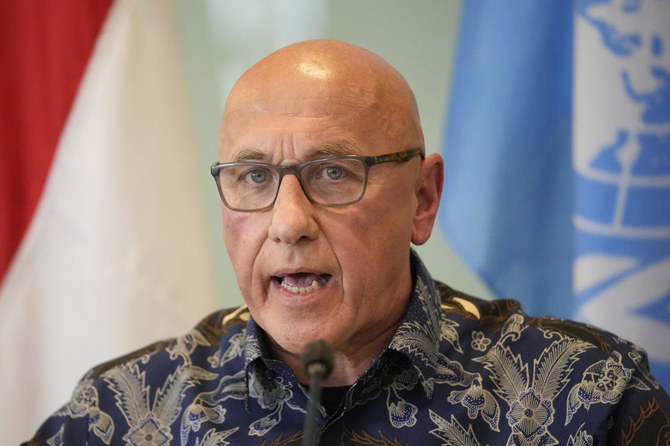
The rapporteur on Myanmar’s human rights, Tom Andrews, reported on Wednesday that while international efforts to isolate the junta appear to have dented its ability to buy military equipment, it still imported $253 million worth of weapons, dual-use technologies, manufacturing equipment and other materials in the 12 months to March.
The report said Myanmar had the help of international banks, including those from Southeast Asian neighbor Thailand, for its purchases.
Facing its biggest challenge since its 2021 coup against Nobel laureate Aung San Suu Kyi’s government, Myanmar’s military is caught up in multiple, low-intensity conflicts and grappling to stabilize a crumbling economy.
Western countries have imposed multiple financial sanctions on Myanmar’s military, banks and associated businesses.
The central bank said local and international banks engaged in transactions with Myanmar have undergone comprehensive due diligence measures for all business relationships and transactions.
“The financial transactions are only for the importation of essential goods and basic necessities for Myanmar civilians, such as medicines and medical supplies, agricultural and livestock supplies, fertilizers, edible oil and fuels,” it said.
The UN report said exports from Singapore had plunged to just over $10 million from over $110 million in 2022 but that Thai companies in Thailand partially filled the gap, transferring $120 million worth of weapons and materials in 2023, double from the previous year.
Thailand’s foreign ministry said in a statement on Thursday that the country’s banking and financial institutions follow protocols like other major financial hubs, adding the government will look into the UN rapporteur’s report.


![]()

Myanmar central bank denies UN report on weapons transactions
Short Url
https://arab.news/96tan
Myanmar central bank denies UN report on weapons transactions


Latest updates


© 2026 SAUDI RESEARCH & PUBLISHING COMPANY, All Rights Reserved And subject to Terms of Use Agreement.