Iranian envoy makes veiled criticism of US resolution on Pakistan’s elections, calls it ‘modern ignorance’

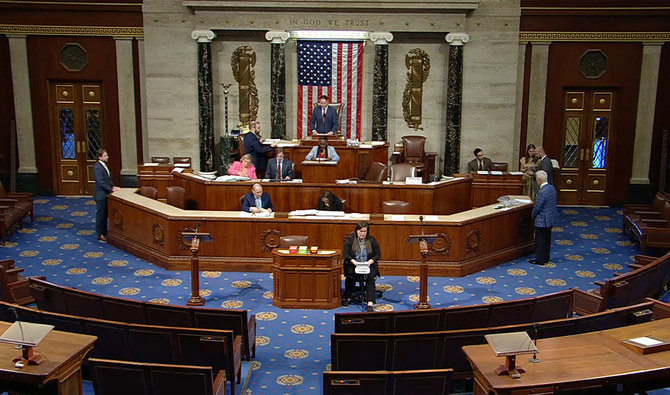
The still image taken from the live stream of the US House of Representatives on June 26, 2024, shows the final results of the vote on a resolution calling for a "full and independent investigation of claims of interference or irregularities in Pakistan’s February 2024 election." (US House of Representatives)
Short Url
Updated 30 June 2024
Follow

Iranian envoy makes veiled criticism of US resolution on Pakistan’s elections, calls it ‘modern ignorance’

  • US House of Representatives called for impartial probe into the rigging allegations that followed Pakistan’s February 8 elections
  • Iranian envoy to Pakistan criticizes the US and describes the development as ‘extortion under the guise of supporting democracy’

ISLAMABAD: Iranian Ambassador to Pakistan, Reza Amiri Moghadam, made a veiled reference on Saturday to a resolution passed by the United States House of Representatives, criticizing it for demanding an impartial probe into the rigging allegations that followed Pakistan’s February 8 elections and calling it “modern ignorance.”
The resolution, overwhelmingly adopted by US lawmakers this week, expressed concern over the state of democracy in Pakistan and called for freedom of media and speech. It also condemned attempts to “suppress” the participation of people in their democracy, asking the government to uphold their human, civil, and political rights.
Pakistan sharply reacted to the development, describing it as “unsolicited” advice and demanding that bilateral relations with the US be based on the principles of “mutual respect and non-interference.”
“Among wonders of modern ignorance: a country prevents ceasefire by veto, supports #GenocideinGaza by providing lethal weapons to Zionist regime, but Congress passes a resolution questioning election in an independent UN member,” Ambassador Moghadam wrote in a social media post, calling it “extortion under the guise of supporting democracy.”

Iran is among the nations that have criticized the United States for its support of Israel’s actions in Gaza, particularly highlighting the US use of its veto power in the United Nations Security Council.
Additionally, Iran has issued a stern warning to Israel, indicating that any attack on Lebanon could lead to a “devastating” war.


Three Afghan migrants die crossing into Iran as UN warns of new displacement toward Pakistan

Updated 9 sec ago
Follow

Three Afghan migrants die crossing into Iran as UN warns of new displacement toward Pakistan

  • UNHCR says 1.8 million Afghans were forced to return from Iran this year, straining Afghanistan’s resources
  • Rights groups warn forced refugee returns risk harm as Afghanistan faces food shortages and climate shocks

KABUL: Three Afghans died from exposure in freezing temperatures in the western province of Herat while trying to illegally enter Iran, a local army official said on Saturday.

“Three people who wanted to illegally cross the Iran-Afghanistan border have died because of the cold weather,” the Afghan army official told AFP on condition of anonymity.

He added that a shepherd was also found dead in the mountainous area of Kohsan from the cold.

The migrants were part of a group that attempted to cross into Iran on Wednesday and was stopped by Afghan border forces.

“Searches took place on Wednesday night, but the bodies were only found on Thursday,” the army official said.

More than 1.8 million Afghans were forced to return to Afghanistan by the Iranian authorities between January and the end of November 2025, according to the latest figures from the United Nations refugee agency (UNHCR), which said that the majority were “forced and coerced returns.”

“These mass returns in adverse circumstances have strained Afghanistan’s already overstretched resources and services” which leads to “risks of onward and new displacement, including return movements back into Pakistan and Iran and onward,” UNHCR posted on its site dedicated to Afghanistan’s situation.

This week, Amnesty International called on countries to stop forcibly returning people to Afghanistan, citing a “real risk of serious harm for returnees.”

Hit by two major earthquakes in recent months and highly vulnerable to climate change, Afghanistan faces multiple challenges.

It is subject to international sanctions particularly due to the exclusion of women from many jobs and public places, described by the UN as “gender apartheid.”

More than 17 million people in the country are facing acute food insecurity, the UN World Food Program said Tuesday.