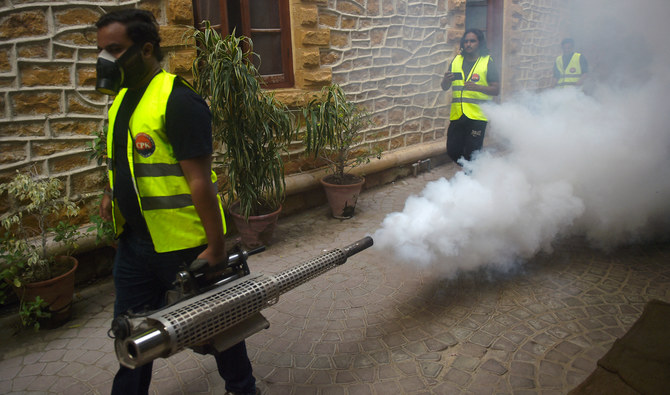
ISLAMABAD: Interior Minister Mohsin Naqvi on Saturday ordered that dengue prevention standard operating procedures be “strictly” implemented, with at least nine cases reported so far in the Pakistani capital ahead of the monsoon season that starts next week.
There is currently no cure or vaccine for dengue fever, which is spread by mosquitoes and in its most severe form can lead to death. Dengue fever often results in intense flu-like symptoms, severe headaches, pain behind the eyes, full-body aches, high fever, nausea, vomiting, swollen glands and rashes.
This year’s first dengue-related death was reported on June 3 in Pakistan’s southern Sindh province.
“The anti-dengue plan formulated should be implemented diligently,” the interior minister was quoted in a statement as telling the chairman of the Capital Development Authority and the Islamabad chief commissioner on Saturday. “Ensure rapid drainage of rainwater from low-lying areas.”
The CDA chairman informed Naqvi an anti-dengue working group was being established in the boundary areas of Islamabad and Rawalpindi and the administrations of the two cities would work “as a team” for dengue prevention.
Dengue fever is endemic to Pakistan, which experiences year-round transmission with seasonal peaks.
An advisory published by Pakistan’s National Institute of Health in 2023 said a total of 52,929 cases and 224 deaths from dengue were reported in the country in 2021, while there were approximately 79,007 confirmed cases of dengue with 149 deaths in 2022, with the surge in cases following unprecedented flooding that began in mid-June 2022. In 2023, Pakistan reported 3,019 suspected cases and 8 deaths from dengue.
Nine cases have so far been reported in Islamabad, according to the Islamabad chief commissioner.
The virus has been surging worldwide, helped by climate change. In barely six months, countries in the Americas have already broken calendar-year records for dengue cases.
The World Health Organization declared an emergency in December, and Puerto Rico declared a public health emergency in March.
Dengue remains less common in the continental United States, but in the 50 states so far this year there have been three times more cases than at the same point last year.


![]()

Pakistan orders ‘strict’ implementation of anti-dengue plan ahead of monsoons next week
Short Url
https://arab.news/p36gy
Pakistan orders ‘strict’ implementation of anti-dengue plan ahead of monsoons next week
- Nine dengue cases reported in capital city, Islamabad chief commissioner says
- First dengue-related death reported on June 3 in Pakistan’s southern Sindh province
Latest updates


Recommended


© 2026 SAUDI RESEARCH & PUBLISHING COMPANY, All Rights Reserved And subject to Terms of Use Agreement.