ISLAMABAD: Pakistan is likely to face extreme weather events such as floods and heat waves in the coming years which could trigger food insecurity and water scarcity in the country, officials and climate experts warned on Friday, urging the government to take preventive measures to mitigate losses.
Pakistan is ranked as the fifth most vulnerable country to climate change effects, according to the Global Climate Risk Index. While Pakistan’s contribution to global greenhouse gas emissions remains below one percent, extreme weather patterns have battered the country’s economy in the recent past.
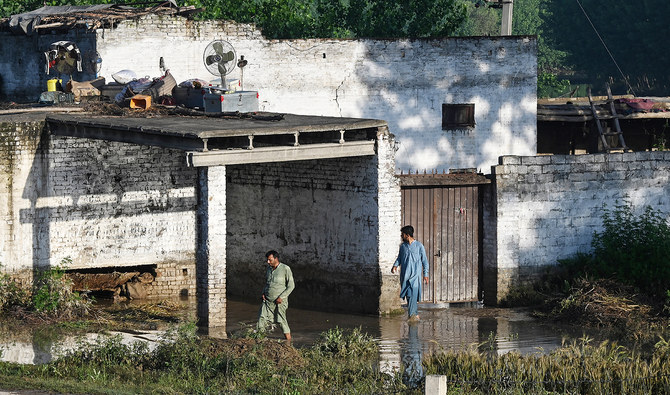
Unusually heavy rains and melting of glaciers in June 2022 triggered cataclysmic floods that destroyed large swathes of crops, killed over 1,700 people and affected 33 million people in the country. The South Asian country suffered billions of dollars in losses as critical infrastructure including houses, bridges and roads were swept away by the floods.
Pakistan’s erratic weather patterns have worried climate experts. The country recorded its “wettest” April since 1961 this year as it received 59.3 millimeters of rain which the meteorological department described as “excessively above” the normal average of 22.5 millimeters. May and June saw the country’s plain areas suffer a severe heat wave while Kaghan in northwestern Pakistan received snowfall this week.
“The climate models are predicting extreme weather events in Pakistan in coming years that could lead to water scarcity and food insecurity in the country,” Dr. Zaheer Babar, director at the Pakistan Meteorological Department (PMD) told Arab News.
Dr. Babar blamed global warming for the extreme weather patterns, stressing the need to adapt to the challenges to offset their adverse impacts.
“If we want to become a climate-resilient society, then we will have to switch to renewable energy resources, conserve water and take policy measures to prevent urban flooding, landsliding and heatwaves,” he explained.
Pakistan’s surging temperatures have caused rapid melting of its glaciers, increasing the flow of water in the Indus River. The country is home to more than 7,253 known glaciers and contains more glacial ice than any other on Earth, other than the polar regions. Almost all these glaciers lie in the northern region of Gilgit-Baltistan and the Khyber Pakhtunkhwa province.
Glaciers provide around 70 percent of fresh water for Pakistan that flows into its rivers and supplies drinking water for the country’s population. It is also essential for ecological habitats and agricultural activity, and aids in generating electricity, according to the Green Network.
However, the recent spell of heat waves and unusually high temperatures are causing glaciers to melt faster.
“The heat wave this season has been extensive not only in Pakistan but also the whole region, including Gulf states, due to climate change,” Dr. Qamar Zaman, lead author of Pakistan’s National Climate Change Policy, told Arab News. “The frequency of extreme weather events is expected to increase in Pakistan and the region in coming years.”
He said the Met Office has already forecast a heavy downpour starting next week which could lead to urban flooding and landsliding, which could damage critical infrastructure.
“In the longer run, these extreme weather patterns are expected to impact water availability and food security in the country,” he said, urging policymakers to focus on effective adaptation and mitigation measures to tackle the phenomenon.
Aisha Khan, Chief Executive of the Civil Society Coalition for Climate Change and CEO of Mountain & Glacier Protection Organization, said rising global temperatures would affect everything and everyone, and other vulnerable factors would make it worse for people in Pakistan.
“Soaring inflation and declining employment opportunities combined with an increase in climate-related disasters is going to play havoc with the lives of millions,” she told Arab News.
“Pakistan needs to take drastic steps to ensure a sharp decline in its current population growth rate,” she suggested, adding that managing a larger number of people facing a food security and water crisis would aggravate the problem.
“We need urgent action now to minimize the impact of the looming climate crisis,” Khan warned.


![]()

‘Extreme weather events’ in Pakistan can trigger water scarcity, food insecurity in future — experts
Short Url
https://arab.news/w7suu
‘Extreme weather events’ in Pakistan can trigger water scarcity, food insecurity in future — experts
- Pakistan has experienced unusually heavy rains and heat waves in past couple of months, signifying alarming weather patterns
- Climate analysts urge government to conserve water, switch to renewable energy resources and cut down on population
Latest updates


© 2026 SAUDI RESEARCH & PUBLISHING COMPANY, All Rights Reserved And subject to Terms of Use Agreement.