KUALA LUMPUR: Saudi Arabia, Japan and Australia were all drawn together on Thursday in the third stage of Asian qualifying for the 2026 World Cup in a "group of death" that also includes China.
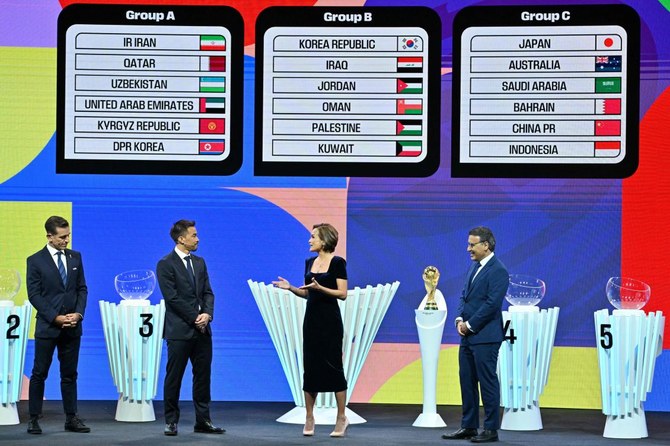
The 18 remaining Asian teams battling it out for eight direct qualification places were drawn into three groups of six at a ceremony in Kuala Lumpur.
Son Heung-min's South Korea were given a more straightforward-looking assignment when they were drawn to face Iraq, Jordan, Oman, Palestine and Kuwait in Group B.
Iran and Asian Cup champions Qatar head Group A and will play Uzbekistan, the United Arab Emirates, Kyrgyzstan and North Korea.
Matches will be played on a home-and-away basis from this September to June 2025, with the top two in each group qualifying directly for the World Cup in the United States, Canada and Mexico.
Teams finishing third and fourth in their groups will advance to the fourth round of Asian qualifying.
Hajime Moriyasu, whose Japan side beat Spain and Germany to reach the knockout rounds of the Qatar 2022 World Cup, called Group C "a tough group".
Indonesia -- in the third qualifying phase for the first time -- and Bahrain are the other teams in that group.
"We had to do it the hard way in the qualifiers for the last World Cup and we're going to have to dig even deeper this time," Japan coach Moriyasu told reporters after the draw in the Malaysian capital.
"But I want us to be ready for it, be brave and go for it. I ask that the fans fight along with us."
Graham Arnold took Australia to the last 16 in Qatar, where they went out 2-1 to eventual champions Argentina.
Like Japan, Australia had a 100 percent record in the second qualifying round for 2026 and did not concede a goal.
"We knew this round of qualifying would present challenges however the draw panned out," Arnold said.
"I feel it's important we embrace those challenges, with our mindset, belief and camaraderie integral to achieve our goal of qualification."
China have only reached the World Cup once, in 2002, and coach Branko Ivankovic knows his side are up against it in the same group.
"Ours is the hardest group in this round," he said.
"But we want to be a serious opponent for any team. Of course we have three strong teams -- Saudi, Japan and Australia -- that participated in the last World Cup."
Third round AFC qualification draw for the 2026 FIFA World Cup:
Group A: Iran, Qatar, Uzbekistan, United Arab Emirates, Kyrgyzstan, North Korea
Group B: South Korea, Iraq, Jordan, Oman, Palestine, Kuwait
Group C: Japan, Australia, Saudi Arabia, Bahrain, China, Indonesia


![]()

Saudi Arabia, Japan, Australia drawn together in tough World Cup qualifying group
Short Url
https://arab.news/462b7
Saudi Arabia, Japan, Australia drawn together in tough World Cup qualifying group
- The 18 remaining Asian teams battling it out for eight direct qualification places were drawn into three groups of six at a ceremony in Kuala Lumpur
- Iran and Asian Cup champions Qatar head Group A and will play Uzbekistan, the United Arab Emirates, Kyrgyzstan and North Korea


Latest updates


© 2026 SAUDI RESEARCH & PUBLISHING COMPANY, All Rights Reserved And subject to Terms of Use Agreement.