NEOM, Qiddiya, and Diriyah among projects attracting UK investor interest

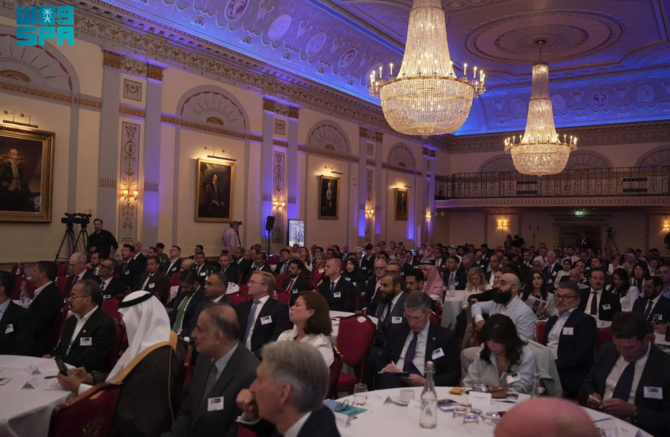
The UK-Saudi Sustainable Infrastructure Summit in London. SPA
Short Url
Updated 01 October 2024
Follow

NEOM, Qiddiya, and Diriyah among projects attracting UK investor interest

RIYADH: Saudi Arabia has garnered strong interest from British investors in its renewable energy sector and sustainable infrastructure, aligning with its Vision 2030 for green initiatives in environmental projects. 

This came at the UK-Saudi Sustainable Infrastructure Summit in London on June 24, where opportunities within the Kingdom’s top five projects — NEOM, Qiddiya, the Red Sea Project, ROSHN, and Diriyah — were highlighted, the Saudi Press Agency reported.  

These initiatives are part of the Kingdom’s broader commitment to ambitious climate goals, which include reducing carbon emissions by 278 million tonnes annually by 2030 and increasing renewable energy generation capacity by 50 percent. 

Hosted by the Saudi British Business Council in collaboration with the Saudi Chambers of Commerce and City of London Corporation, the summit brought together over 250 leaders from the industry and financial sectors of both countries, along with key representatives from these giga-projects. 

The event also placed a strong emphasis on financing and green technologies in an effort to achieve net-zero emissions. 

Discussions focused on the significance of Saudi-British cooperation in sustainable infrastructure development, advancing toward net-zero emissions, bridging investment gaps, and the role of public-private partnerships.

It also focused on innovative financing models including green bonds and sustainability-linked loans, as well as smart urban planning to achieve sustainability goals and implement large-scale projects using innovative low-carbon technologies.

The Saudi British Business Council, the Saudi British Sports Investment Forum, and the real estate and finance sectors held sector-specific working group meetings after the summit to discuss ambitious plans for developing the sports sector and investment landscape in the Kingdom and the UK.

A high-level delegation from the Kingdom, led by the Federation of Saudi Chambers and the Ministry of Investment, attended the event.

During his participation, the Minister of Investment Khalid Al-Falih discussed in a panel session the strategic partnership between the two countries in sectors of mutual interest and the development of the investment environment since the launch of Saudi Vision 2030.

The summit came at a time when the two nations’ economic relations are expanding, and the UK is Saudi Arabia’s 25th largest commercial partner.

In late 2022, both nations signed an agreement to strengthen their collaboration in green finance as the Kingdom increasingly seeks support for its massively transformative projects.


Saudi minister at Davos urges collaboration on minerals

Global collaboration on minerals essential to ease geopolitical tensions and secure supply, WEF hears. (Supplied)
Updated 20 January 2026
Follow

Saudi minister at Davos urges collaboration on minerals

  • The reason of the tension of geopolitics is actually the criticality of the minerals

LONDON: Countries need to collaborate on mining and resources to help avoid geopolitical tensions, Saudi Arabia’s minister of industry and mineral resources told the World Economic Forum on Tuesday.

“The reason of the tension of geopolitics is actually the criticality of the minerals, the concentration in different areas of the world,” Bandar Alkhorayef told a panel discussion on the geopolitics of materials.

“The rational thing to do is to collaborate, and that’s what we are doing,” he added. “We are creating a platform of collaboration in Saudi Arabia.”

Bandar Alkhorayef, Saudi Minister of Industry and Mineral Resources 

The Kingdom last week hosted the Future Minerals Forum in Riyadh. Alkhorayef said the platform was launched by the government in 2022 as a contribution to the global community. “It’s very important to have a global movement, and that’s why we launched the Future Minerals Forum,” he said. “It is the most important platform of global mining leaders.”

The Kingdom has made mining one of the key pillars of its economy, rapidly expanding the sector under the Vision 2030 reform program with an eye on diversification. Saudi Arabia has an estimated $2.5 trillion in mineral wealth and the ramping up of extraction comes at a time of intense global competition for resources to drive technological development in areas like AI and renewables.

“We realized that unlocking the value that we have in our natural resources, of the different minerals that we have, will definitely help our economy to grow to diversify,” Alkhorayef said. The Kingdom has worked to reduce the timelines required to set up mines while also protecting local communities, he added. Obtaining mining permits in Saudi Arabia has been reduced to just 30 to 90 days compared to the many years required in other countries, Alkhorayef said.

“We learned very, very early that permitting is a bottleneck in the system,” he added. “We all know, and we have to be very, very frank about this, that mining doesn’t have a good reputation globally.

“We are trying to change this and cutting down the licensing process doesn’t only solve it. You need also to show the communities the impact of the mining on their lives.”

Saudi Arabia’s new mining investment laws have placed great emphasis on the development of society and local communities, along with protecting the environment and incorporating new technologies, Alkhorayef said. “We want to build the future mines; we don’t want to build old mines.”