



RIYADH: Growth of the Gulf economies is projected to pick up from September thanks to anticipated interest rate cuts and an increase in oil output, according to new data.
In its latest Middle East and North Africa Gross Domestic Product report, UK-based independent research firm Capital Economics warned that the decision by the Organization of the Petroleum Exporting Countries to keep output low until October means a boost to GDP will take longer to materialize than previously expected.
OPEC and its allies, known as OPEC+, have implemented substantial output cuts since late 2022, totaling 5.86 million barrels per day, or about 5.7 percent of global demand.
Earlier this month, OPEC+ extended 3.66 million bpd of cuts until the end of 2025 and prolonged 2.2 million bpd of voluntary cuts until September 2024. The voluntary cuts will be phased out gradually from October 2024 to September 2025.
The countries which have made voluntary cuts to output include Kuwait, Oman, Saudi Arabia and the UAE. Despite this delay, “non-oil sectors should continue to grow relatively strongly,” the report states.
“A monetary loosening cycle should begin soon as the Gulf follows the Fed (US Federal Reserve), which we expect to start cutting rates from September,” it added.
Furthermore, inflation in the Gulf is expected to slow over the second half of the year, easing the squeeze on real incomes and supporting credit demand and consumer spending.
However, the report also notes that non-oil growth across much of the Gulf is expected to ease over the next few years.
A decline in oil prices next year presents a challenge to non-oil sectors, with budget and current account positions likely to weaken.
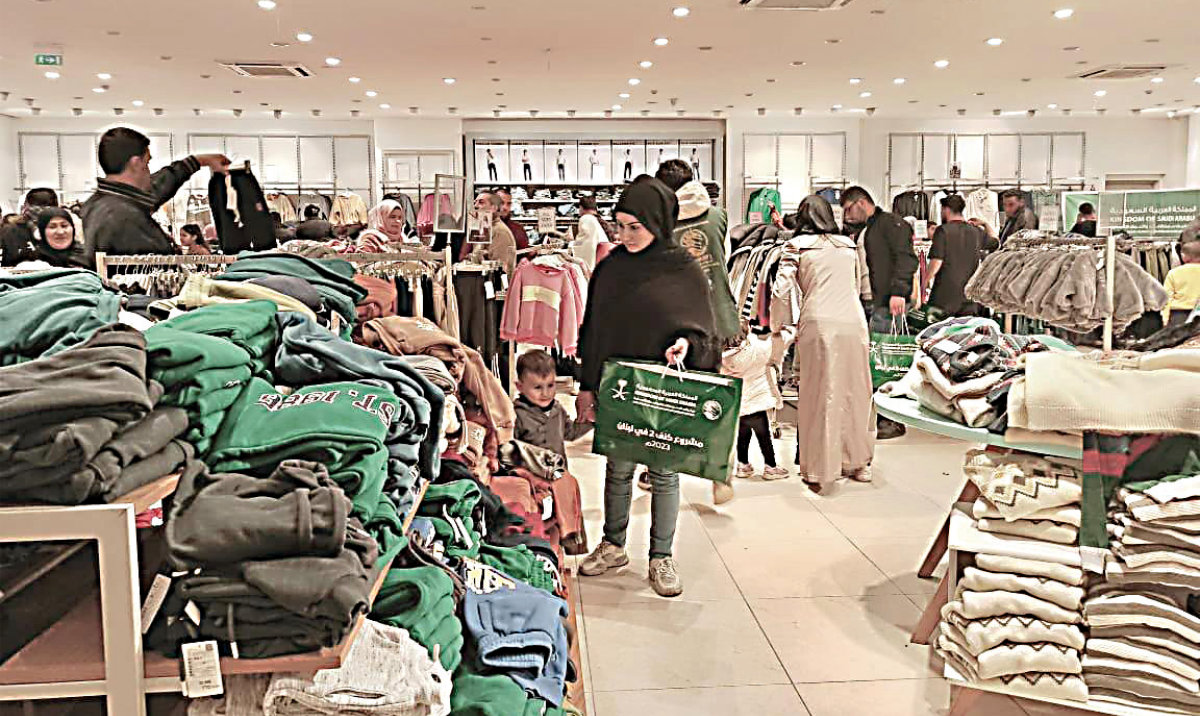
Non-oil growth across much of the Gulf is expected to ease over the next few years. (SPA)
The UAE and Qatar are expected to maintain loose fiscal policies, leveraging their strong balance sheets to support their economies.
Kuwait may also utilize its strong balance sheet. In contrast, Oman and Bahrain will need to persist with a tight fiscal stance.
Saudi economy outlook
Saudi Arabia’s decision to maintain low oil output as part of the OPEC+ deal will constrain GDP growth in the near term, the report said.
Despite efforts to manage crude prices, the report suggests that revenue will fall back next year, potentially leading the Saudi government to scale back some spending plans.
Nevertheless, the Saudi economy expanded by 1.4 percent quarter on quarter in the first three months of 2024, ending the technical recession. Both oil and private non-oil activities contributed to this growth, offsetting weaker government activities.
The report further elaborates on the OPEC+ decision to extend oil output cuts until October, which will limit GDP growth in the short term.
However, Saudi Arabia is expected to gradually unwind its 1 million barrels per day voluntary output cut starting from the fourth quarter of 2025, with a more aggressive increase in oil output projected thereafter.
In light of the OPEC+ rollover, oil prices are anticipated to remain higher than previously expected for the rest of the year.
Despite this, Saudi Arabia is projected to continue running budget deficits, which are likely to be wider than currently budgeted.
FASTFACTS
• Saudi Arabia’s economy is expected to grow by a modest 1.3 percent this year. As oil output increases from the fourth quarter and through 2025 to 2026, growth is projected to accelerate to 4.5 and 4.8 percent, respectively.
• The UAE’s GDP growth is expected to reach 3.3 percent this year, with an acceleration to 5.5 percent in 2025, the report stated.
The state has ample financing options, demonstrated by significant sovereign debt issuance and a recent Aramco share sale.
The Kingdom’s Public Investment Fund also plans to ramp up local investments this year, equating to about 2 percent of GDP, relieving the central government of some financial burdens, the report further highlighted.
Overall, Saudi Arabia’s economy is expected to grow by a modest 1.3 percent this year. As oil output increases from the fourth quarter and through 2025 to 2026, growth is projected to accelerate to 4.5 and 4.8 percent, respectively.
Elsewhere in the Gulf
Additionally, the UAE is forecast to raise oil output sooner than other OPEC+ members, bolstered by supportive fiscal policies.
This positions the country as the fastest-growing economy in the Gulf for both this year and the next. The UAE’s GDP growth is expected to reach 3.3 percent this year, with an acceleration to 5.5 percent in 2025, the report stated.
Qatar’s economy is likely to record modest growth this year and much of next year, but is expected to take off as liquefied natural gas output surges from the end of next year.
The report indicates that economic growth in Qatar slowed last year due to capacity limits in the hydrocarbon sector and the fading boost from the 2022 FIFA World Cup.
Non-hydrocarbon growth is expected to pick up this year due to lower interest rates and slowing inflation. However, lower global LNG prices will shrink the budget surplus, limiting fiscal support.
Qatar’s GDP growth is forecasted at 2 percent and 2.3 in 2024, 2025, weaker than consensus estimates, the report highlighted.
Nevertheless, growth is expected to jump to 11.5 percent in 2026, making it one of the fastest-growing economies globally.
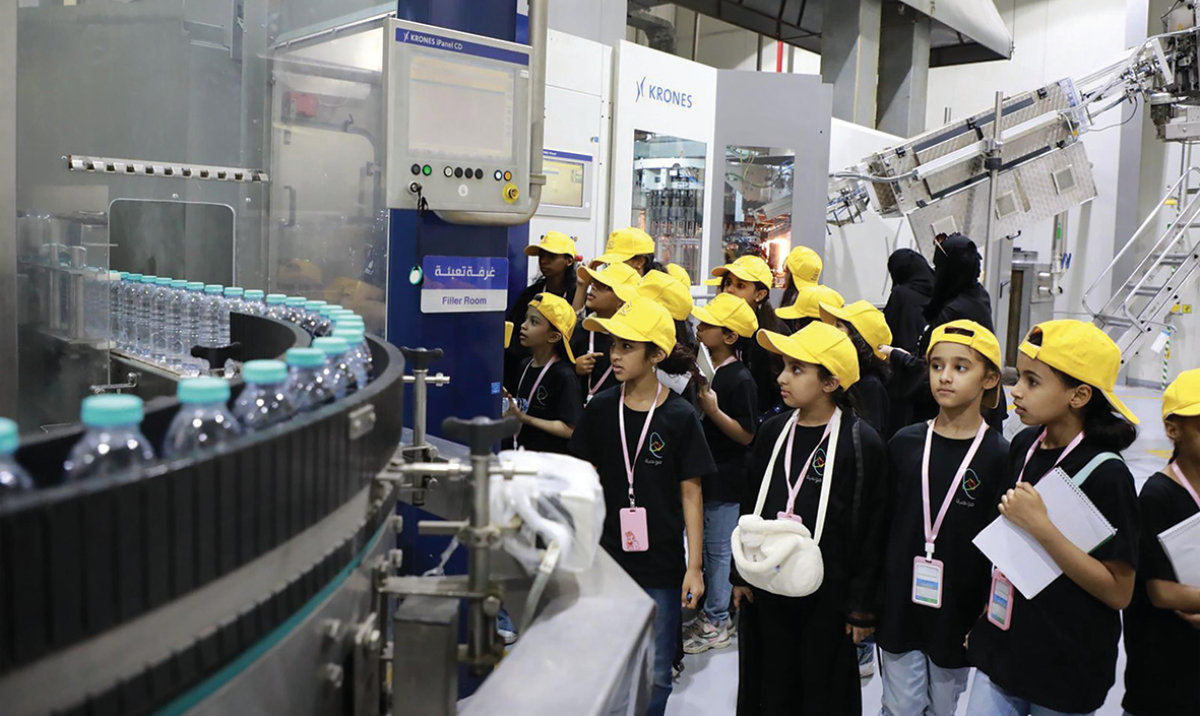
The Saudi economy expanded by 1.4 percent quarter on quarter in the first three months of 2024. (SPA)
For Kuwait, Oman, and Bahrain, economic growth will be weaker this year than previously expected due to the OPEC+ decision. Governments in Oman and Bahrain are likely to maintain tight fiscal policies, weighing on non-oil sectors.
Capital Economics also stated that hydrocarbon receipts are expected to be weaker, leading to deteriorating budget and current account balances.
Oman is better positioned to weather this due to recent government commitments to fiscal tightening, though strict measures are likely to continue.
Bahrain, on the other hand, needs to aggressively tighten fiscal policy to stabilize and reduce its debt-to-GDP ratio, the report stated.
Beyond the Gulf
Outside the Gulf, current account deficits have narrowed, easing external strains.
In Egypt, this forms part of a broader policy shift requiring tight monetary and fiscal policies. Although inflation has peaked, interest rate cuts are not expected until early 2025.
Morocco is set to begin a monetary loosening cycle soon due to low inflation, potentially allowing the central bank to widen the dirham’s trading band, leading to appreciation against the euro.
Tunisia remains an exception, with high inflation and dwindling foreign exchange reserves threatening a balance of payments crisis and potential sovereign default.
Capital Economics forecasts the MENA region’s GDP to grow by 1.5 percent this year, before accelerating to 3.9 percent in 2025 and 4.6 percent in 2026, outpacing consensus estimates for the latter years.


