

Gulf economies to slow this year on sluggish oil demand —Reuters Poll

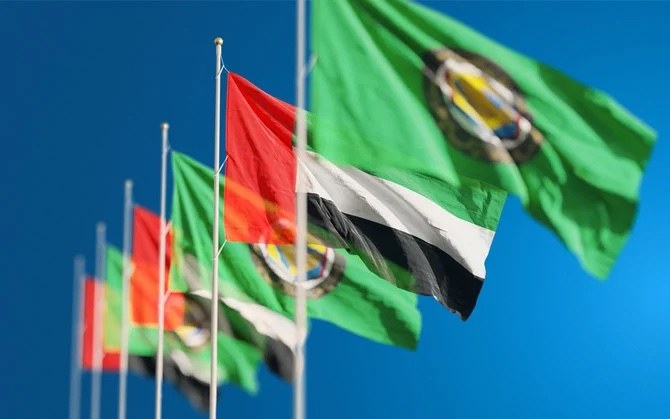
Economies in the six-member Gulf Cooperation Council will grow this year at half the rate of 2022. (Shutterstock)
Short Url
Updated 24 January 2023
Follow

Gulf economies to slow this year on sluggish oil demand —Reuters Poll

RIYADH: Economies in the six-member Gulf Cooperation Council will grow this year at half the rate of 2022 as oil revenues take a hit from an expected mild global slowdown, according to the median view from a Reuters poll of economists.

Crude oil prices, a major driver for Gulf economies, are down more than a third from last year's highs and were expected to remain under pressure this year over fears of a recession in major economies sapping demand.

Overall growth in the six GCC economies was forecast to average 3.3 percent and 2.8 percent this year and next respectively, the Jan. 9-23 poll showed, down from 4.2 percent and 3.3 percent in the previous poll.

"The outlook for 2023 is more cautious given the weaker external environment, although the GCC will likely continue to outperform many developed economies in terms of GDP growth," wrote Khatija Haque, head of research and chief economist at Emirates NBD.

"While oil and gas output growth is expected to slow this year, continued investment to boost production capacity in the region should see the sector contribute positively to headline GDP again in 2023."

Brent crude is expected to average $89.37 a barrel in 2023, nearly 4.6 percent lower than the $93.65 consensus in a November survey and lower than an average of $99 per barrel seen last year, a separate Reuters poll showed.

Saudi Arabia, the region's largest economy and top crude oil exporter, was forecast to grow 3.4 percent this year and 3.1 percent in 2024, slightly outperforming the region as a whole. The economy expanded at a record pace of 8.8 percent in 2022.

Economic growth in the UAE was expected at 3.3 percent this year, down from 6.4 percent last year.

Among other Gulf countries — Qatar, Oman, and Bahrain — growth was expected at 2.4 percent - 2.7 percent for 2023. Kuwait was seen growing at 1.7 percent.

Despite lower oil GDP growth, non-oil growth was expected to remain resilient in 2023, economists in the survey said.

Analysts expected continued current account surpluses for the main Gulf economies, based on relatively high oil prices.

Saudi Arabia, the UAE, Qatar and Kuwait were predicted to see double-digit growth in current account surpluses in 2023, with Oman and Bahrain in single digits.

The inflation outlook was modest, but varied, with the lowest in Oman at 1.9 percent and the highest at 3.1 percent in the UAE.


Free trade negotiations between GCC, India mark new phase of partnership, says sec-gen

Updated 24 February 2026
Follow

Free trade negotiations between GCC, India mark new phase of partnership, says sec-gen

RIYADH: The Gulf Cooperation Council’s secretary-general affirmed that the negotiations for a free trade agreement between the GCC and India, and the signing of the joint statement, represents a new phase of strategic partnership.

Jasem Mohamed Al-Budaiwi said that this contributes to enhancing close cooperation and strengthening economic and trade ties, according to the Saudi Press Agency.

This came during the signing ceremony of the joint statement on launching the free trade agreement negotiations between the Al-Budaiwi and India’s Minister of Commerce and Industry, Piyush Goyal, which took place in New Delhi, on Tuesday.

During the signing ceremony, Al-Budaiwi said that the Terms of Reference, signed on Feb. 5, provide a comprehensive and clear framework for these negotiations. The two nations agreed to discuss enhancing cooperation in vital strategic areas, including trade in goods, customs procedures, and services.

Additionally, the framework covers Sanitary and Phytosanitary measures, intellectual property rights, cooperation on Micro, Small, and Medium Enterprises, along with other topics of mutual interest. This reflects the comprehensive nature of the agreement and its ability to keep pace with the future economy.

Al-Budaiwi expressed hope that these negotiations would lead to a comprehensive and ambitious free trade agreement that works to remove customs and non-customs barriers, enhance the flow of quality investments in both directions, and achieve further liberalization in trade and investment cooperation between the GCC and India for mutual benefit. 

This would provide a stimulating economic environment and an investment climate that opens broad horizons for the business sector, supports supply chains, and accelerates the pace of economic growth in line with the ambitious developmental visions of the GCC states. 

The top official affirmed the full readiness of the General Secretariat to host the first round of negotiations at its headquarters in Riyadh during the second half of this year.

The two sides held a meeting during which they reviewed the existing cooperation relations between the GCC and India and discussed ways to develop and elevate them to broader horizons, serving mutual interests and enhancing opportunities for strategic partnership between the two sides, particularly in the economic, investment, and trade fields.

They praised the role undertaken by the negotiating teams from both sides, appreciating the efforts contributing to reaching a comprehensive agreement that enhances economic integration and supports the smooth flow of trade between the two nations.