ISLAMABAD: Pakistan launched the post-Hajj flight operation on Thursday, bringing back the first batch of 150 pilgrims from Saudi Arabia, with the religious affairs ministry saying that nearly 1,200 devotees would return via seven special flights to four different cities by the end of the day.
Transporting large numbers of pilgrims to and from Saudi Arabia during the Hajj season presents a significant logistical challenge, prompting the government to launch special flights, ensuring safe and timely travel for pilgrims.
The first post-Hajj flight operated between Jeddah and Multan, with six additional flights scheduled to return pilgrims to Karachi, Lahore and Islamabad later in the day.
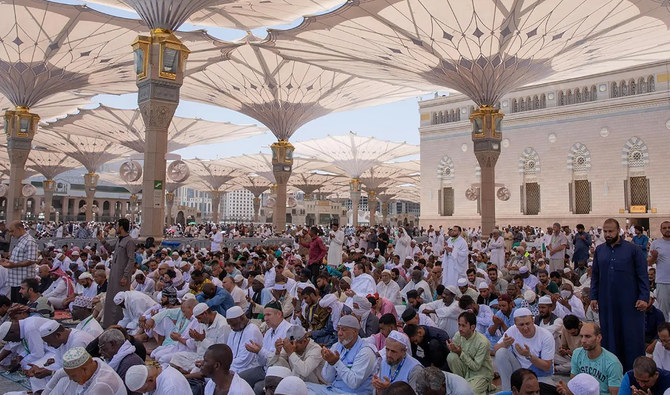
The religious affairs ministry announced that 720 Pakistani pilgrims in Saudi Arabia will also travel to Madinah today. These pilgrims arrived in the kingdom shortly before Hajj began and were taken directly to Makkah, not having enough time to visit the Prophet’s Mosque before.
“The Hajj flight operation from Jeddah for the return of pilgrims will continue until July 9,” the ministry said in a statement. “The last Hajj flight from Madinah will arrive back in the homeland on July 21. The return of 70,000 government Hajj pilgrims will also be completed on July 21.”
In a separate statement, the ministry also announced the arrangements for distributing Zamzam water among pilgrims availing the government scheme.
“The ministry has made all airlines responsible through an agreement to facilitate pilgrims at designated points to collect Zamzam water,” it said.
The statement urged the pilgrims to collect the water from relevant airports and book it with their luggage.
Pilgrims often bring Zamzam water back from Hajj because it is considered sacred within Islam. The water comes from the Zamzam well located within the Grand Mosque in Makkah.
It is also believed to have unique properties and blessings, ensuring spiritual benefits and healing.

Pakistan launches post-Hajj flight operation, plans to bring back 1,200 pilgrims today
https://arab.news/4xyag
Pakistan launches post-Hajj flight operation, plans to bring back 1,200 pilgrims today
- Religious affairs ministry asks pilgrims to get Zamzam water from designated spots at relevant airports
- The flight operation will continue until July 21 to bring back 70,000 pilgrims on government Hajj scheme
Pakistan says it is moving toward phased crypto regulation after Binance, HTX approvals
- The country is among the world’s largest crypto adoption markets, with nearly 40 million users
- Bilal bin Saqib says the government is not promoting crypto but moving to regulate the sector
ISLAMABAD: Pakistan’s top virtual asset regulatory official said on Sunday the country was laying the foundation for a phased and tightly supervised crypto framework after granting conditional approvals to two global exchanges, signaling a shift from years of regulatory ambiguity toward formal oversight of digital assets.
The Pakistan Virtual Assets Regulatory Authority (PVARA) said this week it had issued no objection certificates (NOCs) to global crypto exchanges Binance and Huobi (HTX). Pakistan has also signed a memorandum of understanding with them to explore what the finance ministry described as the “tokenization” of up to $2 billion in sovereign bonds, treasury bills and commodity reserves, an initiative aimed at boosting liquidity and attracting investors.
“The no objection certificate given to Binance and Huobi is the first practical step of this new thinking,” PVARA chief Bilal bin Saqib said at a briefing. “Let me make it clear that this NOC is not a shortcut. This is not a blanket approval.”
He said the approvals marked the start of a risk-mitigated, phased and supervised entry framework, adding that platforms would be subject to strict anti-money laundering and counter-terrorism financing requirements, ownership transparency checks and enforcement-linked licensing timelines.
“This is not a new experiment,” he said, pointing to phased regulatory approaches adopted in financial centers such as Dubai, the United Kingdom and Singapore, where firms are first brought under supervision before being allowed to expand operations.
Pakistan is among the world’s largest crypto adoption markets, with estimates putting the number of users between 30 and 40 million, despite the absence of a comprehensive regulatory framework. Saqib said ignoring the sector was no longer viable, warning that unregulated adoption posed greater risks to the economy and consumers.
“We don’t want to promote crypto,” he said. “We want to regulate crypto. Adoption is already there.”
He said the framework was designed to prepare Pakistan for longer-term developments in digital finance, including tokenized assets, compliance technology, blockchain analytics and digital payment infrastructure, while ensuring that local talent is channeled into regulated and productive use.
“For the international community, the message is clear,” Saqib said. “Pakistan is not running away from innovation. Pakistan is welcoming innovation. Pakistan is regulating innovation.”


