King Salman pays sacrificial animal expenses for 3,322 pilgrims

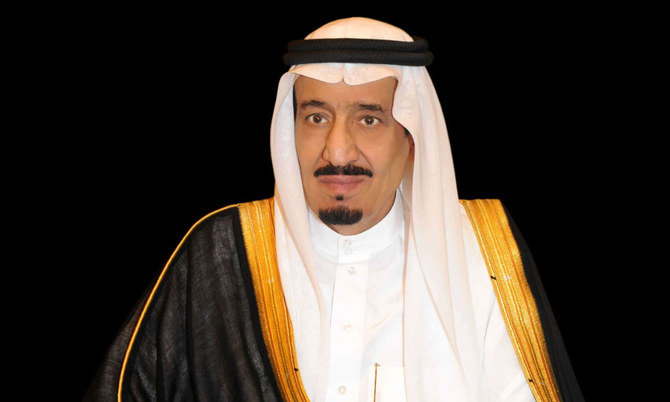
Saudi Arabia’s King Salman. (File/SPA)
Short Url
Updated 17 June 2024
Follow

King Salman pays sacrificial animal expenses for 3,322 pilgrims

  • The pilgrims are all guests of the Custodian of the Two Holy Mosques Program for Hajj, Umrah and Visit and are from 88 countries

RIYADH: Saudi Arabia’s King Salman has paid the expenses for the sacrificial animals of 3,322 Hajj pilgrims at his own expense, Saudi Press Agency reported on Monday.

The pilgrims are all guests of the Custodian of the Two Holy Mosques Program for Hajj, Umrah and Visit and are from 88 countries.

Most pilgrims are required to slaughter an animal as a reminder of the sacrifice that Prophet Ibrahim was prepared to offer — of his son, Ismail — as a mark of absolute submission to God.

The Minister of Islamic Affairs, Dawah, and Guidance Sheikh Dr. Abdullatif bin Abdulaziz Al Al-Sheikh considered the gesture an extension of the king’s generosity toward all Muslims.


Striking light pillars phenomenon captivates Northern Borders residents

Updated 23 December 2025
Follow

Striking light pillars phenomenon captivates Northern Borders residents

  • The sight captivated residents and visitors alike

RIYADH: A striking astronomical and optical phenomenon was observed in Saudi Arabia’s Northern Borders Region on Monday, as light pillars, a remarkable natural spectacle, appeared in the sky, drawing the attention of locals and enthusiasts of natural phenomena, the Saudi Press Agency reported.

The sight captivated residents and visitors alike, with the interplay of colors and light making for an extraordinary spectacle.

Astronomy Club member Adnan Khalifa said that a light pillar is an optical phenomenon that occurs in the atmosphere as a vertical column of light extending above or below its source. This effect is caused by the reflection of light on tiny ice crystals suspended in clouds or the air.

He added that the light source can be natural, such as the sun, particularly when near the horizon, or the moon. It can also originate from human-made sources, like streetlights, creating a unique and captivating visual display in the sky.

Abouazza El-Mhamdi, associate professor in the physics and astronomy department at King Saud University’s College of Science, told Arab News: “On Monday evening, residents of the Northern Borders Region near Arar witnessed a rare meteorological event — the vibrant light pillars that illuminated the night sky.

“While appearing like a celestial display, this is not a purely astronomical event involving stars or planets, for example, but rather an atmospheric optical phenomenon triggered by an exceptional drop in temperature and perfect wind stillness,” he said. 

“The display featured towering vertical beams of white, orange and yellow light, created when ground-based light sources reflected off tiny, flat ice crystals suspended in the freezing air, which acted like a collective mirror,” he added. 

“Although these pillars are common in Arctic climates like Canada or Russia, their appearance in Saudi Arabia is a remarkable anomaly, highlighting the unique and intense winter conditions currently affecting the Kingdom’s northern reaches,” the professor said.

Following the inclement weather last week, and as a result of several days of low temperatures, vibrant beams of light shot up into the night sky, creating a stunning display.

The phenomenon, characterized by its colorful vertical light columns, occurs under specific conditions, such as temperatures falling below 0 degrees Celsius, while calm winds are also essential.

The unique ice halo effect forms when moisture in the air condenses into ice crystals, reflecting surrounding lights to create a breathtaking visual display.