

Saudi Arabia leads Middle Eastern banking growth amid favorable conditions: Fitch

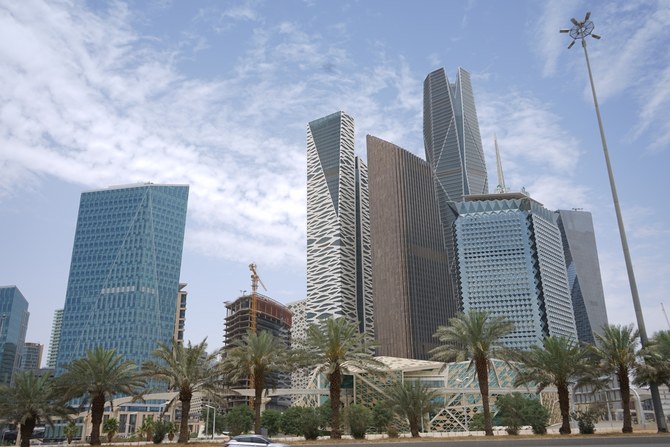
This expansion presents new business opportunities for the Kingdom’s financial institutions and heightens competition for liquidity. Shutterstock
Short Url
Updated 01 October 2024
Follow

Saudi Arabia leads Middle Eastern banking growth amid favorable conditions: Fitch

RIYADH: High oil prices and interest rates are creating favorable operating conditions for banks across the Middle East, despite regional tensions, according to Fitch Ratings.

During a recent webinar on the region’s banking sector, Fitch Ratings highlighted that in Saudi Arabia, lending growth is expected to be around double the regional average of 5-6 percent for the fiscal year 2024, driven by significant non-oil gross domestic product growth.

This expansion presents new business opportunities for the Kingdom’s financial institutions and heightens competition for liquidity.

The agency noted the Gulf Cooperation Council as a standout in the global banking landscape, adding that the region is benefiting from robust oil prices, elevated interest rates, substantial government expenditure, strong non-oil sector growth, and high investor and consumer confidence.

These factors contribute to solid business conditions and healthy financial metrics for banks in most markets.

Fitch Ratings highlighted that GCC financial institutions experienced record US dollar issuance in the first quarter of 2024, fueled by favorable pricing conditions, lending increases, refinancing needs, and strong investor demand.

However, the credit rating agency noted that regional banks are currently at the peak of their cycle. Lower hydrocarbon prices pose a risk to financial operating environments across the Middle East, and each country faces unique challenges.

In contrast to Saudi Arabia, the UAE has enjoyed stronger liquidity conditions, enhancing banks’ profitability metrics in 2023 and the first quarter of 2024, with the sector’s average net interest margin improving by 100 basis points over 2022–2023.

Qatar’s banking sector notably relies on non-domestic funding, which constituted 42 percent of total holdings at the end of the first quarter of 2024. This dependence makes Qatari banks vulnerable to external political and economic shocks, as well as shifts in investor sentiment.

In October last year, Fitch Ratings affirmed that banks in the GCC are thriving due to high oil prices, contained inflation, and rising interest rates.

It also highlighted that financial institutions in the UAE are improving, and banks in Saudi Arabia, Qatar, and the UAE are well-positioned to benefit from rising interest rates due to quick loan book repricing and substantial low-cost funding.


Closing Bell: Saudi benchmark index edged up to close at 10,549

Updated 6 sec ago
Follow

Closing Bell: Saudi benchmark index edged up to close at 10,549

RIYADH: Saudi Arabia’s Tadawul All Share Index rose on Thursday, gaining 58.39 points, or 0.56 percent, to close at 10,549.08.

Total trading turnover reached SR1.59 billion ($425 million), with 218 stocks advancing and 37 declining.

The parallel market, Nomu, added 222.72 points, or 0.96 percent, to finish at 23,519.01, as 43 stocks rose and 21 retreated. Meanwhile, the MSCI Tadawul Index increased by 6.11 points, or 0.44 percent, to close at 1,393.42.

Leading the day’s gains was Alkhaleej Training and Education Co., whose shares jumped 7.63 percent to SR20.45. Other strong performers included Consolidated Grunenfelder Saady Holding Co., up 6.60 percent to SR9.69, and Abdullah Saad Mohammed Abo Moati for Bookstores Co., which rose 6.48 percent to SR48.98.

On the downside, Naseej International Trading Co. recorded the largest decline, falling 2.44 percent to SR34.44, while National Gas and Industrialization Co. dropped 1.79 percent to SR93.10 and Nama Chemicals Co. slipped 1.32 percent to SR23.99.

Saudi Aramco Base Oil Co., or Luberef announced the signing of a memorandum of understanding with Saudi Aramco for a GIII+ production facility in Jazan.

The 18-month agreement, which may be renewed, is a key step in the Group III+ Project aimed at enhancing production capacity. The MoU is non-binding, and any future approvals, formal agreements, or financial impacts will be disclosed in line with regulatory guidelines. Luberef ended the session at SR96.10, down 0.26 percent.

Meanwhile, the Power and Water Utility Co. for Jubail and Yanbu, or Marafiq, reported receiving official notice of higher energy product prices used in production. The company estimated the financial impact for 2026 at 5.6 percent of total cost of sales, based on its most recent audited 2024 statements.

The effect is expected to appear in the first quarter of the 2026 fiscal year. Marafiq said it is working to mitigate the impact through improved production efficiency, enhanced plant reliability, optimized asset utilization, and cost reductions. The stock closed at SR36.80, up 1.03 percent.