SHANGHAI: New Chinese coast guard rules took effect Saturday, under which it can detain foreigners for trespassing in the disputed South China Sea, where neighbors and the G7 have accused Beijing of intimidation and coercion.
Beijing claims almost the entirety of the South China Sea, brushing aside competing claims from several Southeast Asian nations including the Philippines and an international ruling that its stance has no legal basis.
China deploys coast guard and other boats to patrol the waters and has turned several reefs into militarized artificial islands. Chinese and Philippine vessels have had a series of confrontations in disputed areas.
From Saturday, China’s coast guard can detain foreigners “suspected of violating management of border entry and exit,” according to the new regulations published online.
Detention is allowed up to 60 days in “complicated cases,” they say.
“Foreign ships that have illegally entered China’s territorial waters and the adjacent waters may be detained.”
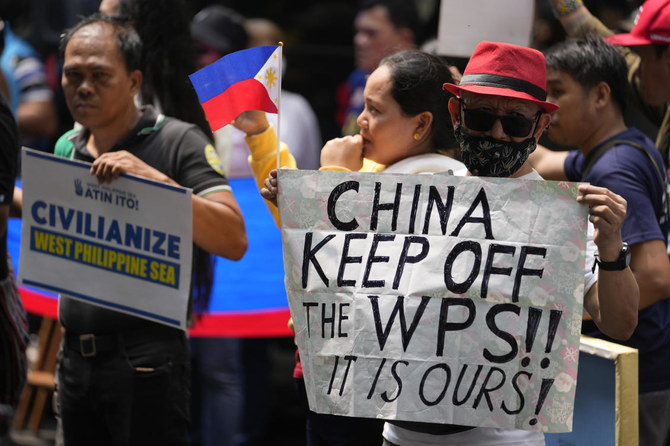
Manila has accused the Chinese coast guard of “barbaric and inhumane behavior” against Philippine vessels, and President Ferdinand Marcos said last month called the new rules a “very worrisome” escalation.
China Coast Guard vessels have used water cannon against Philippine boats multiple times in the contested waters.
There have also been collisions that injured Filipino troops.
Philippine military chief General Romeo Brawner told reporters on Friday that authorities in Manila were “discussing a number of steps to be undertaken in order for us to protect our fishermen.”
Philippine fishermen were told “not to be afraid, but just to go ahead with their normal activities to fish there in our Exclusive Economic Zone,” Brawner said.
The Group of Seven bloc on Friday criticized what it called “dangerous” incursions by China in the waterway.
“We oppose China’s militarization, and coercive and intimidation activities in the South China Sea,” read a G7 statement at the end of a summit on Friday.
The South China Sea is a vital waterway, where Vietnam, Malaysia and Brunei also have overlapping claims in some parts.
Most recently, however, confrontations between China and the Philippines have raised fears of a wider conflict over the sea that could involve the United States and other allies.
Trillions of dollars in ship-borne trade passes through the South China Sea annually, and huge unexploited oil and gas deposits are believed to lie under its seabed, though estimates vary greatly.
The sea is also important as a source of fish for growing populations.
China has defended its new coast guard rules. A foreign ministry spokesman said last month that they were intended to “better uphold order at sea.”
And the Chinese defense minister warned this month that there were “limits” to Beijing’s restraint in the South China Sea.
China has also been angered in the past by US and other Western warships sailing through the South China Sea.
The US Navy and others undertake such voyages to assert the freedom of navigation in international waters, but Beijing considers them violations of its sovereignty.
Chinese and US forces have had a series of close encounters in the South China Sea.


![]()

New China rules allow detention of foreigners in South China Sea
Short Url
https://arab.news/gae57
New China rules allow detention of foreigners in South China Sea
- China Coast Guard vessels have used water cannon against Philippine boats multiple times in the contested waters
- Confrontations between China and the Philippines have raised fears of a wider conflict that could involve the US and other allies


Latest updates


© 2026 SAUDI RESEARCH & PUBLISHING COMPANY, All Rights Reserved And subject to Terms of Use Agreement.