

Government agencies provide top quality care for elderly, disabled Hajj pilgrims

1 / 3
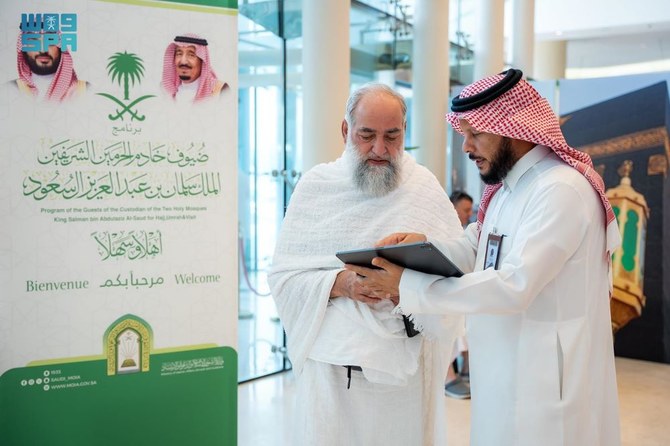
Government agencies in the Kingdom play a vital role in providing humanitarian services to ensure the safety and comfort of pilgrims during Hajj. (SPA)
2 / 3
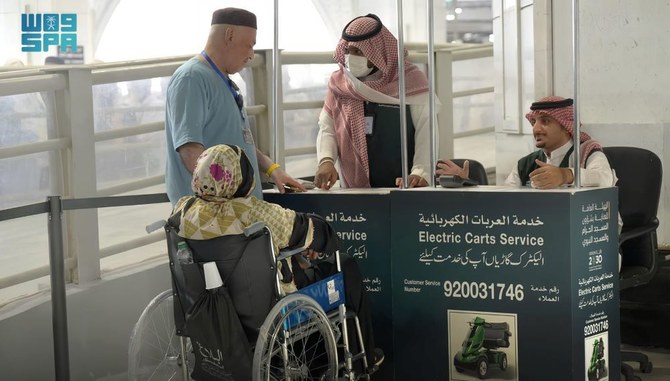
Government agencies in the Kingdom play a vital role in providing humanitarian services to ensure the safety and comfort of pilgrims during Hajj. (SPA)
3 / 3
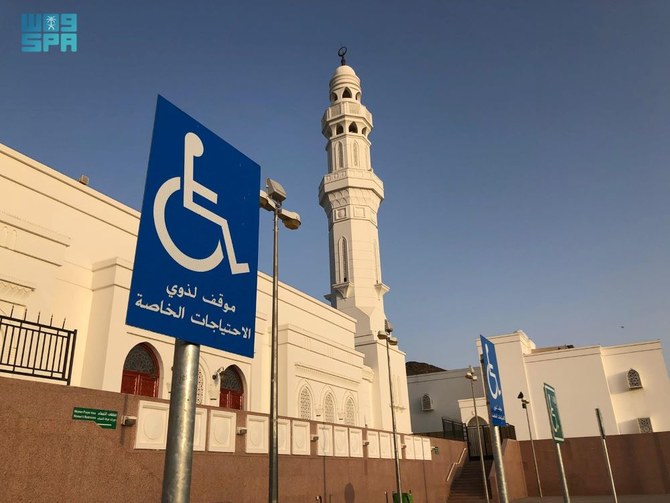
Government agencies in the Kingdom play a vital role in providing humanitarian services to ensure the safety and comfort of pilgrims during Hajj. (SPA)
Short Url
Updated 12 June 2024
Follow

Government agencies provide top quality care for elderly, disabled Hajj pilgrims

  • Wheelchairs, guides, volunteers all on hand to help worshippers perform rituals
  • Modern technology used to track movement of visitors, ensure safety

MAKKAH: Government agencies in the Kingdom play a vital role in providing humanitarian services to ensure the safety and comfort of pilgrims during the Hajj rituals, with special care provided to the elderly and disabled people.

Hospitals and health centers are available in Makkah, Madinah and the holy sites, offering first aid and emergency medical care. Awareness and educational campaigns about public health and preventive measures are also being conducted.

Security services undertake crowd management and traffic control to ensure the safety of pilgrims. They also provide search and rescue services and deploy teams to maintain order and safety at the holy sites.

Visitor Umm Ayman Reda said she was delighted with the available services from the moment she arrived at King Abdulaziz International Airport. She said she used the Haramain High Speed Railway to get to her hotel and it “did not make her feel old” as she did not have to walk long distances.

She said the Hajj agency told her about an integrated program for the elderly and people with special needs, which ensures they can perform their rituals with ease and comfort. This was “a significant humanitarian effort provided by the Kingdom to serve Hajj pilgrims from all over the world,” she said.

Saad Jameel Al-Qurashi, who owns of a local Hajj agency, said the Kingdom’s leaders were dedicated to ensuring the comfort of pilgrims at every stage of the Hajj journey.

He said the pilgrimage sites in Arafat and Muzdalifah were fully equipped with services to assist the elderly and people with special needs so they could perform their rituals in comfort.

“All Hajj workers are dedicated to serving the pilgrims … it is an honor that Saudis proudly uphold at all levels,” he said.

He also complimented the transport and communication services and said visitors were provided with drinking water, free meals and guides to help them perform their Hajj rituals correctly.

Brochures and information leaflets in multiple languages are being distributed and information centers have also been established.

Modern technology is used to track the movement of pilgrims and ensure their safety. Mobile applications help visitors navigate and access necessary information, while quick relief services are available for emergency situations.

The General Authority for the Care of the Two Holy Mosques told Arab News it had implemented comprehensive measures to care for people with disabilities at the Grand Mosque, including within the prayer rooms. These are cleaned and sterilized before and after each prayer and Zamzam water is available.

Smart golf carts are also available at the Grand Mosque — located in the eastern courtyards — for people with mobility issues and electric scooters can be reserved through the Tanaqol application for performing rituals. These can be accessed at several points, including the Marwah entrance at Gate 25, the Bab Darul Arqam entrance at Gate 16 and the Shubaika Stairways entrance at Gate 66. Wheelchairs are available at both the entrance to the eastern square at Bab as-Salam (Gate 19) and the entrance to the western square at Bab e Ajyad.

Volunteers are on hand to push the wheelchairs at both the entrance to Bab e Ajyad on the ground floor — serving pilgrims and those on the ground floor — and Bab e Safa on the second floor, serving pilgrims in the Masaa area.

The main and interior doors at the Grand Mosque are equipped with Braille guide signs to assist visually impaired people. During circumambulation, the elderly and people with disabilities are provided with umbrellas to protect them from the heat of the sun.


Absher Hackathon finalists highlight scale of Saudi tech talent

Updated 14 December 2025
Follow

Absher Hackathon finalists highlight scale of Saudi tech talent

  • World’s largest hackathon underscores growing national enthusiasm for tech innovation

RIYADH: Saudi Arabia’s push to position itself as a global hub for digital innovation was on display this weekend as the Absher Tuwaiq Hackathon 2025 — billed as the world’s largest hackathon — concluded with the announcement of finalist teams competing for prizes totaling SR1 million ($266,000). 

The three-day hackathon, organized by the Ministry of Interior in partnership with Tuwaiq Academy, brought together innovators from across the Kingdom to develop digital solutions aligned with the ministry’s digital transformation goals. 

The finalist teams recognized for their projects were: Shadow, Wusool, Watheeq , Tanabbah, HRS, Ikhlaa, Amal, Mustabiq, Al‑Dahna, Inspire, Saqour Al‑Watan, Thaqib, Sawt Al‑Mustaqbal, Manee, and YS Advance International. 

The finalists were announced at the end of the three-day Absher Tuwaiq Hackathon organized by the Ministry of Interior in partnership with Tuwaiq Academy. (AN photo/Supplied)

In addition to cash prizes, the competition offered SR450,000 in support from the National Technology Development Program, along with incubation opportunities at Invi Lab to help teams turn prototypes into market-ready products.   

Tariq Al‑Hamid, official spokesperson for the Absher Conference, told Arab News that the hackathon has generated strong momentum nationwide.  

This year’s event included more than 4,000 participants from all regions of the Kingdom — “a reflection of the growing national enthusiasm for digital innovation,” he said. 

HIGHLIGHT

The Absher Tuwaiq Hackathon brought together innovators from across the Kingdom to develop digital solutions aligned with the ministry’s digital transformation goals. 

According to Al‑Hamid, the 2025 event was structured around four specialized tracks: digital identity and security applications; artificial intelligence for predictive and proactive security; Internet of Things applications supporting field operations; and innovations to enhance or expand services on the Absher Platform. 

Tariq Al-Hamid (center) said that the hackathon’s impact extends beyond prize money. (Supplied)

He added that this focused approach allowed participants “to present high‑quality ideas and advanced prototypes at levels comparable to international competitions.” 

Participants also took part in more than 80 training programs delivered by global partners including Google Cloud, Meta, NVIDIA, and Huawei, an experience Al-Hamid said significantly strengthened both the competition and participants’ skills. 

Al-Hamid said that the hackathon’s impact extends beyond prize money. “More important than the cash reward is the opportunity to turn creative ideas into real products that make an impact on citizens, residents, and visitors.” 

Standout participants often attract the attention of leading national technology companies seeking new talent, he added. 

Participation was open to individuals and teams from across Saudi Arabia, from high school students to industry professionals, highlighting the inclusivity of the event and the breadth of the Kingdom’s innovation ecosystem.  

The hackathon forms part of the wider Absher Tuwaiq initiative, a core pillar of the upcoming Absher Conference 2025, which will empower more than 100,000 participants across seven technical tracks in 16 cities, in partnership with 20 local and international organizations. 

The conference, organized by the Ministry of Interior and Tuwaiq Academy, sponsored by Elm Company and held in strategic partnership with the Saudi Data and Artificial Intelligence Authority, will take place in Riyadh from Dec. 17 -19. 

The event will showcase national digital innovations and reinforce Saudi Arabia’s role in global technology.