
BEIRUT: On Tuesday an Israeli combat drone targeted a motorcycle in the town of Naqoura in southern Lebanon, killing its rider.
It was later revealed that the victim, identified as Saleh Ahmed Mehdi, an employee of the South Lebanon Water Establishment whose daily task is to ensure the continuous water supply to the area, was a civilian and not affiliated with Hezbollah.
The Naqoura attack came hours after Israeli warplanes targeted the Hawsh Al-Sayyid Ali area in the Hermel district of northeastern Lebanon on the border with Syria. This area is near the Al-Qusayr in Syria, where six airstrikes destroyed a convoy of fuel tankers and a facility, both belonging to Hezbollah.
According to a Lebanese security source, the targeted area is “a link between the Lebanese Hermel area and the Syrian town of Al-Qusayr, which Hezbollah took control of during battles alongside the Syrian Army in 2013. The targeted area is more than 143 km from the southern Lebanese border and is known for smuggling operations between Lebanon and Syria.”
The Israeli airstrikes, carried out shortly after midnight on Monday, killed three Hezbollah members, who were officially mourned by the party without mentioning where they were killed, as is customary in all its obituary statements.
According to the Syrian Observatory for Human Rights, several Syrians were also killed. A Hezbollah building was completely destroyed, and several individuals were injured.
Hezbollah mourned Bilal Wajih Alaa El-Din, born in 1984, from the town of Majdel Selm in southern Lebanon, Abbas Mohammed Nasser, born in 1979, from the town of Tayr Felsay in southern Lebanon, and Hadi Fouad Moussa, born in 1983, from the town of Shebaa in southern Lebanon.
Hezbollah responded to the airstrikes by launching 40 rockets from southern Lebanon toward the Galilee panhandle and Upper Galilee.
The party announced that it responded to the Bekaa airstrikes by “bombing the headquarters of the artillery regiment and the armored brigade of the Golan Division 210 in the Yarden barracks with dozens of Katyusha rockets.”
Israeli media reported that “firefighting teams are dealing with several fires ignited by rockets in southern Golan and Upper Galilee.”
Hezbollah continued its attacks in the morning by “bombarding an Israeli Army soldiers’ gathering near the Natu’a settlement with suitable weapons. The target was hit directly, resulting in casualties among its members, with some killed and others injured.”
The raids on the Hermel area were “in response to Hezbollah shooting down an Israeli drone in the Iqlim Al-Tuffah and Jabal Rihan on Monday,” according to an Israeli Army spokesperson.
Israel confirmed that a drone belonging to the Israeli Air Force was shot down in the skies of Lebanon. This is the fifth drone to be downed since the start of the war.
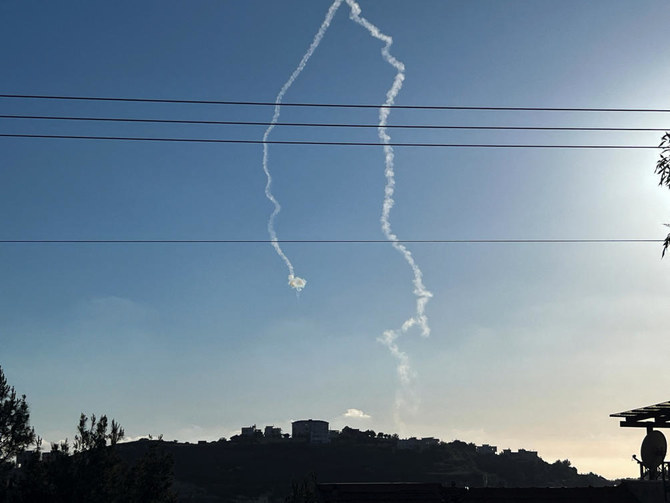
Residents of the Fnaidek area in Akkar, northern Lebanon, reported the fall of a rocket during Israeli raids. It is unclear whether the rocket was interceptive or dropped by Israeli aircraft. The explosion destroyed a building under construction and did not result in any human casualties.
Israeli Army spokesperson Avichay Adraee stated that the airstrikes were “in response to Hezbollah’s downing of an Israeli drone that was operating in Lebanese airspace yesterday.”
The raids targeted “a military complex belonging to Unit 4400, which enhances Hezbollah’s logistical capabilities and aims to transport weapons into Lebanon and within it.”