JERUSALEM: Israel’s parliament moved ahead with a contentious law on conscripting ultra-Orthodox religious students into the military amid angry scenes on Monday in the Knesset as families of some of the Gaza hostages demanded more action to get them home.
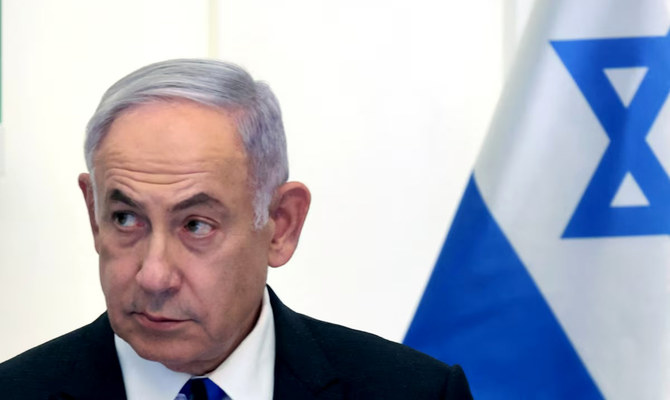
Coming a day after centrist former general Benny Gantz quit the government in a dispute over the strategic aims of the Gaza war, the vote and confrontations underscored the volatile mix of forces buffeting Prime Minister Benjamin Netanyahu, now increasingly dependent on his allies from the hard right.
The conscription bill, which must still pass further readings and committee hearings after the late night vote, would see a gradual entry into the military of some ultra-Orthdox Jews, who have traditionally resisted serving in the armed forces.
Although originally put forward by Gantz in 2022 under the previous government, he now opposes the measure, which he says is inadequate for new personnel demands facing the military.
Defense Minister Yoav Gallant, the last of a group of former generals left following the departure of Gantz and his ally, former army chief Gadi Eisenkot, broke ranks and voted against the bill.
By contrast, the religious parties in the coalition, which have strongly opposed a general expansion of conscription, gave their support, with a view to inserting changes in the review stage.
While the proposal is for more ultra-Orthodox in the military, their numbers would be restricted and the bill would allow some alternatives to military service.
“We have a great opportunity that should not be missed. The ultra-Orthodox public must not be pushed into a corner,” Finance Minister Bezalel Smotrich, leader of one of the pro-settler parties in the coalition, said in a statement.
The issue of lifting some of the restrictions on conscripting ultra-Orthodox men into the military has been a divisive issue for decades in a country where broad military service has been seen as one of the bedrocks of its security.
Resented by many secular Israelis, it has been more sensitive than ever since the start of the war in Gaza, in which more than 600 Israeli soldiers have been killed.
“There are those who supported it then and oppose it now because they see it as wrong for Israel now, and there are those who opposed it then and will support it now because they see an opportunity to change it,” Assaf Shapira, head of the political reform program at the Israel Democracy Institute, told Reuters.
As parliament prepared to vote on the bill, there were angry exchanges at a meeting of the finance committee, where members of some of the hostage families waylaid Smotrich and demanded the government do more to bring the captives home.
Inbal Tzach, whose cousin Tal Shoham was one of the 253 Israeli and foreign hostages abducted by Hamas gunmen as they rampaged through the communities near Gaza on Oct. 7, said ministers such as Smotrich needed to do everything to get the remaining 120 hostages back.
Smotrich, who has ruled out any deal with Hamas and has opposed proposals for a ceasefire deal which would bring the hostages back in an exchange for Palestinian prisoners, dismissed the families’ campaign as cynical.
“I will not endanger the State of Israel and its people,” he said. “I will not stop the war just before the destruction of Hamas, because this an existential danger to Israel.”


![]()

Angry scenes as Israeli parliament votes on conscription law
Short Url
https://arab.news/6eyyc
Angry scenes as Israeli parliament votes on conscription law
- The issue of lifting some of the restrictions on conscripting ultra-Orthodox men into the military has been a divisive issue for decades in a country


Latest updates


© 2026 SAUDI RESEARCH & PUBLISHING COMPANY, All Rights Reserved And subject to Terms of Use Agreement.