

Saudi Arabia’s entertainment scene set to make a splash with aquaparks

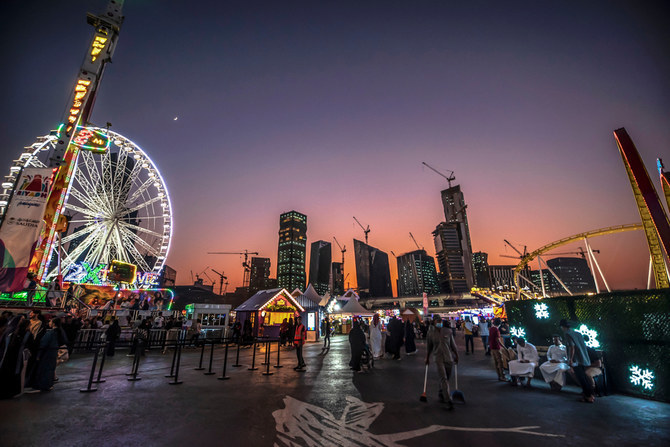
Saudi Arabia’s entertainment sector has seen exponential growth, with the number of companies skyrocketing to 4,000 from fewer than 10 since the inception of Vision 2030, according to a senior official. Shutterstock
Short Url
Updated 09 June 2024
Follow

Saudi Arabia’s entertainment scene set to make a splash with aquaparks

RIYADH: Saudi Arabia is gearing up to introduce a host of new entertainment and aquatic parks as the Ministry of Investment partners with Nowaar Entertainment, with the first park slated to open its doors in Riyadh in 2025.

In collaboration with the General Entertainment Authority, MISA signed an agreement on Sunday with Nawaar Entertainment to develop entertainment and splash parks across the country, with Riyadh being the inaugural location set to launch in 2025.

Saudi Arabia’s entertainment sector has seen exponential growth, with the number of companies skyrocketing to 4,000 from fewer than 10 since the inception of Vision 2030, according to a senior official.

Speaking at the Saudi Media Forum in Riyadh on Feb. 21, GEA CEO Faisal Bafarat revealed that the industry has already generated over 150,000 local jobs since the Kingdom embarked on its economic diversification initiative in 2016.

Bafarat emphasized the significance of fostering high competitiveness among various business sectors to introduce innovative forms of entertainment, which are now attracting increased investment in the Kingdom, as reported by the Saudi Press Agency.

Reports also indicated the organization’s efforts toward developing entertainment options tailored to the diverse needs of people from all walks of life in the Kingdom.

Meanwhile, MISA inked several agreements with Japan during the Seventh Ministerial Meeting of the Saudi-Japan Vision 2030, held in Riyadh in December 2023.

Chaired by Saudi Minister of Investment Khalid Al-Falih alongside the Japanese Minister of Economy, Trade and Industry, Ken Saito, and the Japanese Vice-Minister for Foreign Affairs, Fukazawa Yoichi, the event witnessed the signing of 13 agreements and memorandums of understanding with Japanese entities and companies.

Among the highlights were three significant projects in construction technology, tourism, and entertainment.

Through dialogue sessions, the meeting also shed light on promising partnership opportunities in implementing mega projects in the Kingdom, including NEOM, the Red Sea, and Qiddiya.

Saudi Arabia’s Vision 2030 is spearheading targeted support measures for the entertainment sector, aiming to contribute over $23 billion, equivalent to 3 percent of GDP, and create more than 100,000 jobs by 2030. Additionally, a $64 billion investment plan is in place to further bolster the sector’s growth.


Saudi Arabia’s foreign reserves rise to a 6-year high of $475bn

Updated 22 February 2026
Follow

Saudi Arabia’s foreign reserves rise to a 6-year high of $475bn

RIYADH: Saudi Arabia’s foreign reserves climbed 3 percent month on month in January to SR1.78 trillion, up SR58.7 billion ($15.6 billion) from December and marking a six-year high.

On an annual basis, the Saudi Central Bank’s net foreign assets rose by 10 percent, equivalent to SR155.8 billion, according to data from the Saudi Central Bank, Argaam reported.

The reserve assets, a crucial indicator of economic stability and external financial strength, comprise several key components.

According to the central bank, also known as SAMA, the Kingdom’s reserves include foreign securities, foreign currency, and bank deposits, as well as its reserve position at the International Monetary Fund, Special Drawing Rights, and monetary gold.

The rise in reserves underscores the strength and liquidity of the Kingdom’s financial position and aligns with Saudi Arabia’s goal of strengthening its financial safety net as it advances economic diversification under Vision 2030.

The value of foreign currency reserves, which represent approximately 95 percent of the total holdings, increased by about 10 percent during January 2026 compared to the same month in 2025, reaching SR1.68 trillion.

The value of the reserve at the IMF increased by 9 percent to reach SR13.1 billion.

Meanwhile, SDRs rose by 5 percent during the period to reach SR80.5 billion.

The Kingdom’s gold reserves remained stable at SR1.62 billion, the same level it has maintained since January 2008.

Saudi Arabia’s foreign reserve assets saw a monthly rise of 5 percent in November, climbing to SR1.74 trillion, according to the Kingdom’s central bank.

Overall, the continued advancement in reserve assets highlights the strength of Saudi Arabia’s fiscal and monetary buffers. These resources support the national currency, help maintain financial system stability, and enhance the country’s ability to navigate global economic volatility.

The sustained accumulation of foreign reserves is a critical pillar of the Kingdom’s economic stability. It directly reinforces investor confidence in the riyal’s peg to the US dollar, a foundational monetary policy, by providing SAMA with ample resources to defend the currency if needed.

Furthermore, this financial buffer enhances the nation’s sovereign credit profile, lowers national borrowing costs, and provides essential fiscal space to navigate global economic volatility while continuing to fund its ambitious Vision 2030 transformation agenda.