VIRGINIA, USA: A federal appeals court upheld the conviction Friday of a British national for his role in a hostage-taking scheme by Daesh group that took roughly two dozen Westerners captive a decade ago.
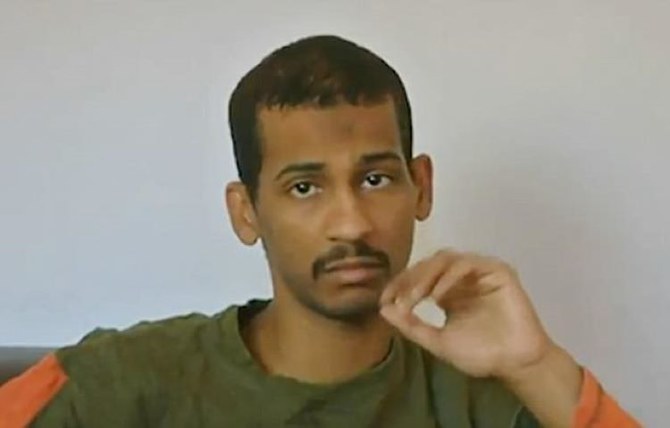
El Shafee Elsheikh was convicted and sentenced to life in prison in 2022 in federal court in Alexandria, Virginia. His jury trial established that he was one he was one of the notorious “Beatles,” captors nicknamed for their accents and known for torturing and beating prisoners.
Elsheikh appealed his conviction. He argued that confessions he gave in media interviews after his capture in 2018 should have been tossed out of court. He alleged that the Kurdish-led Syrian Defense Forces tortured him and forced him to conduct the interviews.
Elsheikh’s lawyers also argued that FBI interviews of him while he was in foreign custody violated his constitutional rights. Elsheikh said he was confused by the process, in which he was initially interrogated by investigators with the Department of Defense who did not read him his rights and used the information to gather intelligence.
He was later questioned by FBI agents who did read him his rights and told him that anything he said going forward could be used against him in court.
In both cases, a unanimous three-judge panel of the 4th US Circuit Court of Appeals in Richmond ruled against Elsheikh. The judges said the evidence did not support his contention that he was beaten or tortured. And the judges ruled that interrogators followed proper procedures in their two-step interrogation process to inform Elsheikh of his rights.
Elsheikh was one of two “Beatles” brought to the US to face trial. The United Kingdom agreed to the extradition and provided intelligence and evidence to assist with the prosecution after the US promised it would not seek the death penalty.
The other Beatle who faced trial, Alexanda Kotey, pleaded guilty under a deal that provided a possibility he could, after 15 years, serve the remainder of his life sentence in the United Kingdom.
Elsheikh’s convictions revolved around the deaths of four American hostages: James Foley, Steven Sotloff, Peter Kassig and Kayla Mueller. All but Mueller were executed in videotaped beheadings circulated online. Mueller was forced into slavery and raped multiple times by Daesh leader Abu Bakr Al-Baghdadi before she was killed.
They were among 26 hostages taken captive between 2012 and 2015, when the Daesh group controlled large swaths of Iraq and Syria.

Appeals court upholds conviction of British national linked to Daesh
Short Url
https://arab.news/gxacp
Appeals court upholds conviction of British national linked to Daesh
- He argued that confessions he gave in media interviews after his capture in 2018 should have been tossed out of court
- Elsheikh’s lawyers also argued that FBI interviews of him while he was in foreign custody violated his constitutional rights
Nepal’s rapper-turned-mayor challenges ousted PM
Katmandu: Nepal’s rapper-turned-politician Balendra Shah will go into a head-to-head election battle with the veteran prime minister he helped unseat, as he champions youth demands that toppled last year’s government.
The 35-year-old resigned last week as mayor of Katmandu to contest general elections, announcing Tuesday that he will directly challenge ousted prime minister KP Sharma Oli by running in the same constituency.
Nepal will hold general elections on March 5, the first since mass anti-corruption protests in September 2025 overthrew Oli, a 73-year-old Marxist leader and four-term prime minister.
“Contesting against a major figure... signals that I am not taking the easy way out,” Shah told AFP, ahead of his formal confirmation of candidacy.
“It demonstrates that, despite the problems or betrayals that have affected the country, we are moving toward addressing them,” he added.
Better known as Balen, the former mayor arrived for the interview at a Katmandu hotel dressed in black and wearing a traditional Nepali hat or “topi,” though he was without his trademark dark square sunglasses.
His hip-hop songs tackling corruption and inequality have drawn millions of views.
A civil engineer and rapper before joining politics, Shah stunned the political establishment in 2022 when he became the first independent candidate to be elected as Katmandu mayor.
He built a reputation as a sharp-tongued reformer, launching campaigns targeting tax evasion, traffic congestion, education and city waste.
Shah’s approach, however, drew criticism for heavy-handed enforcement and for communicating directly with his millions of social media followers rather than engaging with journalists.
“We made many processes that operated through informal arrangements transparent, through open procurement,” he said.
- ‘Ripple effect’ -
In December, Shah joined the centrist Rastriya Swatantra Party (RSP), led by television host Rabi Lamichhane, 50.
RSP, which became parliament’s fourth-largest force in the last elections in 2022, challenged parties that had dominated Nepal since the end of its civil war in 2006.
If the RSP secures a parliamentary majority, Shah would become prime minister.
“We share the same ideology,” Shah said, describing a vision of “a liberal economic system with social justice,” including free education and health care for the poor.
Rather than contesting from his Katmandu base, Shah will challenge Oli in his stronghold of Jhapa-5, a largely rural district 300 kilometers (185 miles) southeast of Katmandu.
“This should not be perceived as an egoistic decision,” Shah said. “The ripple effect would simply be greater if I contest from Jhapa.”
The September 8-9 demonstrations were initially triggered by anger over a brief government ban on major social media platforms, with protesters gathered under a loose “Gen Z” banner.
But deeper grievances — economic stagnation and entrenched corruption — fueled the unrest in the country of 30 million, in which at least 77 people were killed.
- ‘Grow our economy’ -
Shah backed the protests while urging restraint, emerging as a central figure in the movement.
“Gen Z’s number one demand is good governance, because there is a high level of corruption in the country,” he said, adding that his party had drawn on protesters for support.
“The Gen Z protest has opened a door — 40 percent of our central committee members and proportional representatives are new faces who emerged from the September protest,” he said.
Young Nepalis are looking for leaders promising economic reform. The World Bank estimates 82 percent of Nepal’s workforce is in informal employment, with GDP per capita at $1,447 in 2024.
“We need to grow our economy,” Shah said, citing tourism, trade and skilled jobs as ways to stem the mass outflow of workers.
Landlocked Nepal, wedged between regional giants India and China, faces geopolitical pressures, but Shah sees an opportunity to make Nepal a trade hub.
“My approach is to maintain a natural relationship with both neighboring nations,” he said.
And while focused on politics, he said that music remains central to his identity.
“Music is a medium to express oneself,” he said. “I will continue it, even if I am elected as prime minister.”
The 35-year-old resigned last week as mayor of Katmandu to contest general elections, announcing Tuesday that he will directly challenge ousted prime minister KP Sharma Oli by running in the same constituency.
Nepal will hold general elections on March 5, the first since mass anti-corruption protests in September 2025 overthrew Oli, a 73-year-old Marxist leader and four-term prime minister.
“Contesting against a major figure... signals that I am not taking the easy way out,” Shah told AFP, ahead of his formal confirmation of candidacy.
“It demonstrates that, despite the problems or betrayals that have affected the country, we are moving toward addressing them,” he added.
Better known as Balen, the former mayor arrived for the interview at a Katmandu hotel dressed in black and wearing a traditional Nepali hat or “topi,” though he was without his trademark dark square sunglasses.
His hip-hop songs tackling corruption and inequality have drawn millions of views.
A civil engineer and rapper before joining politics, Shah stunned the political establishment in 2022 when he became the first independent candidate to be elected as Katmandu mayor.
He built a reputation as a sharp-tongued reformer, launching campaigns targeting tax evasion, traffic congestion, education and city waste.
Shah’s approach, however, drew criticism for heavy-handed enforcement and for communicating directly with his millions of social media followers rather than engaging with journalists.
“We made many processes that operated through informal arrangements transparent, through open procurement,” he said.
- ‘Ripple effect’ -
In December, Shah joined the centrist Rastriya Swatantra Party (RSP), led by television host Rabi Lamichhane, 50.
RSP, which became parliament’s fourth-largest force in the last elections in 2022, challenged parties that had dominated Nepal since the end of its civil war in 2006.
If the RSP secures a parliamentary majority, Shah would become prime minister.
“We share the same ideology,” Shah said, describing a vision of “a liberal economic system with social justice,” including free education and health care for the poor.
Rather than contesting from his Katmandu base, Shah will challenge Oli in his stronghold of Jhapa-5, a largely rural district 300 kilometers (185 miles) southeast of Katmandu.
“This should not be perceived as an egoistic decision,” Shah said. “The ripple effect would simply be greater if I contest from Jhapa.”
The September 8-9 demonstrations were initially triggered by anger over a brief government ban on major social media platforms, with protesters gathered under a loose “Gen Z” banner.
But deeper grievances — economic stagnation and entrenched corruption — fueled the unrest in the country of 30 million, in which at least 77 people were killed.
- ‘Grow our economy’ -
Shah backed the protests while urging restraint, emerging as a central figure in the movement.
“Gen Z’s number one demand is good governance, because there is a high level of corruption in the country,” he said, adding that his party had drawn on protesters for support.
“The Gen Z protest has opened a door — 40 percent of our central committee members and proportional representatives are new faces who emerged from the September protest,” he said.
Young Nepalis are looking for leaders promising economic reform. The World Bank estimates 82 percent of Nepal’s workforce is in informal employment, with GDP per capita at $1,447 in 2024.
“We need to grow our economy,” Shah said, citing tourism, trade and skilled jobs as ways to stem the mass outflow of workers.
Landlocked Nepal, wedged between regional giants India and China, faces geopolitical pressures, but Shah sees an opportunity to make Nepal a trade hub.
“My approach is to maintain a natural relationship with both neighboring nations,” he said.
And while focused on politics, he said that music remains central to his identity.
“Music is a medium to express oneself,” he said. “I will continue it, even if I am elected as prime minister.”
© 2026 SAUDI RESEARCH & PUBLISHING COMPANY, All Rights Reserved And subject to Terms of Use Agreement.


