Three policemen killed in fresh bout of militant violence in northwest Pakistan

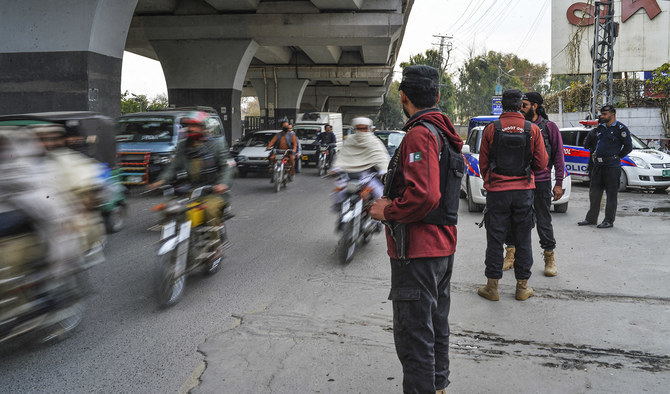
Policemen stand guard along a street a day after a mosque suicide blast inside a police headquarters in Peshawar, Pakistan on February 1, 2023. (AFP/File)
Short Url
Updated 07 June 2024
Follow

Three policemen killed in fresh bout of militant violence in northwest Pakistan

  • The policemen were shot dead in separate incidents in Lakki Marwat and Bajaur districts of Khyber Pakhtunkhwa province
  • The deaths have brought the total number of police killings in ambushes and targeted attacks in the province to 59 this year

PESHAWAR: At least three policemen have been killed in separate attacks in Pakistan's northwestern Khyber Pakhtunkhwa province in the last two days, police officials said on Friday, amid a fresh bout of violence in the militancy-hit northwestern Pakistani region that borders Afghanistan.

In the latest incident, unidentified gunmen riding motorbikes shot an official of the Counter-Terrorism Department (CTD) in the Lakki Marwat district late Thursday, according to police spokesman Shahid Marwat.

The official was killed on the spot and the assailants managed to get away from the scene.

“CTD police officer Wahid Khan was martyred in an attack by unidentified terrorists in the jurisdiction of Nawrang police station,” Marwat told Arab News.

Earlier on Thursday, he said, a Levies paramilitary force official, Sharif Ullah, was shot dead in Tajazai, a dusty town on the outskirts of Lakki Marwat.

“Police are investigating whether it was a case of personal enmity or an act of militants,” the spokesman said.

Gunmen also killed a police constable in the Inayat Kallay bazaar of the Bajaur tribal district this week, police official Jaffar Khan told Arab News.

The deaths have brought the total number of police killings in ambushes and targeted attacks in the province to 59 this year.

While no group immediately claimed responsibility for the killings, suspicion is likely to fall on the Tehreek-e-Taliban Pakistan (TTP), which has claimed dozens of recent attacks in the country’s militancy-prone northwest.

Pakistan has witnessed a renewed surge in militant violence in its two western provinces, KP and Balochistan, since the TTP called off its fragile truce with the government in November 2022.

Last Wednesday, unidentified gunmen killed a police official providing security to a polio team in Peshawar, the capital of the province.

A senior police officer told Arab News last week that more than 200 of his colleagues had been killed in targeted attacks in the last two years.

In May, gunmen shot dead a policeman in the restive North Waziristan tribal district, while six people, including five officials of the customs department, were killed and another was wounded when gunmen opened fire on their vehicle in the southern Dera Ismail Khan district of the province.

Pakistan has blamed the surge in violence on militants operating out of the neighboring Afghanistan. Kabul denies the allegation and says rising violence in Pakistan is a domestic issue of Islamabad.

Pakistan says 177 militants killed in Balochistan counteroffensive after wave of attacks

Updated 7 sec ago
Follow

Pakistan says 177 militants killed in Balochistan counteroffensive after wave of attacks

  • Authorities say coordinated attacks last weekend killed 31 civilians, 17 security personnel
  • Separatist BLA group claimed responsibility as operations expanded across multiple districts

ISLAMABAD: Pakistan’s security forces have killed 22 more militants in overnight counteroffensive operations in the southwestern province of Balochistan, state media reported on Monday, taking the total number of insurgents killed over the past three days to 177 following a wave of coordinated separatist attacks.

Militants launched simultaneous assaults across multiple districts in Balochistan on Friday and Saturday, targeting security installations and government facilities. The attacks marked one of the deadliest escalations in recent years in the resource-rich but restive province, with at least 31 civilians and 17 members of law enforcement agencies killed.

The banned separatist group, the Baloch Liberation Army, claimed responsibility for the attacks, saying it had launched a coordinated operation dubbed Herof, or “black storm,” targeting security forces across the province. The assault included pre-dawn strikes on high-security installations in the cities of Quetta, Gwadar, Dalbandin, Pasni, Nushki, Kalat, Turbat and Mastung.

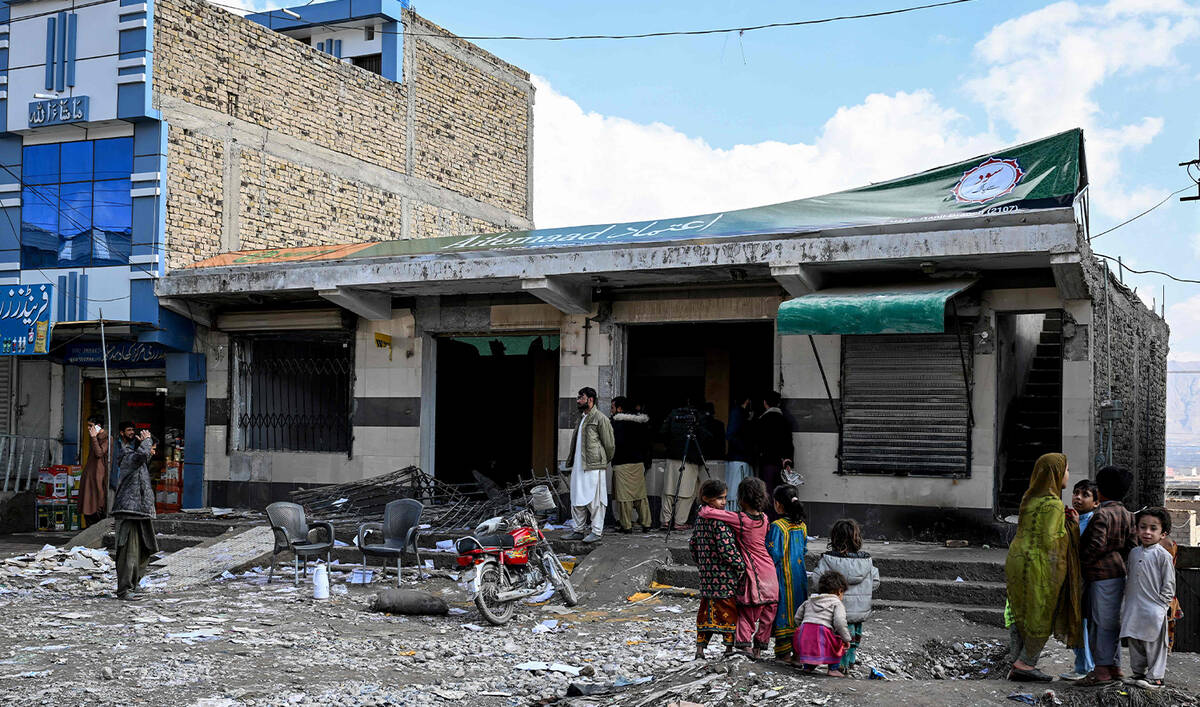
Local residents look at a damaged bank on the outskirts of Quetta on February 1, 2026 a day after an attack by Baloch separatists. (AFP)

On Monday, state broadcaster Radio Pakistan said security forces carried out the latest “sanitization operations” against what it described as “Fitna-al-Hindustan” in Balochistan late Sunday night. Pakistan’s military and civilian authorities use the term to describe separatist militants in the province whom Islamabad alleges are supported by India, a charge New Delhi denies.

“According to security sources, 22 more terrorists were killed last night during pursuit operations,” Radio Pakistan said. “At least 177 terrorists have been eliminated in the operations conducted over the last three days.”

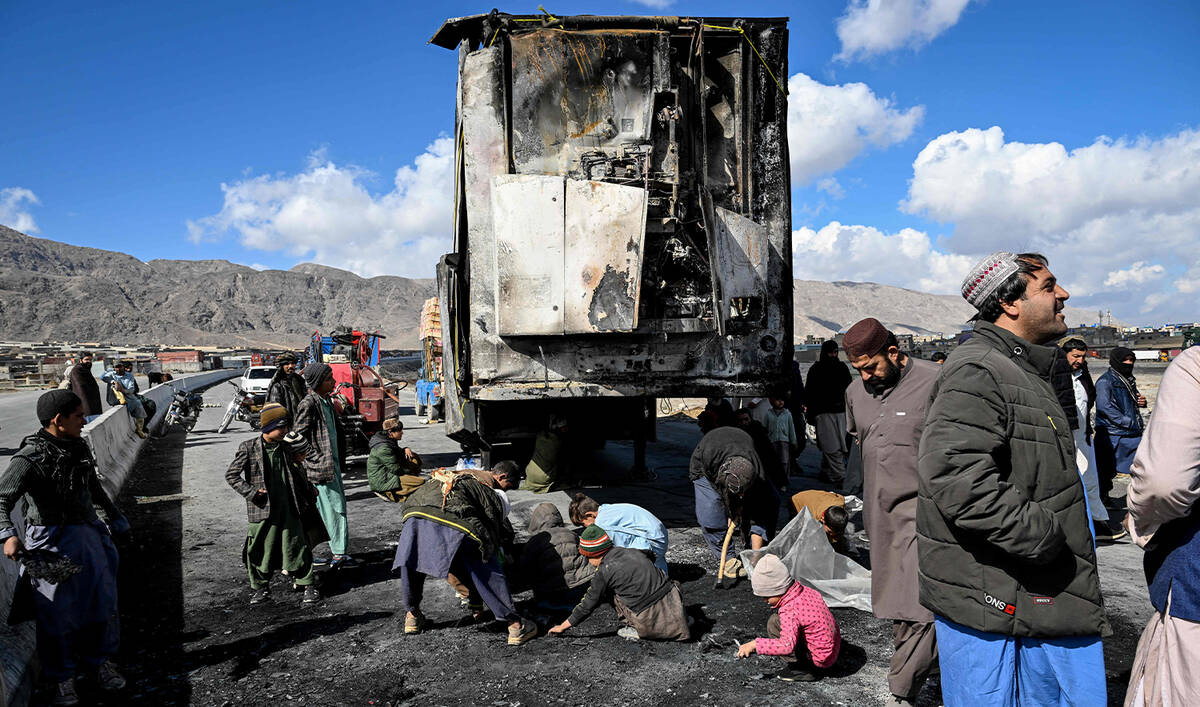
People gather as others collect recyclable items beside a burnt vehicle along a road on the outskirts of Quetta on February 1, 2026 a day after an attack by Baloch separatists. (AFP)

Balochistan, Pakistan’s largest province by area, has long been gripped by a separatist insurgency that has intensified in recent years. Militants frequently target security forces, government officials, infrastructure projects, foreigners and non-local workers.

Balochistan is strategically significant for Pakistan due to its vast reserves of minerals and hydrocarbons and its role as a transit hub for the multibillion-dollar China-Pakistan Economic Corridor (CPEC), a flagship component of China’s Belt and Road Initiative. The province is home to the deep-sea Gwadar Port on the Arabian Sea, which Islamabad views as critical to regional trade and energy routes linking China, Central Asia and the Middle East. 

Local residents look at a damaged bank on the outskirts of Quetta on February 1, 2026, a day after an attack by Baloch separatists. (AFP)

Separatist groups accuse the central government of exploiting the province’s natural resources while neglecting local communities. Islamabad rejects the allegations, saying it is investing in development and security to stabilize the province.