RIYADH: Unless company executives adopt artificial intelligence technologies now, they will soon find themselves outmoded and driven out of business by their competitors, a Saudi AI consultant has warned.
Mohammed Alqarni, an academic, AI-for-business consultant, and CEO of the Saudi AI consultancy firm Foresighted, believes it is important for businesses to begin experimenting with AI right away, otherwise they will quickly fall behind their more nimble rivals.
“AI will not replace your job — someone using AI will replace your job,” Alqarni told Arab News.
Working with top executives, Foresighted aims to enhance understanding of AI’s advantages and limitations, propel the development of innovative business models, and integrate AI technologies into business plans.
“One of the main philosophies that we have is: No one understands the business more than the business people themselves,” Alqarni said. “We teach them what AI can do and what AI can’t do because AI can’t do everything.”


Alqarni is developing a “generative AI organizational transformation framework,” which will consider key impact areas of AI, including the impact of automation on various jobs — including top managerial positions.
“A very interesting insight we found was that the higher the skill needed, the more AI impact will have,” said Alqarni.
“Initial analysis revealed that if you are in a managerial position, AI will impact your job more, and this makes a lot of sense, because your main tasks are reviewing documents, and doing strategic level work, and that is heavily data-driven, so AI will help you a lot.
“The lower you go, to the more operational tasks, the impact of AI reduces, because it is usually manual work.”
For many in the business world, AI is still just a trendy buzzword that is not fully understood. Alqarni believes bosses cannot afford to be complacent about the tectonic shifts already underway.

For Mohammed Alqarni, CEO of the Saudi AI consultancy firm Foresighted, the sooner business executives learn or get themselves familiar with AI, the better for their careers and businesses. (Shutterstock)
Asked about the possible repercussions that executives and companies will face if they fail to utilize AI, Alqarni is unequivocal: “They will be out of business.”
He added: “As I said, AI is no longer an option. It’s your only defense against creative destruction. If you do not change, someone else will force you to change or you will be out of business. The sooner you start, the better you are.”
To avoid falling behind, Alqarni says business leaders should start experimenting with AI right away and encourage their employees to start utilizing it in their work. “I am not saying deploy AI today,” he said. “All I’m asking is, start experimenting today.”
One of the biggest challenges executives cite for avoiding AI uptake is that they are “too busy” and lack the time to experiment. However, Alqarni says business chiefs “need to create a culture of innovation, a culture of experimentation in order to utilize AI in the best way.”

AI consultant Mohammed Alqarni says the transition could be painful, but believes it is wrong to bury one’s head in the sand. (Shutterstock image)
Some are likely putting off AI adoption, fearful that it could make many human jobs obsolete. Alqarni acknowledges the transition could be painful, but believes it is wrong to bury one’s head in the sand.
“The way I think about it, when it comes to AI and unemployment — because this is the ultimate fear at a government level — AI will definitely eliminate jobs, but it will also change some jobs, and at the same time it will create more jobs,” he said.
“The question is not about whether AI will eliminate jobs or not. It’s about how many jobs will be created and how many jobs will be eliminated and how many jobs will be changed.”
Drawing parallels with the industrial revolution of the 18th and 19th centuries, when large, steam-driven factories destroyed many traditional cottage industries and artisan crafts, Alqarni said the job market eventually “balanced out” as more roles were created.
Likewise, he believes the employment landscape will adjust to the rhythms of the AI age. “My only concern is the speed at which this has happened,” said Alqarni. “I think we will feel it stronger with AI because the development is much faster.
“For you to build a factory, it will take years. To build a model AI agent that could replace human beings could happen in a couple of days.
“It is not black and white when it comes to job creation and job elimination, but it is a scale. There will be jobs that are lost, transitioned, changed, as well as job creation.”
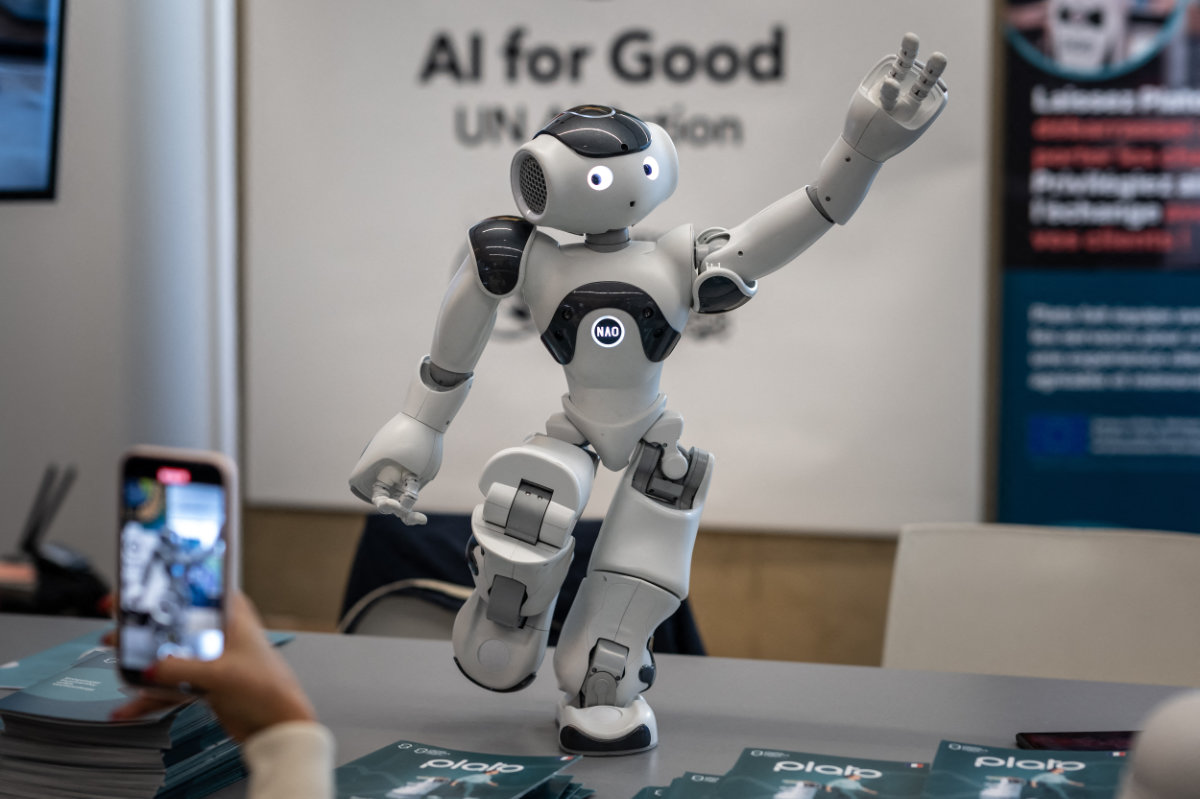
The best way to guarantee job security is through re-skilling the workforce, says AI consultant Mohammed Alqarni. (AP/File photo)
For Alqarni, the best way to guarantee job security during this turbulent transition, therefore, is through re-skilling the workforce.
“People that are losing their job will need to be re-skilled, given relevant skills that are needed in the market,” he said. “For jobs that are being changed, it is a matter of up-skilling.”
Alqarni believes Saudi Arabia should prepare young workers for a rapidly changing job market.
“Vision 2030 programs tasked with such planning should consider AI’s impact on jobs in the near and far future,” he said.
“This would ensure that job creation matches the required demand. This is a crucial consideration that is not being considered enough.”