KARACHI: Karachi’s premier business chamber on Tuesday urged the government to slash high energy costs and reduce taxes on items prone to smuggling in its budgetary proposals, days before Pakistan is expected to unveil the annual federal budget for the upcoming fiscal year.
Pakistan, a country of over 241 million people, is desperately trying to avert a macroeconomic crisis by securing external financing. The South Asian country has significantly hiked food and fuel prices since 2022 in exchange for bailout programs from the International Monetary Fund (IMF). The price hikes have also spiked the cost of production, causing Pakistani exports to become costlier than those offered by regional competitors and hampering the country’s industrial growth.
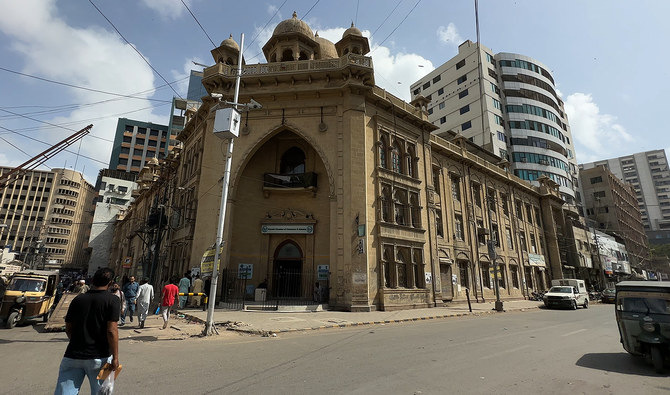
The Karachi Chamber of Commerce & Industry (KCCI) represents the business and industrial community of Karachi, Pakistan’s financial hub, which contributes over 65 percent of revenue to the national exchequer. The KCCI says it is considered among the top 10 largest chambers of commerce and industry across the world in terms of its membership base.
Through its budget proposals for the upcoming fiscal year, the KCCI has invited the government’s attention toward key challenges tha industrialists and traders in Pakistan are facing.
“We have asked the government that the industry, particularly SMEs [small and medium-sized enterprises], is facing significant challenges,” Iftikhar Ahmed Sheikh, the KCCI’s president, told Arab News. “It is essential to control the prices of electricity and gas for their survival.”
The budget was originally due to be presented on June 7 but was delayed because of Prime Minister Shehbaz Sharif’s Beijing visit from June 4-8, two sources with knowledge of the development, told Arab News last week.
Sheikh said Pakistani manufacturers and exporters, reeling from high energy costs, are facing tough competition in the global market from their regional competitors.
“Their prices range between 4 to 8 cents whereas ours are above 18 cents,” Sheikh explained. “With electricity costing eighteen cents, how can we manufacture and compete with countries where the cost is only four to eight cents?“
Sheikh said his chamber has urged the government in its budget proposals to stop revenue pilferages by reducing tax burdens.
“We have addressed all factors related to revenue leakage in the budget proposals,” Sheikh said. “We have urged the government that rather than imposing new taxes, it would be more beneficial to plug these leakages which will increase our revenue,” the KCCI president said, referring to the increase in smuggling of certain items.
The KCCI’s budget proposals include reducing taxes on high duty items and those prone to smuggling. The chamber has assured the government that lowering taxes will discourage smuggling and increase imports through legal channels, enhancing tax collection in return.
Demanding a decrease in custom duties, withholding taxes and various other taxes, the KCCI also demanded that the rate of sales tax on industrial machinery should be lowered to zero. This, the chamber said, would trigger industrialization and lead to job creation.
Pakistan’s bid to secure another long-term loan from the IMF has seen the country increase energy tariffs and bring about tax reforms that fueled inflation in the country.
However, Sheikh said the KCCI is opposing the imposition of new taxes as people are already overburdened by them.
“People are suffering due to inflation, so our first target is that no new tax should be imposed and the IMF doesn’t say you should impose new taxes or that you should impose tax on the existing tax,” he clarified.


![]()

Karachi’s premier business chamber urges government to slash energy costs, taxes for industrial growth
Short Url
https://arab.news/wencf
Karachi’s premier business chamber urges government to slash energy costs, taxes for industrial growth
- High energy costs rendering Pakistani exports uncompetitive, says Karachi Chamber of Commerce and Industry president
- KCCI opposes imposition of new taxes in upcoming budget, says people are already reeling from effects of high inflation
Latest updates






© 2026 SAUDI RESEARCH & PUBLISHING COMPANY, All Rights Reserved And subject to Terms of Use Agreement.