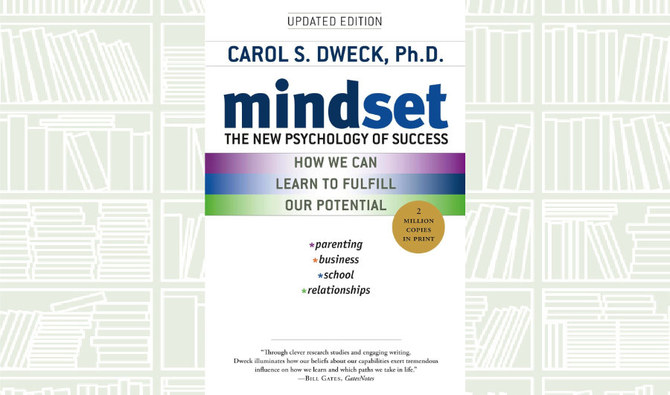

Have you ever had feelings of inadequacy, even after accomplishing something remarkable? Or perhaps you avoid taking on new difficulties out of a worry that failing will reveal your deception. If so, you may benefit from Carol Dweck’s “Mindset: The New Psychology of Success.”
A renowned psychologist, Dweck unveils the groundbreaking idea of fixed vs. growth mindsets. Fixed mindsets believe intelligence and talent are set in stone. Growth mindsets, on the other hand, view them as muscles that can be strengthened through effort and learning.
Imagine yourself struggling with a new skill. A fixed mindset whispers, “See, you’re not good at this.” A growth mindset roars back: “This is tough, but I’m learning and getting better every day!“
Dweck’s book is not just theory. It is packed with real-world examples, from classrooms to CEOs. She demonstrates how embracing a growth mindset can transform students from giving up easily to persevering and thriving.
“Mindset” is for anyone who wants to unlock their full potential. Dweck equips the reader with the tools to reframe setbacks as stepping stones. Instead of dwelling on “I can’t,” you can learn to say, “I can’t yet.” This simple shift in perspective can be a game-changer.
This book is about ditching the drama of fixed mindsets and embracing the “yet” of growth. It is about realizing that your potential is limitless, and the only thing holding you back is the story you tell yourself.