Heatstroke cases rise in Multan as Pakistan bakes under blistering heat wave

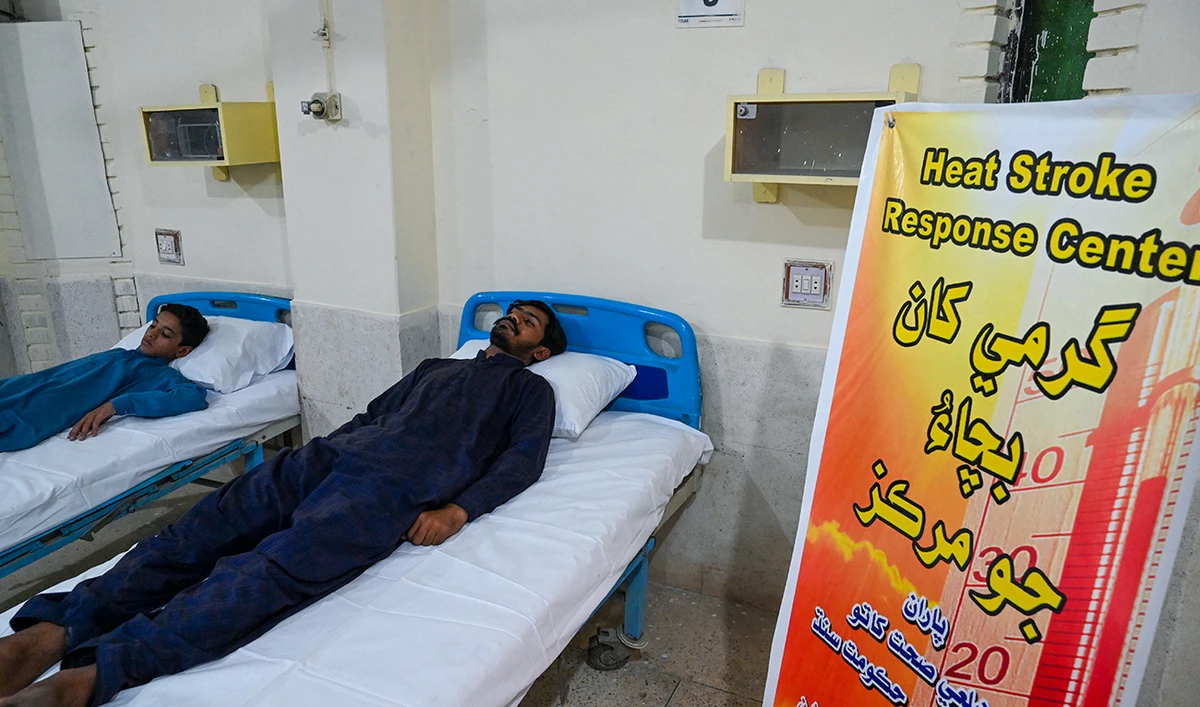
In this picture taken on May 11, 2022, patients suffering from heat stroke are treated at a hospital in Jacobabad, in the southern Sindh province. (AFP/File)
Short Url
Updated 01 June 2024
Follow

Heatstroke cases rise in Multan as Pakistan bakes under blistering heat wave

  • Doctors at Nishtar Hospital say increasing number of patients coming in with heatstroke, dehydration and diarrhea
  • Pakistan saw temperatures surge past 50 degrees Celsius recently as heat wave grips Pakistan and India

ISLAMABAD: The temperature in a small, enclosed room in Multan’s Nishtar Hospital is cooler than the temperature outside as three patients infused with an intravenous drip lay on beds and a round water cooler with the words “ORS,” meaning oral rehydration solution, sits at a table in the room.
This is the scene at the heat wave “bay,” a separate unit at the largest public hospital in the city, that is dedicated to heat stroke patients. The 1000-bed hospital, which has been functioning since 1953, has allocated two rooms of its Emergency Ward for patients who come in with cases of dehydration, high blood pressure, diarrhea and other risks associated with a heat stroke.
The initiative was taken after the Pakistan Meteorological Department (PMD) warned of multiple heat waves in the country till June. Parts of Pakistan have seen temperatures as high as 52.2 degrees Celsius (126°F) over the last week as South Asia swelters in a hot summer — a trend scientists say has been worsened by human-driven climate change.
“Definitely there are heat stroke patients coming in here at Nishtar Hospital,” Medical Superintendent Dr. Muhammad Kazim Khan told Arab News on Friday. “There are daily two to three heat stroke patients.”
The hospital has also been treating patients for dehydration, hypertension and other similar problems in recent weeks.
Khan said the hospital’s “heat stroke rooms” were equipped with central air conditioning, with patients having access to all medicines and ORS, a solution of water, salts and sugar to replenish electrolytes lost through dehydration.
In case of a heat stroke, patients spend up to eight hours at the facility before being discharged upon the physician’s advice, according to the medical superintendent.
“Otherwise, if they suffer any complications, then we shift them to a ward where after spending a day or two, they are again discharged,” he said.
Muhammad Mazhar, 50, said he sought treatment at the hospital Thursday night after suffering from diarrhea and vomiting. He was put on a drip and discharged after his condition improved, only to find the symptoms worsened on Friday.
“I came here again an hour ago and have been put on a drip again,” Mazhar told Arab News. “Right now, I am feeling better.”
Aamna Bibi, 45, was shifted to the hospital after she complained of stomach pain.
“I have been sick for the past five years,” she said. “I faint [whenever the heat gets too much] and I am also a heart patient and I also have diabetes.”
Mazhar said the weather in Multan had become “unbearable.”
“The heat in Multan is severe,” Mazhar said. “When a person goes out, it feels as if he is stepping on coals.”
Khan urged people to be careful during heat waves, advising them to avoid venturing outdoors unnecessarily and stay hydrated at all times by increasingly consuming water and juices.
Diabetes, heart diseases and respiratory illnesses, associated with heat stroke, could become “very dangerous” for patients during a heat wave, he warned.
“If we don’t get a season of rainfall and the temperature continues to remain this high, then no doubt there can be a lot of disaster,” the official said.
“And there may be chances of heat wave patients increasing.”

Tens of thousands flee northwest Pakistan over fears of military operation

Updated 28 January 2026
Follow

Tens of thousands flee northwest Pakistan over fears of military operation

  • More than 70,000 people, mostly women and children, have fled remote Tirah region bordering Afghanistan 
  • Government says no military operation underway or planned in Tirah, a town in Khyber Pakhtunkhwa province

BARA, Pakistan: More than 70,000 people, mostly women and children, have fled a remote region in northwestern Pakistan bordering Afghanistan over uncertainty of a military operation against the Pakistani Taliban, residents and officials said Tuesday.

Pakistan’s Defense Minister Khawaja Mohammad Asif has denied the claim by residents and provincial authorities. He said no military operation was underway or planned in Tirah, a town in Khyber Pakhtunkhwa province.

Speaking at a news conference in Islamabad, he said harsh weather, rather than military action, was driving the migration. His comments came weeks after residents started fleeing Tirah over fears of a possible army operation.

The exodus began a month after mosque loudspeakers urged residents to leave Tirah by Jan. 23 to avoid potential fighting. Last August, Pakistan launched a military operation against Pakistani Taliban in the Bajau r district in the northwest, displacing hundreds of thousands of people.

Shafi Jan, a spokesman for the provincial government in Khyber Pakhtunkhwa, posted on X that he held the federal government responsible for the ordeal of the displaced people, saying authorities in Islamabad were retracting their earlier position about the military operation.

Khyber Pakhtunkhwa Chief Minister Suhail Afridi, whose party is led by imprisoned former Prime Minister Imran Khan, has criticized the military and said his government will not allow troops to launch a full-scale operation in Tirah.

The military says it will continue intelligence-based operations against Pakistani Taliban, who are known as Tehrik-e-Taliban Pakistan, or TTP. Though a separate group, it has been emboldened since the Afghan

Taliban returned to power in 2021. Authorities say many TTP leaders and fighters have found sanctuary in Afghanistan and that hundreds of them have crossed into Tirah, often using residents as human shields when militant hideouts are raided.

Caught in the middle are the residents of Tirah, who continued arriving in Bara.

So far, local authorities have registered roughly 10,000 families — about 70,000 people — from Tirah, which has a population of around 150,000, said Talha Rafiq Alam, a local government administrator overseeing the relief effort. He said the registration deadline, originally set for Jan. 23, has been extended to Feb. 5.

He said the displaced would be able to return once the law-and-order situation improves.

Among those arriving in Bara and nearby towns was 35-year-old Zar Badshah, who said he left with his wife and four children after the authorities ordered an evacuation. He said mortar shells had exploded in villages in recent weeks, killing a woman and wounding four children in his village. “Community elders told us to leave. They instructed us to evacuate to safer places,” he said.

At a government school in Bara, hundreds of displaced lined up outside registration centers, waiting to be enrolled to receive government assistance. Many complained the process was slow.

Narendra Singh, 27, said members of the minority Sikh community also fled Tirah after food shortages worsened, exacerbated by heavy snowfall and uncertain security.

“There was a severe shortage of food items in Tirah, and that forced us to leave,” he said.

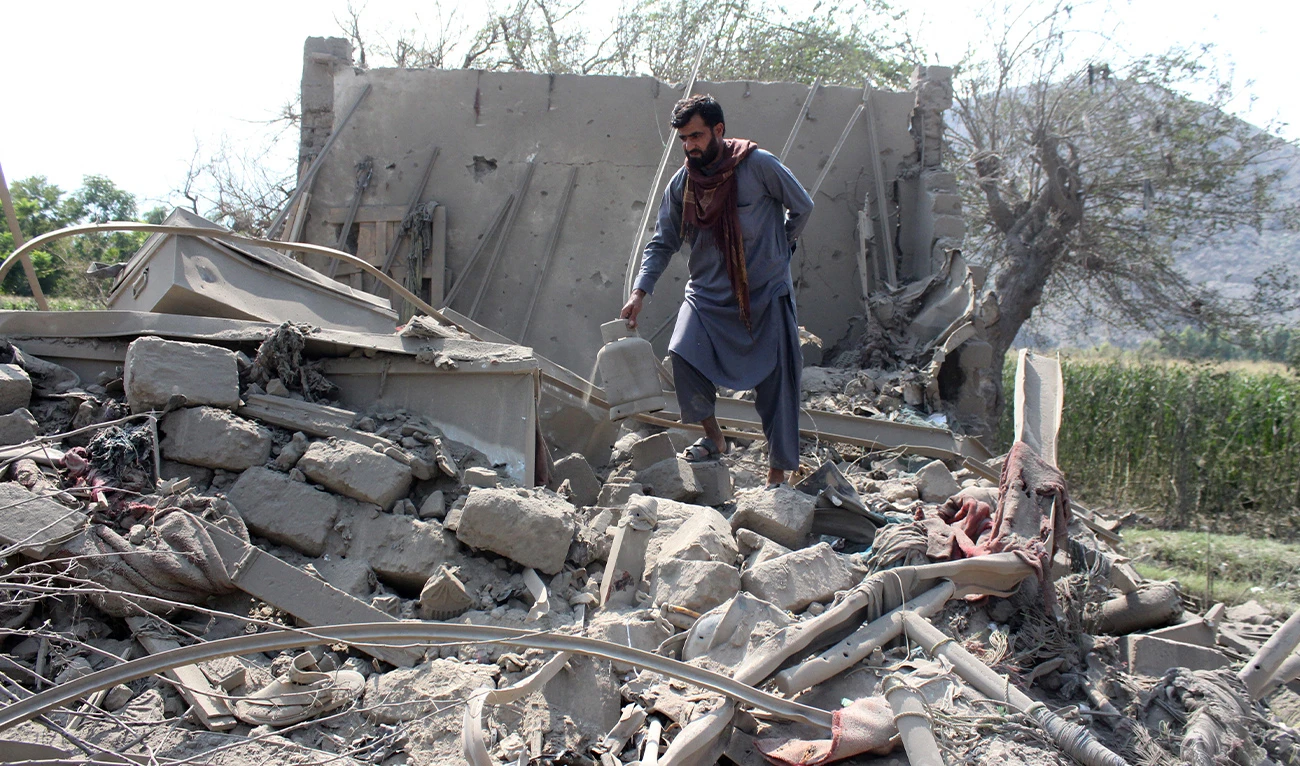
Tirah gained national attention in September, after an explosion at a compound allegedly used to store bomb-making materials killed at least 24 people. Authorities said most of the dead were militants linked to the TTP, though local leaders disputed that account, saying civilians, including women and children, were among the dead.