ROME: Daily life has become “apocalyptic” in parts of southern Gaza since Israel moved into the city of Rafah, though the situation in the north is improving, the UN’s food agency said Friday.
“The exodus that we’ve seen in the past 20 days or so out of Rafah has been an awesome and horrific experience for many, many people,” Matthew Hollingworth, the World Food Programme (WFP) director for the Palestinian territories.
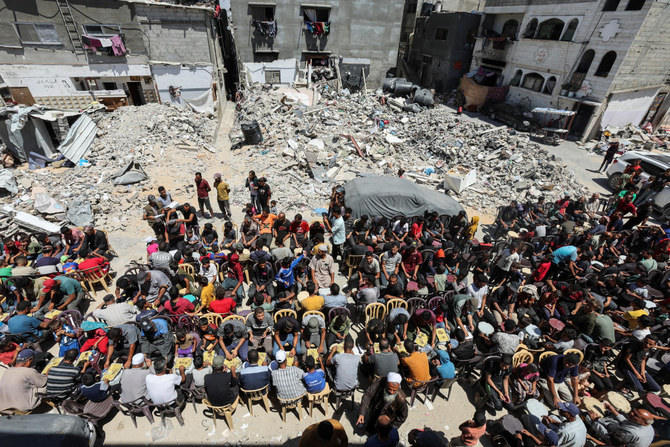
They have fled the fighting to areas where there was not enough water, health care or fuel, where food was limited, telecommunications had stopped and there was not enough space to dig pit latrines, Hollingworth told an online briefing.
The public health situation was “beyond crisis levels,” he said, adding: “The sounds and smells of everyday life are horrific and apocalyptic.”
People “sleep to the sounds of war... and they wake to the same sounds,” he said.
The WFP was able to provide “ever decreasing amounts of assistance,” with all of its bakeries in Rafah closed due to a lack of fuel and supplies, he said.
From May 7 — when Israeli tanks and troops entered Rafah’s east — to May 20, “not a single WFP truck crossed from the southern corridors from Egypt,” Hollingworth said.
The WFP also lost access to its main warehouse in the south of the Gaza Strip because it was in an evacuation zone, with 2,700 tons of food either looted or destroyed in fighting.
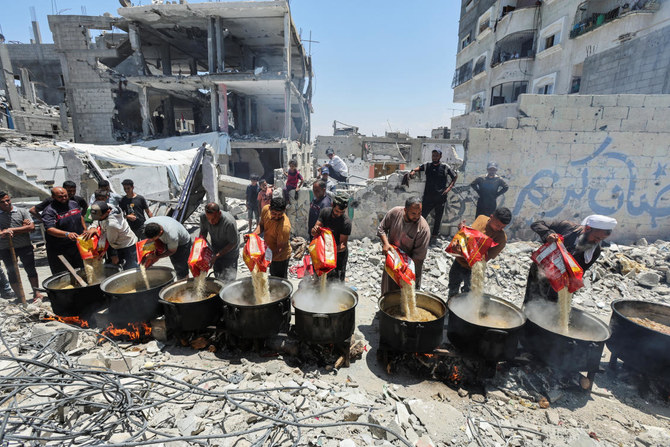
Hollingworth said the WFP was serving around 27,000 people with hot meals in Rafah — “but that’s not enough.”
In central areas of the Gaza Strip, where many people fled, the WFP is providing around 400,000 hot meals a day, and has kept six bakeries functioning.
Commercial food is also getting in, he said, but many people have no money, with some even resorting to trading their identity cards — which they need if they want to register for aid.
Hollingworth said aid trucks from Egypt had begun entering the Gaza Strip through the Israeli-controlled Kerem Shalom crossing.
“Since May 20, we have started to get a trickle of assistance in,” he said, though he warned the security situation was still slowing down the deliveries.
“That has to turn into a flood of assistance if we’re going to ensure we don’t start seeing the most acute forms of hunger becoming more common,” he said.
In the north of the Palestinian territory, by contrast, where UN agencies warned of imminent famine in March, Hollingworth said the situation was improving.
With the opening of crossings, around 12,000 tons of inter-agency assistance, mostly food, had been delivered since May 1.
“There has been a step change in terms of availability of food,” he said, though problems of health care, clean water supply and sewage remained.
The United States has built a temporary pier into Gaza, but it was damaged in poor weather, suspending deliveries.
During the two weeks it was open, about 1,000 tons of inter-agency aid moved through the pier, Hollingworth said.
Israeli Prime Minister Benjamin Netanyahu has said his government is doing everything to avoid famine in Gaza, and noted a study saying that calorie consumption in the territory was 3,200 a day — more than enough.
“I have not seen anybody, aid workers alike who live off protein bars, eat 3,000 calories or more in Gaza,” Hollingworth said.
The Gaza war was sparked by Hamas’s October 7 attack on southern Israel, which resulted in the deaths of 1,189 people, mostly civilians, according to an AFP tally based on Israeli official figures.
Militants also took 252 hostages, 121 of whom remain in Gaza, including 37 the army says are dead.
Israel’s retaliatory offensive has killed at least 36,284 people in Gaza, mostly civilians, according to the Hamas-run territory’s health ministry.


![]()
![]()
![]()

WFP warns of ‘apocalyptic’ scenes in southern Gaza

Short Url
https://arab.news/5fcsy
WFP warns of ‘apocalyptic’ scenes in southern Gaza
- The public health situation was “beyond crisis levels” Matthew Hollingworth, WFP director for the Palestinian territories said
- From May 7 — when Israeli tanks and troops entered Rafah’s east — to May 20, “not a single WFP truck crossed from the southern corridors from Egypt,” Hollingworth said


Latest updates





© 2026 SAUDI RESEARCH & PUBLISHING COMPANY, All Rights Reserved And subject to Terms of Use Agreement.