



LONDON: Since the EU announced a €1 billion ($1.087 billion) aid package to assist Syrians in Lebanon, in exchange for Lebanese authorities agreeing to curb the flow of migrants to Europe, hostility toward the Syrian community in Lebanon has, by most accounts, continued to rise.
Earlier this month, Ursula von der Leyen, president of the European Commission, announced that the EU would allocate a substantial package of aid to crisis-racked Lebanon for the 2024-27 period to help it cope with its substantial refugee population.
Of this amount, €736 million would be allocated to supporting refugees, while €264 million would go toward training the Lebanese armed forces to tackle illegal migration to Europe.
Von der Leyen said the aid would bolster border management, assist reform to the banking sector, and support basic services to the most vulnerable communities, including refugees, amid a crippling economic crisis in Lebanon and a surge in the number of irregular boat arrivals in Cyprus from Lebanon.
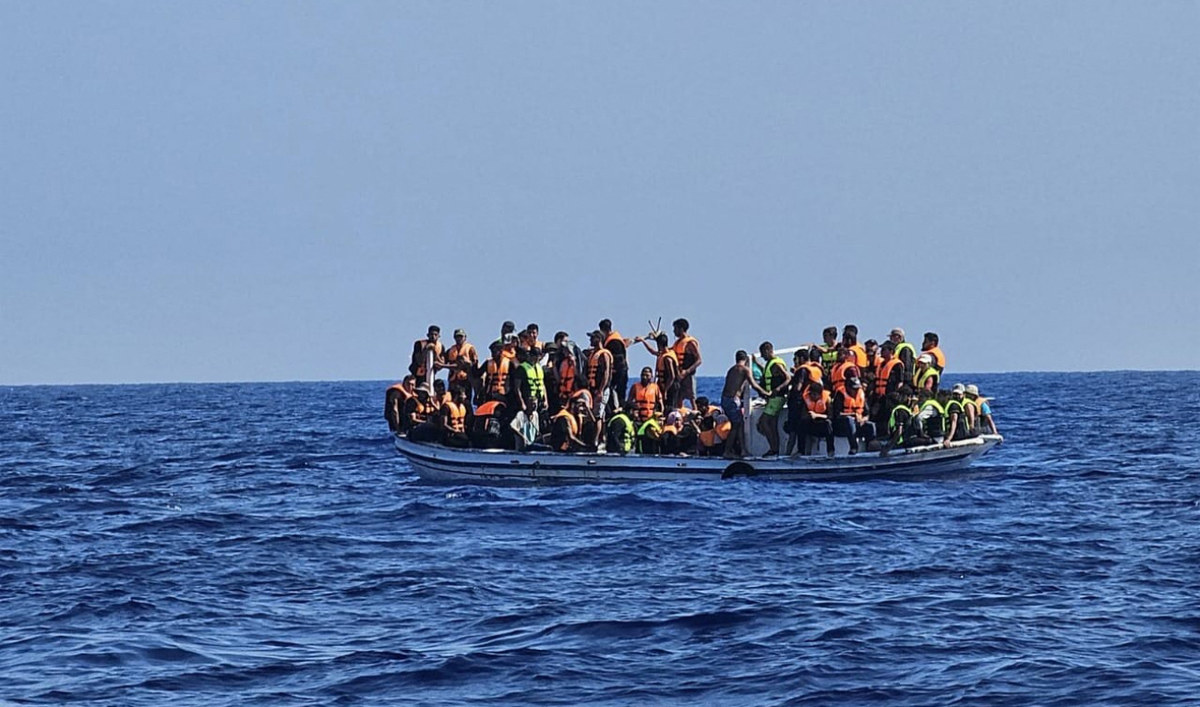
The EU recently announced a €1 billion aid package to assist Syrians in Lebanon, in exchange for Lebanese authorities agreeing to curb the flow of migrants to Europe. (AFP)
The announcement came after Cyprus, an EU member state, voiced concern about the number of migrant boats arriving on its shores last month. The majority were Syrians arriving from Lebanon.
This sharp increase in arrivals prompted the Cypriot government in mid-April to suspend the processing of asylum applications from Syrians. Nicosia also called on its EU partners to step up efforts to aid Lebanon.
However, von der Leyen’s announcement appears to have emboldened Lebanese authorities to step up their crackdown on Syrians, human rights monitor Amnesty International said on Monday.
Within a week of the announcement, on May 8, Lebanon’s General Security announced a new clampdown on Syrians, further tightening work and residency restrictions and ramping up raids, evictions, arrests and deportations.
More than 400 refugees were repatriated to Syria on May 14, according to Amnesty International, which, alongside other rights bodies, concluded that “Syria remains unsafe for return, and refugees are at risk of human rights violations.”
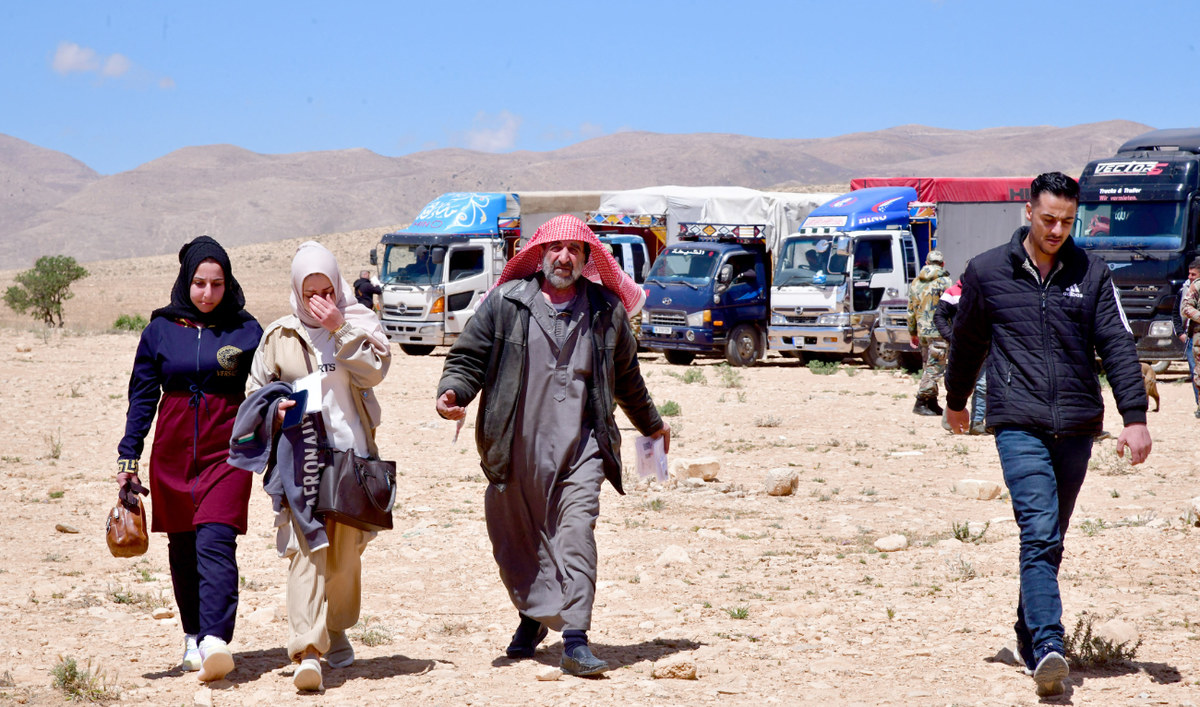
Syrian refugees returning from Lebanon to their country through the Al-Zamrani crossing on May 14, 2024. (AFP)
“Once again, President von der Leyen has put her desire to curb the flow of refugees at any cost into Europe before the EU’s obligations to protect refugees fleeing conflict or persecution,” Aya Majzoub, Amnesty International’s deputy director for the Middle East and North Africa, said in a statement.
“This appears to have emboldened Lebanese authorities to intensify their ruthless campaign targeting refugees with hateful discourse, forced deportations, and stifling measures on residency and labor.”
Lebanon is home to about 1.5 million Syrian refugees. Anti-Syrian sentiment in the country has intensified since the onset of the financial crisis in 2019, pushing 80 percent of the Lebanese population below the poverty line.
The hostility and suspicion, stoked by the rhetoric of senior politicians, boiled over in mid-April when a senior Lebanese Forces official was reportedly abducted and killed in a Syrian area near the Lebanese border.
Lebanese mobs indiscriminately attacked Syrians and vandalized their properties, while local authorities and self-appointed community groups evicted many from their homes and businesses.
IN NUMBERS
- 1/3 of Lebanese citizens in five governorates were living in poverty in 2022.
- 90% of Syrians in Lebanon were living below the poverty line in 2022.
- 2,000 Syrians arrived in Cyprus by sea in the first quarter of 2024.
The EU-Lebanon deal augurs poorly for acceptance of displaced Syrian refugees, rights groups say.
Wadih Al-Asmar, president of the Lebanese Center for Human Rights, told Arab News he has never witnessed “this amount of pressure on Syrian refugees in Lebanon, where all the security services are participating.”
He believes the hostility toward Syrians is “purely for electoral reasons” and that von der Leyen has “opened a Pandora’s box in the region, especially in Lebanon.”
Syrian refugees are among the most vulnerable communities in Lebanon, with the majority unable to afford basic essentials and more than half of households living in shelters that are either overcrowded or below minimum standards for habitability, according to UN agencies.
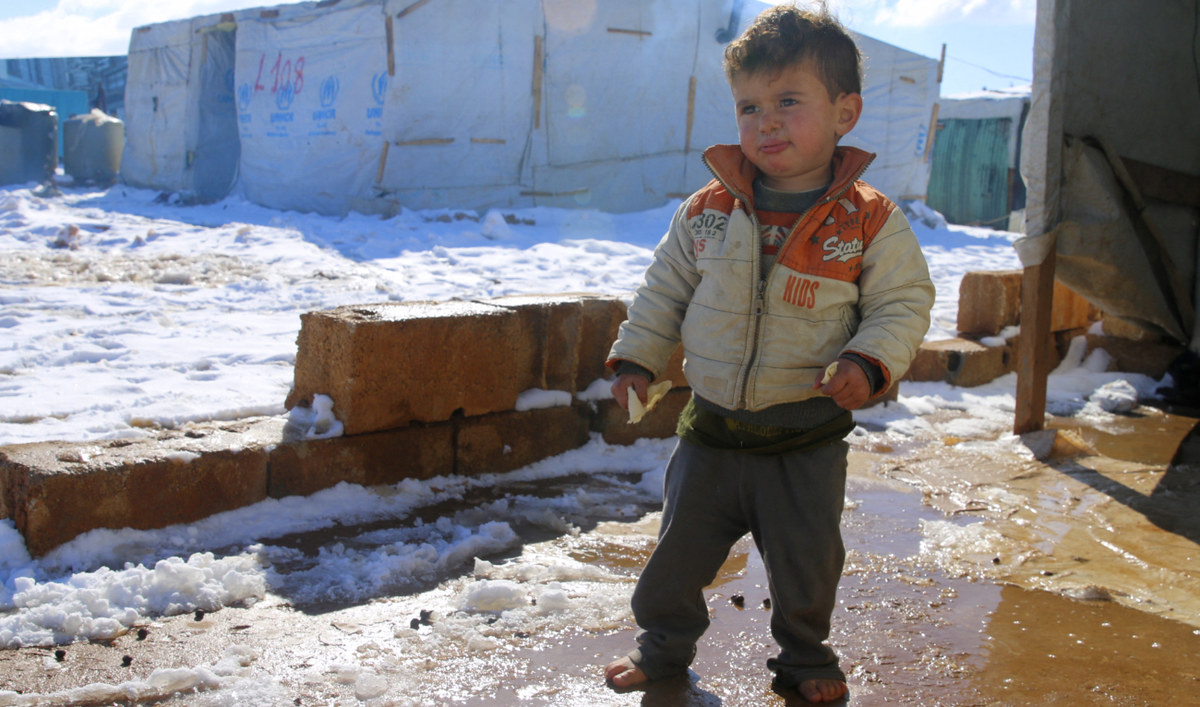
A Syrian child stands barefoot amidst snow in the Syrian refugees camp of Al-Hilal near Baalbek in Lebanon’s Bekaa valley on January 20, 2022. (AFP)
Karam Shaar, a senior fellow at the New Lines Institute, said displaced Syrians in Lebanon “are always in a position where they have to pick between two ugly options: Staying in Lebanon or going back to Syria.
“It’s the balance between the ugliness of these two factors that determines whether they decide to stay in Lebanon or go back to Syria,” he told Arab News.
Until now, the next best option for Syrians was onward travel to a third country — ideally an EU member state. However, since Cyprus stopped processing Syrian refugee applications, options have narrowed further.
“The option to leave Lebanon and go to Europe has also been made much, much harder because it’s much more difficult to go to Greece from Lebanon instead of going to Cyprus, which is much, much closer,” Shaar said.
Cyprus is a mere 185 km from Lebanon — taking about 10 hours to reach by boat. More than 2,000 Syrians arrived by sea in the first quarter of 2024. Whether the new EU funding for Lebanon will reduce those numbers remains to be seen.
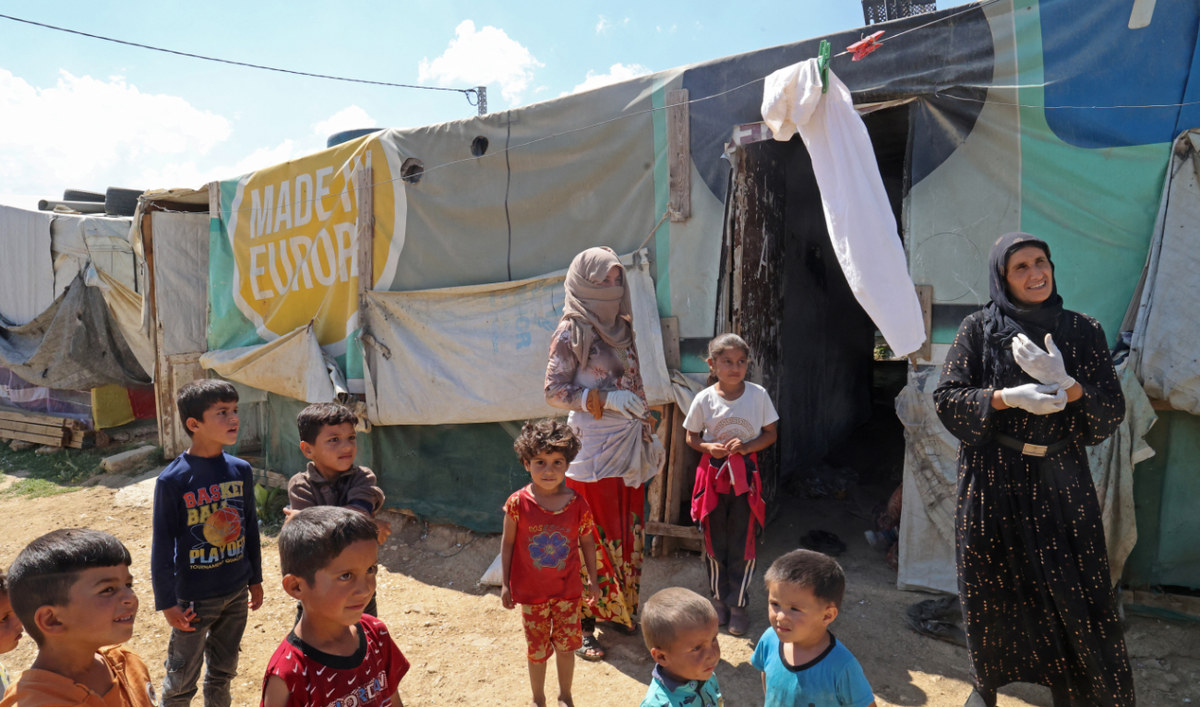
Syrian refugees are among the most vulnerable communities in Lebanon, with the majority unable to afford basic essentials. (AFP)
Shaar said the money allocated to support Syrians in Lebanon is “relatively small.” Furthermore, owing to the routine misappropriation of funding by Lebanese authorities, little is likely to reach those most in need.
“If you think of the 3RP (Regional Refugee and Resilience Plan), which is the main UN-sponsored plan for helping Lebanon cope with the Syrian refugee crisis, the sums that Lebanon has been receiving per year are actually higher than the amount that the EU has announced — if you look at the elements relating specifically to Syrians,” he said.
“Unfortunately, in light of aid diversion, which is the case in Lebanon, in Syria — in most corrupt countries to varying extents — little of that amount will actually find its way to Syrians.
“However, I think part of those amounts is urgently needed, especially in the field of education and the support toward the UNHCR.”
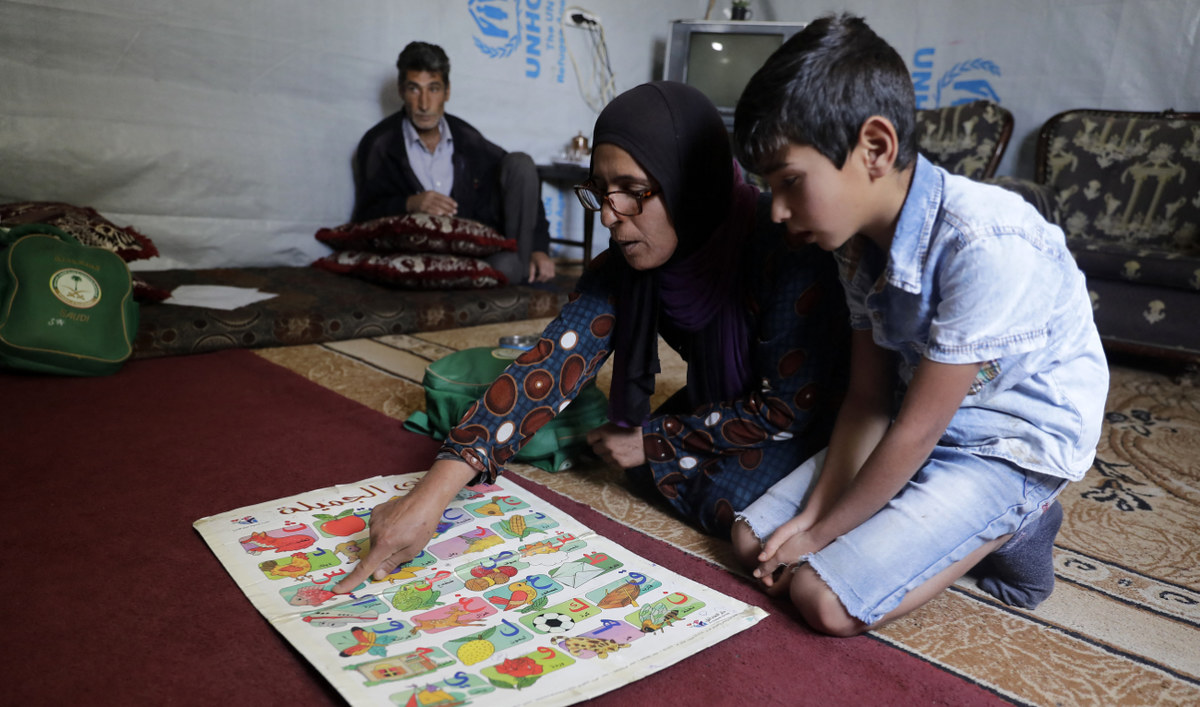
Karam Shaar, a senior fellow at the New Lines Institute, said part of the money allocated to support Syrians in Lebanon is “urgently needed, especially in the field of education and the support toward the UNHCR.” (AFP)
Co-led by the UN Refugee Agency and the UN Development Programme, the 3RP provides a platform for humanitarian and development partners to respond to the Syrian crisis at the regional and host country level.
The 3RP estimated in this year’s Regional Strategic Overview report that Lebanon, the country with the highest proportion of refugees in the world relative to its population, will need $2.7 billion in financial aid to meet humanitarian needs in 2024.
Last year, Lebanon received $1.8 billion, representing a mere 31 percent of the required $5.9 billion, according to the same report.
Al-Asmar of the Lebanese Center for Human Rights believes the latest EU aid package will have “more negative than positive effect on Lebanon.”
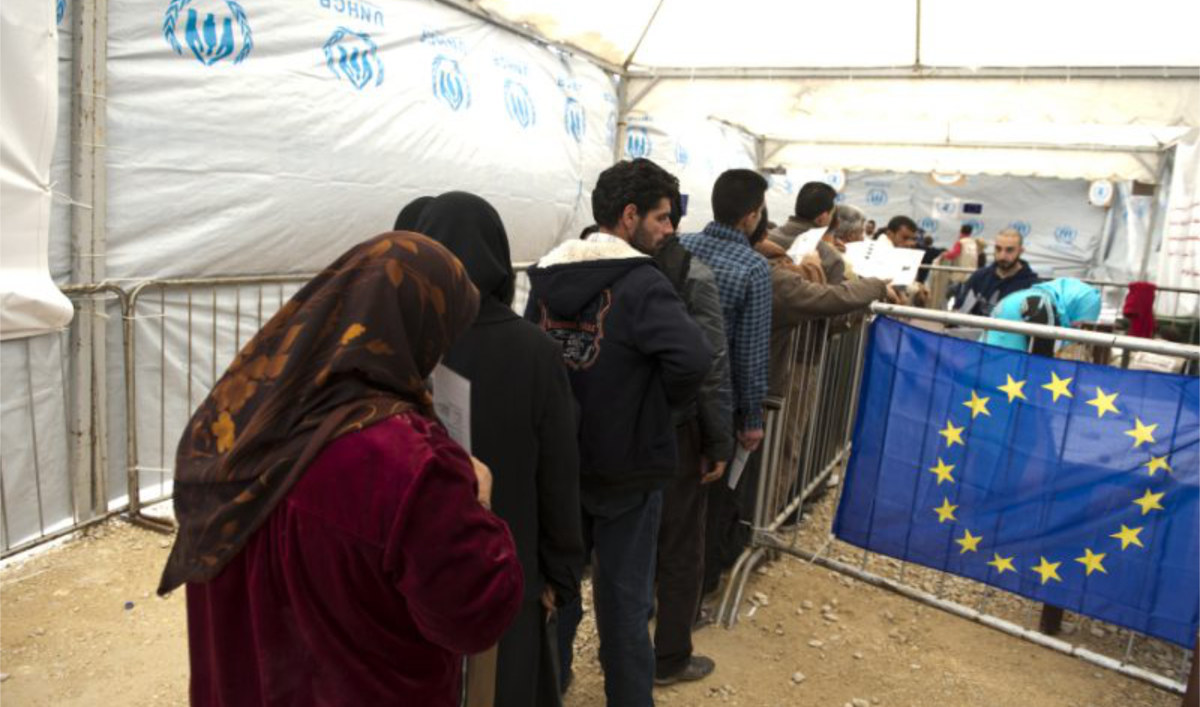
The UN said Lebanon will need $2.7 billion in financial aid to meet humanitarian needs in 2024. (EU)
On the one hand, he said, the €1 billion “is not new money — this was the support that was planned for the next four years.” It was primarily a “marketing or packaging announcement,” he said.
On the other hand, “this support, instead of being welcomed by Lebanese politicians, was somehow a trigger to initiate one of the biggest hate campaigns against Syrian refugees.”
Rather than shouldering the responsibility for the country’s predicament, including the ongoing financial crisis, Lebanese politicians are instead making scapegoats of the Syrians, he said.
€1 billion for Lebanon over four years means €250 million per year,” which “is nothing,” especially when considering the “number of refugees we have in Lebanon.”
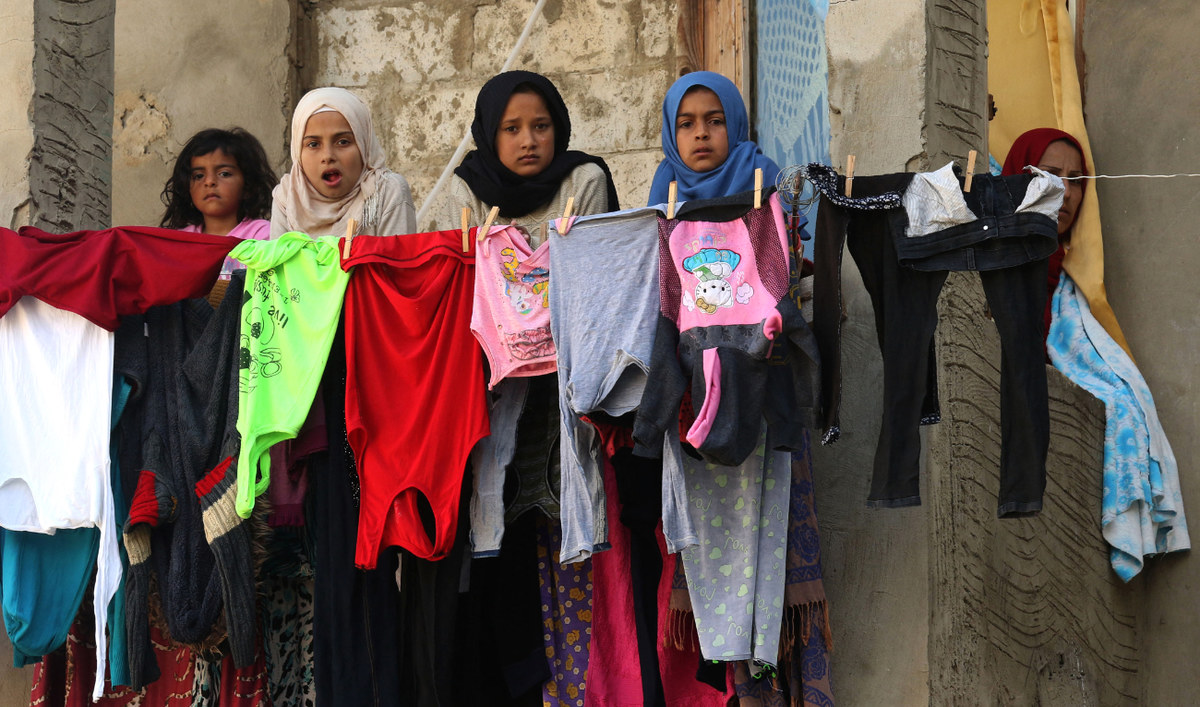
Syrian refugees stand in the balcony of a building under construction which they have been using as shelter in the city of Sidon in southern Lebanon, on March 17, 2020. (AFP)
Pointing out that EU officials have not yet approved the agreement, he said: “We have the feeling that the EU is trying to outsource border management … and pushing the Lebanese government to commit human rights violations that EU countries cannot afford to commit.
“So, whenever there are Syrian people to be pushed back from Cyprus, for example, they will not be pushed back to Syria, which is a crime. They will be pushed back to Lebanon, and then the Lebanese army will commit this international crime, which is a violation of the Convention against Torture, by sending them back to Syria.”
Article 3 of the UN Convention against Torture stipulates that “no state party shall expel, return (“refouler”) or extradite a person to another state where there are substantial grounds for believing that he would be in danger of being subjected to torture.”
As a party to the convention, Lebanon has breached its international obligations by summarily deporting thousands, including opposition activists and army defectors, to Syria, according to Human Rights Watch.
Ahead of the 8th Brussels Conference on supporting the future of Syria and the region, held on Monday, humanitarian organizations, including the Norwegian Refugee Council, warned that Syrians are at risk of being forgotten by the international community.
With 16.7 million Syrians requiring humanitarian assistance in 2024, according to UN figures, aid agencies urged donors to increase investment in early recovery to help Syrians rebuild their lives and access basic services.
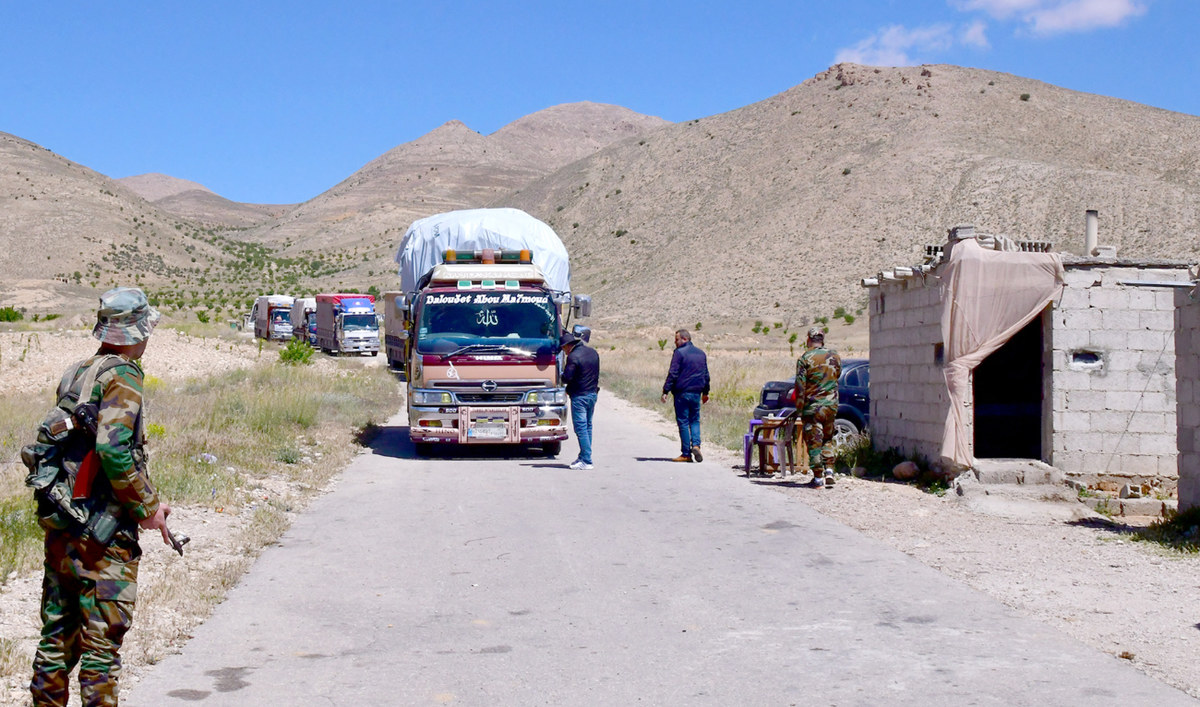
Human Rights Watch said Lebanon has breached its international obligations by summarily deporting thousands, including opposition activists and army defectors, to Syria. (AFP)
The EU pledged €2.12 billion for 2024-25 to support Syrians at home and in neighboring countries, as well as their host communities in Lebanon, Turkiye, Jordan and Iraq.
In response to the pledge, the aid agency Oxfam said the discussion in Brussels “remains far removed from the harsh realities Syrians face.”
In a statement the agency said: “Funding still fails to match the scale of needs, and year after year, the number of people relying on aid grows, a stark reminder of the eminent collapse in Syria’s humanitarian situation.”
The UN Office for the Coordination of Humanitarian Affairs has warned that the Syrian Humanitarian Response Plan for 2024, covering neighboring countries, is only 8.7 percent funded, at $352 million out of the required $4.07 billion.
In neighboring countries, just $371 million, or 7.7 percent, of the $4.49 billion required is covered.


