

BRUSSELS: The Syrian government and international aid donors must both do more if they want millions of Syrians forced to flee the country by war to return home, the UN’s refugee chief has said.
Filippo Grandi, the UN High Commissioner for Refugees, said the Gaza war and the broader Israeli-Palestinian conflict showed what happens if refugee questions are left unaddressed.
“If you leave it unattended ... it comes back with a vengeance,” Grandi told Reuters in Brussels on the sidelines of a European Union-led conference on aid for Syrians.
The forum yielded pledges of 7.5 billion euros in grants and loans for coming years, the EU said on Monday evening.
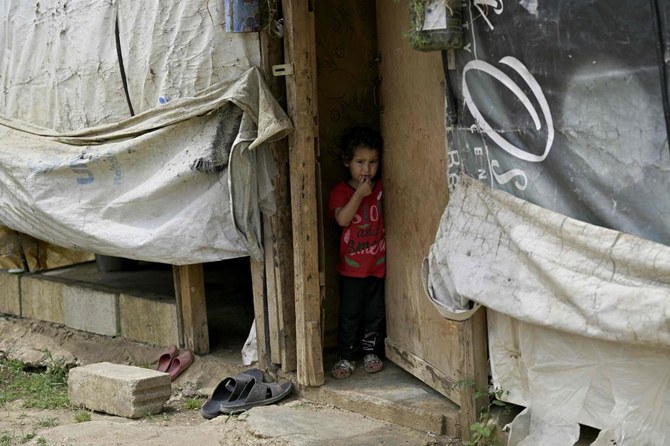
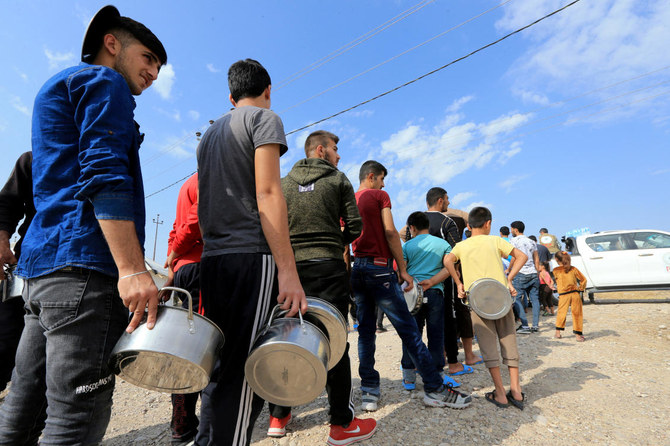
But 13 years after an uprising against President Bashar Assad spiralled into war, the fate of more than five million Syrian refugees living outside the country is increasingly contentious.
Lebanese politicians have been pushing for more refugees to be sent home. Some 800,000 Syrians are registered with the UN refugee agency in Lebanon, whose authorities say the true number of Syrians in the country is around two million.
The issue has also risen up Europe’s political agenda, with EU member Cyprus concerned that large numbers of refugees unwelcome in Lebanon will arrive on its shores.
But Western nations have not resumed ties with Assad, regarding him as a war criminal — an accusation he denies — and saying Syria is still unsafe for large-scale returns.
Some Arab states began re-engaging with Assad in the aftermath of a deadly 2023 earthquake but had little success in convincing him to create conditions for refugee returns.
Speaking on Monday evening, Grandi said he could not tell Western countries how to engage with Assad, but they could fund humanitarian work inside Syria by organizations such as his own.
“Something has got to give in all this, you know?” he said. “You cannot have the cake and eat it. You have to invest if you want solutions.”
VOLUNTARY RETURNS
Grandi said refugees should only return voluntarily – and this could only happen if they felt safe in Syria and could rely on basics such as housing and ways to earn a living.
For Syrian authorities, this meant providing security and solving bureaucratic problems such as documentation.
“It’s slow progress, but we’re working on it,” Grandi said. He said he told Assad last year he had a “huge confidence gap” with his own people, who need convincing they can trust him.
More than 500,000 people have been killed in the Syrian war and about 150,000 remain unaccounted for.
Many of the country’s schools, water supplies and electricity stations have been destroyed. A devastating economic crunch has added to the country’s woes in recent years.
Western aid donors had an important part to play too, Grandi said, with more funding for projects inside Syria.
“We have a program in Syria, but it is not very well funded,” he said, adding one flagship scheme had only received between 30 percent and 35 percent of the required funding.
“We need to invest more to create conditions for people to go back,” he said.