- Yossi Cohen sought to steer court away from investigating Israeli crimes in Occupied Territories
- ‘Despicable tactics’ used including ‘keen interest’ in prosecutor’s family, source tells The Guardian
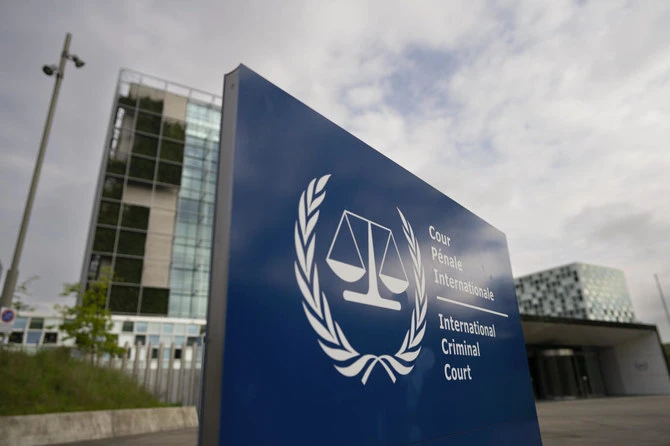
LONDON: A former chief of Israel’s Mossad intelligence agency staged a years-long campaign of intimidation against a former International Criminal Court prosecutor in an attempt to sway war crimes investigations, The Guardian reported on Tuesday.
Fatou Bensouda, the former ICC prosecutor, became a target of Yossi Cohen in the years leading up to her opening a formal investigation into alleged war crimes in the Occupied Territories.
Launched in 2021, the investigation ended with the seeking of an arrest warrant for Israeli Prime Minister Benjamin Netanyahu by Bensouda’s successor Karim Khan.
Israel has long feared the results of the investigation, including the threat of prosecution against its military personnel, which was used as justification for Cohen’s decade-long campaign to undermine the court.
As Mossad director, Cohen, a close ally of Netanyahu at the time, was acting as the prime minister’s “unofficial messenger,” a source told The Guardian.
In total, four sources told the newspaper that Bensouda had briefed top ICC officials about Cohen’s campaign, which one official described as “stalking” and involving intimidation.
On several occasions, Cohen had “put pressure” on Bensouda to avoid opening the Palestine case at the ICC.
“You should help us and let us take care of you. You don’t want to be getting into things that could compromise your security or that of your family,” Cohen told her, according to the account of one ICC official to The Guardian.
As part of the targeted campaign against Bensouda, Cohen used “despicable tactics,” including taking a “keen interest” in her family, one source said.
Mossad obtained secret recording transcripts as well as photographs of Bensouda’s husband, which Cohen personally showed her.
His campaign was helped by the former president of the Democratic Republic of Congo, Joseph Kabila, in an unlikely alliance that proved crucial to Cohen.
It is unclear why Kabila aided him, but his status as the leader of a country facing ICC investigation helped him set up a “chance” meeting between Bensouda and Cohen.
The ICC prosecutor and Cohen appear to have first met at the Munich Security Conference in 2017, two years after Bensouda opened a preliminary investigation into the Palestinian file.
A year later, Cohen “ambushed” her in a New York City hotel as she was due to meet Kabila to discuss the situation in his country, The Guardian reported. Cohen’s “surprise” appearance was said to have “alarmed” ICC officials at the time.
He had earlier made a series of trips to the DRC, relating to what was described by Israeli broadcaster Kan as an “extremely controversial plan.”
Following the New York meeting, Cohen repeatedly phoned Bensouda to request further talks in an attempt to “build a relationship” and “play good cop,” sources told The Guardian.
But the influence campaign failed when in 2019, Bensouda announced that she had grounds to open a full criminal investigation into war crimes allegations in the Occupied Territories.
She first requested a ruling from the pre-trial chamber of the ICC, confirming the court’s jurisdiction over Palestine.
At this stage, Cohen stepped up his campaign against Bensouda into “threats and manipulation,” fearing the results of an official investigation being launched.
Senior ICC officials had suspicions that Israel had cultivated sources within the court’s office of the prosecutor.
In 2021, the ICC’s pre-trial chamber confirmed that the court had jurisdiction over the Occupied Territories. A month later, Bensouda formally launched the criminal investigation.
She said at the time: “In the end, our central concern must be for the victims of crimes, both Palestinian and Israeli, arising from the long cycle of violence and insecurity that has caused deep suffering and despair on all sides.”
Her successor, Khan, has vowed to prosecute “attempts to impede, intimidate or improperly influence” ICC officials after a warrant for Netanyahu’s arrest was sought.
The recent results of the investigation first launched by Bensouda represent a heavy blow to Israel’s international standing, and mark a failure of Cohen’s decade-long campaign to influence the court.
“The fact they chose the head of Mossad to be the prime minister’s unofficial messenger to (Bensouda) was to intimidate, by definition,” one source told The Guardian.
In response to questioning by the newspaper, a spokesperson for the Israeli prime minister’s office said: “The questions forwarded to us are replete with many false and unfounded allegations meant to hurt the state of Israel.”
Khan’s move last week to seek arrest warrants against Netanyahu marked the first time the ICC has taken action against leaders of a country closely allied with the US and Europe.
Netanyahu’s alleged crimes pertain to the war in Gaza, and include directing attacks on civilians and using starvation as a method of warfare.