

Saudi-based Pakistani group recruits over 2,500 volunteers to facilitate Hajj pilgrims this year

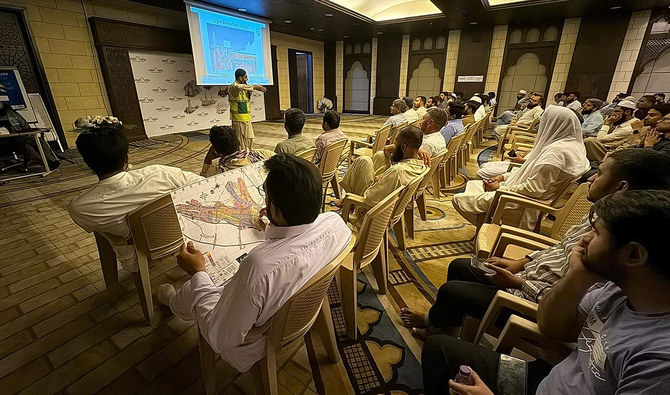
A man looks map of the Saudi holy city of Makkah as Pakistani volunteers attend a training session to assist pilgrims during this year’s annual Hajj pilgrimage in Jeddah on May 15, 2024. (Photo courtesy: Pakistan Hajj Volunteers Group)
Short Url
Updated 26 May 2024
Follow

Saudi-based Pakistani group recruits over 2,500 volunteers to facilitate Hajj pilgrims this year

  • The Pakistan Hajj Volunteers Group comprises thousands of expatriates living in the Kingdom who facilitate pilgrims each year
  • The PHVG offers guidance, wheelchair services, and other facilities to pilgrims during Hajj days irrespective of their nationalities

ISLAMABAD: The Pakistan Hajj Volunteers Group (PHVG), a Saudi Arabia-based group of Pakistani expatriates, has recruited more than 2,500 volunteers to assist pilgrims during this year’s annual Hajj pilgrimage, a senior PHVG official said on Sunday.
Established in 2011 with only 85 volunteers, the PHVG has expanded over the course of 12 years and currently includes thousands of members, who volunteer during Hajj pilgrimage every year. The group works in close coordination with the Pakistani consulate in Jeddah and the Pakistan Hajj Mission.
The PHVG assists and provides guidance to pilgrims during the annual Hajj pilgrimage in Mina Valley, and the Saudi cities of Azizia and Makkah from the 10th till 12th of the Islamic holy month of Dhu Al-Hijjah, when Hajj activities reach their peak.
“The PHVG registered and verified 2,838 volunteers for Hajj 2024 operation and also has around 100 key volunteers in our three regions (Hejaz, central and eastern parts of the Kingdom) who are engaged year-round for all the preparations for the guests of Allah,” Ashraf Ali Khan, the PHVG central coordinator, told Arab News.
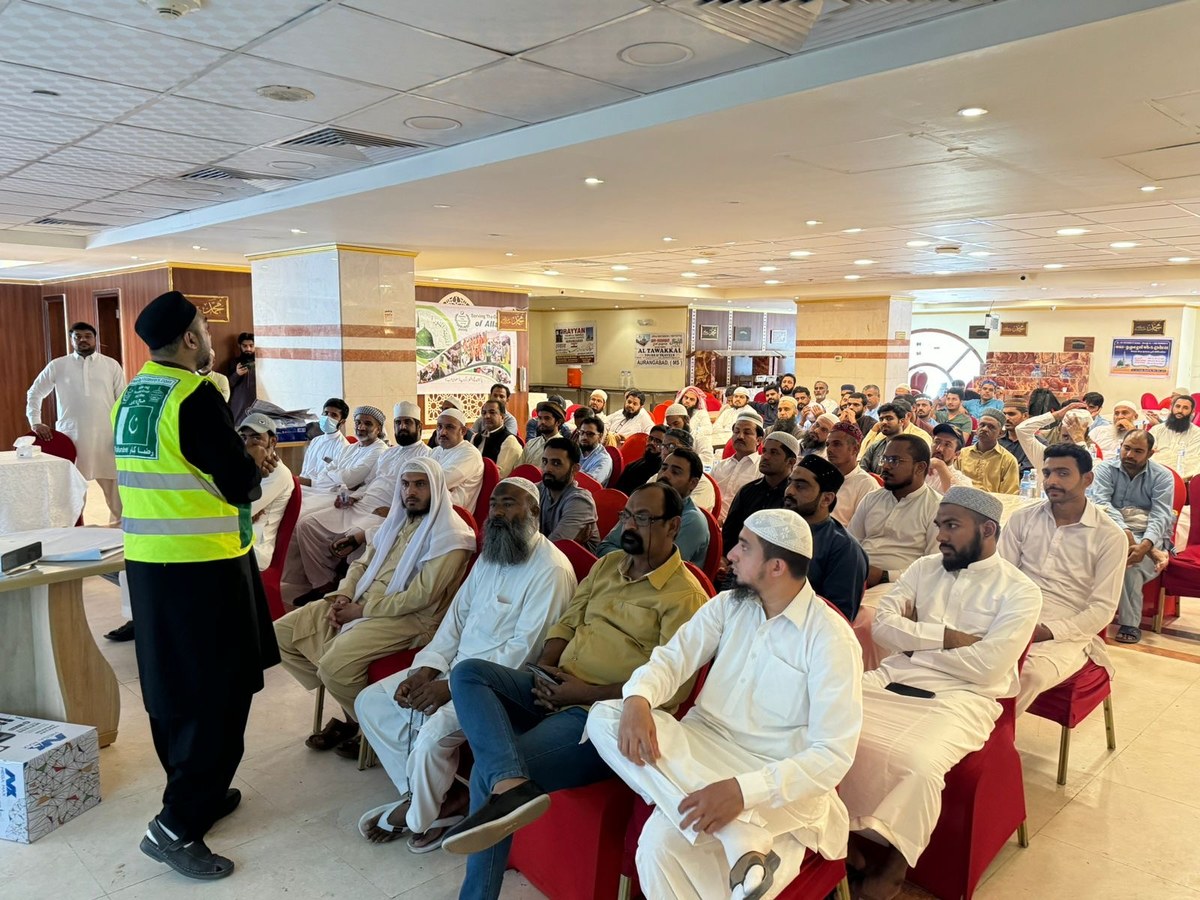


Pakistan Hajj Volunteers Group official briefs Pakistani volunteers during a training session to facilitate Hajj pilgrims in Jeddah on May 15, 2024. (Photo courtesy: Pakistan Hajj Volunteers Group)

The PHVG started its registration campaign on February 9 that ended on May 10, according to the official. The organization used print, electronic, and social media to register Pakistani volunteers from all over the Kingdom.
“Any Pakistani legally present in the Kingdom can become a volunteer and they also need to be registered on the Saudi social services website for further permissions,” Khan said, adding all volunteers were required to complete two mandatory training sessions and an online exam before the final selection.
The official said his organization trained volunteers using audiovisual training sessions and instructed them on the Mina map reading and the usage of its mobile application, PHVG Hajj Navigator.
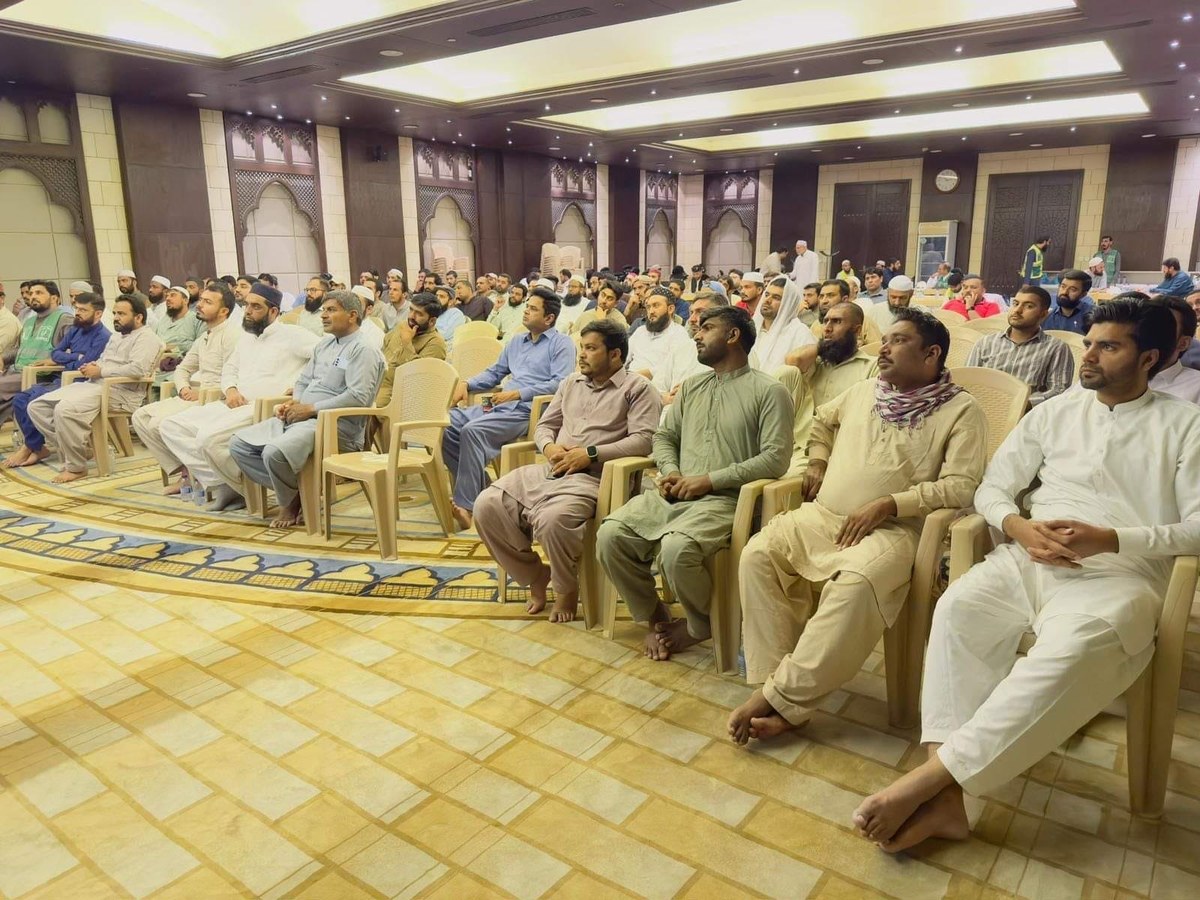


Pakistani volunteers attend a training session to facilitate Hajj pilgrims in Jeddah on May 15, 2024, ahead of annual Hajj pilgrimage. (Photo courtesy: Pakistan Hajj Volunteers Group)

“The volunteers are neither allowed to perform Hajj nor compensated for their services as they are devoted to helping and guiding pilgrims to seek the reward and pleasure from Allah,” he added.
The volunteers mainly help Hajj pilgrims in five different areas, including providing training through videos and presentations, according to the official.
Along with this, volunteers also provide guidance in Mina, especially through translation, to pilgrims who come from around the world, and guide them to their tents, hospitals and assist them with wheelchairs.
“Additionally, we offer Tawaf-e-Ziyara to pilgrims who fall ill during the pilgrimage,” Khan said. “Each sick pilgrim is accompanied by two volunteers who escort them from the hospital and return them after completing the Tawaf.”
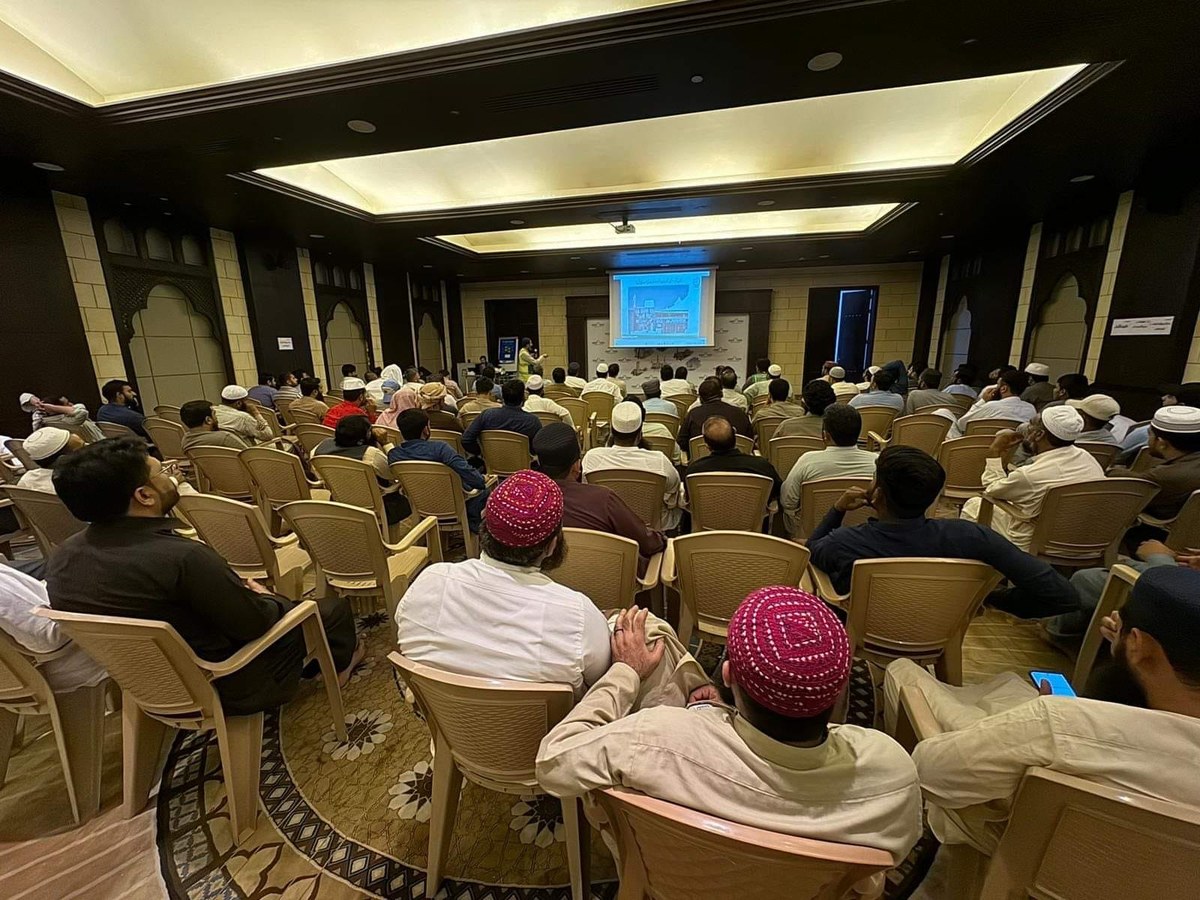


Pakistan Hajj Volunteers Group official briefs Pakistani volunteers during a training session to facilitate Hajj pilgrims in Jeddah on May 15, 2024. (Photo courtesy: Pakistan Hajj Volunteers Group)


IMF hails Pakistan privatization drive, calls PIA sale a ‘milestone’

Updated 10 January 2026
Follow

IMF hails Pakistan privatization drive, calls PIA sale a ‘milestone’

  • Fund backs sale of national airline as key step in divesting loss-making state firms
  • IMF has long urged Islamabad to reduce fiscal burden posed by state-owned entities

KARACHI: The International Monetary Fund (IMF) on Saturday welcomed Pakistan’s privatization efforts, describing the sale of the country’s national airline to a private consortium last month as a milestone that could help advance the divestment of loss-making state-owned enterprises (SOEs).

The comments follow the government’s sale of a 75 percent stake in Pakistan International Airlines (PIA) to a consortium led by the Arif Habib Group for Rs 135 billion ($486 million) after several rounds of bidding in a competitive process, marking Islamabad’s second attempt to privatize the carrier after a failed effort a year earlier.

Between the two privatization attempts, PIA resumed flight operations to several international destinations after aviation authorities in the European Union and Britain lifted restrictions nearly five years after the airline was grounded following a deadly Airbus A320 crash in Karachi in 2020 that killed 97 people.

“We welcome the authorities’ privatization efforts and the completion of the PIA privatization process, which was a commitment under the EFF,” Mahir Binici, the IMF’s resident representative in Pakistan, said in response to an Arab News query, referring to the $7 billion Extended Fund Facility.

“This privatization represents a milestone within the authorities’ reform agenda, aimed at decreasing governmental involvement in commercial sectors and attracting investments to promote economic growth in Pakistan,” he added.

The IMF has long urged Islamabad to reduce the fiscal burden posed by loss-making state firms, which have weighed public finances for years and required repeated government bailouts. Beyond PIA, the government has signaled plans to restructure or sell stakes in additional SOEs as part of broader reforms under the IMF program.

Privatization also remains politically sensitive in Pakistan, with critics warning of job losses and concerns over national assets, while supporters argue private sector management could improve efficiency and service delivery in chronically underperforming entities.

Pakistan’s Cabinet Committee on State-Owned Enterprises said on Friday that SOEs recorded a net loss of Rs 122.9 billion ($442 million) in the 2024–25 fiscal year, compared with a net loss of Rs 30.6 billion ($110 million) in the previous year.