

Ancient castles in Sabya governorate reflect architectural heritage

1 / 4
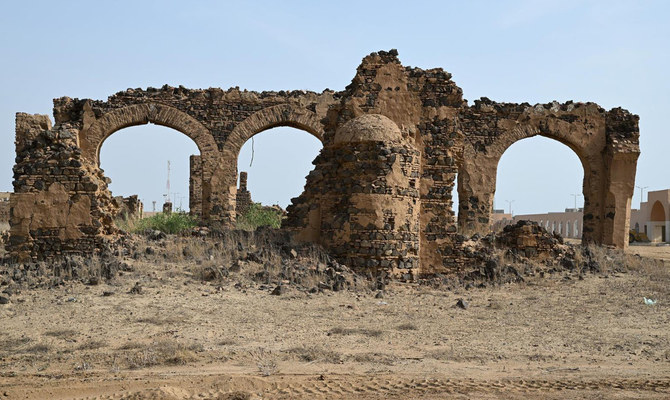
The Sabya Archaeological Castle, an architectural marvel, boasts spacious rooms with high ceilings and thick walls. (SPA)
2 / 4
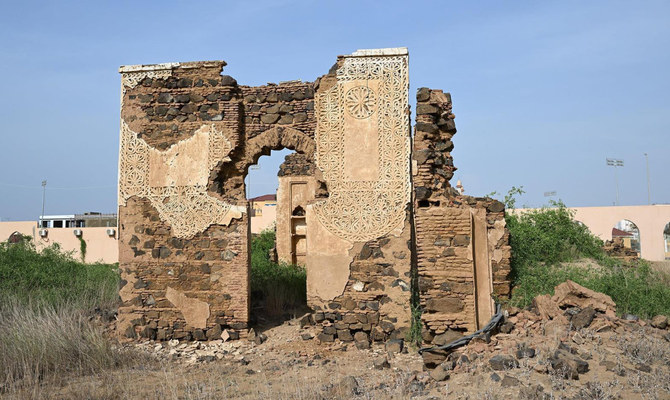
The Sabya Archaeological Castle, an architectural marvel, boasts spacious rooms with high ceilings and thick walls. (SPA)
3 / 4
The Sabya Archaeological Castle, an architectural marvel, boasts spacious rooms with high ceilings and thick walls. (SPA)
4 / 4
The Sabya Archaeological Castle, an architectural marvel, boasts spacious rooms with high ceilings and thick walls. (SPA)
Short Url
Updated 25 May 2024
Follow

Ancient castles in Sabya governorate reflect architectural heritage

  • The Sabya Archaeological Castle has origins that date to the early 20th century

RIYADH: The Sabya governorate in the Jazan region is a treasure trove of archaeological wonders, each with its own unique story.

Among these is the Sabya Archaeological Castle, whose origins date to the early 20th century. The castle, steeped in history, is a must-visit for any archeology enthusiast or researcher.

The castle is situated near Sabya Avenue, within King Fahd Park. It is part of the present city of Sabya, which offers a view of Wadi Sabya. 

The Sabya Archaeological Castle, an architectural marvel, boasts spacious rooms with high ceilings and thick walls. The walls, adorned with beautiful geometric and floral patterns, are a testament to the skill of the craftsmen who built them.

Local materials such as volcanic stone, wood, and limestone were used during construction. Some accounts suggest that the clay used in making bricks was sourced from the banks of Wadi Sabya.

The use of volcanic stones of various sizes and shapes in particular gives the castle a unique and captivating beauty. The stones were obtained from volcanoes near the city, including Jabal Akwa, located a short distance northeast of Sabya.

The mosque, situated north of the castle, was also constructed using the same building materials as the castle and other structures in the area. It was intended for prayers and gatherings of religious leaders, dignitaries, and the people of Sabya. Its mihrab, or prayer niche, still stands despite some damage.

Some accounts suggest the presence of remains of other buildings in the vicinity of the castle, opening the possibility of conducting archaeological excavations to reveal more secrets about this site.

The Kingdom’s Heritage Commission is diligently working to preserve the Sabya Archaeological Castle, recognizing its significance as one of the most important archaeological sites in the Jazan region.


Saudi Arabia’s Sharaan and Wadi Nakhlah nature reserves win Dark Sky recognition

Updated 58 min 30 sec ago
Follow

Saudi Arabia’s Sharaan and Wadi Nakhlah nature reserves win Dark Sky recognition

  • The two reserves in AlUla join more than 250 locations worldwide that are protected from light pollution
  • AlUla Manara and AlGharameel Nature Reserve, also both in AlUla, received Dark Sky Park designations last year

ALULA: Two more nature reserves in Saudi Arabia’s AlUla have won recognition as Dark Sky Places, joining more than 250 locations worldwide that are protected from light pollution.

The official accreditation of Sharaan National Park and Wadi Nakhlah reserves from the DarkSky International builds on AlUla’s 2024 achievement, when AlUla Manara and AlGharameel Nature Reserve became the first sites in the Kingdom and the Gulf region to receive Dark Sky Park designations.

The latest recognition further strengthens AlUla’s position as a leading global destination for night sky protection and astronomical tourism, said the Royal Commission for AlUla (RCU) in a statement carried by the Saudi Press Agency (SPA).

Dark Sky International also announced the recognition in an earlier report, noting that the Sharaan and Wadi Nakhlah’s combined area of 6,146 square kilometers reflects the “expanded scope of environmental protection efforts aimed at preserving AlUla’s pristine night skies and reducing light pollution across a vast geographical area.”

DarkSky International works to reduce light pollution in both urban and rural areas and to raise global awareness of the importance of protecting the night sky.

AlUla’s natural isolation from urban light sources, combined with ideal atmospheric conditions, makes it a world-class destination for stargazing, astronomy education, and immersive dark-sky experiences.  (SPA)


AlUla’s protected areas are located in the heart of northwest Arabia, near the ancient oasis city of AlUla in Madinah Province.

“Towering sandstone cliffs, labyrinthine canyons, tranquil basins, and volcanic formations create a dramatic setting where geological diversity, cultural heritage, and thriving biodiversity converge beneath exceptionally dark, open skies,” Dark Sky said.

Scientists have noted that AlUla’s natural isolation from urban light sources, combined with ideal atmospheric conditions, makes it a world-class destination for stargazing, astronomy education, and immersive dark-sky experiences. 

With the phased development of its reserves, AlUla is now ranked 3rd globally in the Dark Sky Park category, solidifying its status as one of the world’s premier destinations for astronomical discovery.

The RCU reaffirmed its commitment to protecting the natural environment, preserving the night sky, and promoting sustainable tourism, further positioning AlUla as a leading global destination for astronomy, scientific research, and advanced environmental experiences, in line with AlUla Vision and the Kingdom’s Vision 2030.