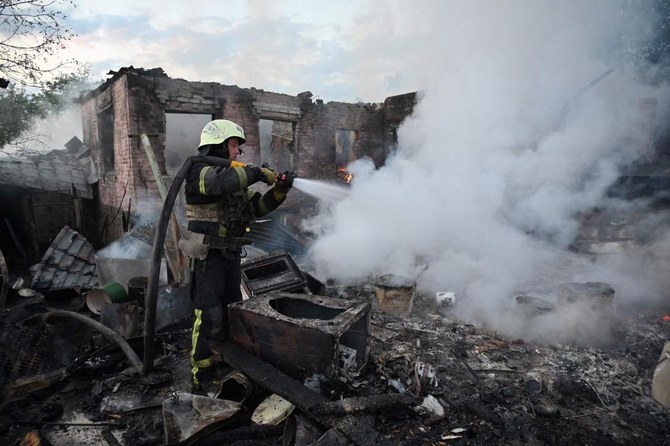
KHARKIV: A Russian air attack on Ukraine’s northeastern city of Kharkiv on Wednesday injured at least nine people, at least one severely, and set fire to a residential building, local officials said.
“One of the guided aerial bombs, according to preliminary data, hit a cafe. It is very close to a multi-story residential building,” Serhii Bolvinov, head of the investigative department of the regional police, told national TV.
Regional governor Oleh Syniehubov said a petrol station caught fire as a result of the attack as well.
Kharkiv, Ukraine’s second largest city, and the surrounding region have been targeted by Russian attacks since the start of the war in 2022. Strikes have become far more intense in recent months, hitting civilian and energy infrastructure, and Russian forces have opened a new front north of the regional capital in recent weeks.
Moscow denies deliberately targeting civilians but thousands have been killed and injured in its 27-months-old invasion of Ukraine.

Russian guided bombs hit residential area in Kharkiv, nine injured
Short Url
https://arab.news/nw44f
Russian guided bombs hit residential area in Kharkiv, nine injured
- One of the guided aerial bombs, according to preliminary data, hit a cafe
- A petrol station caught fire as a result of the attack as well
Malawi suffers as US aid cuts cripple health care
LILONGWE: A catastrophic collapse of health care services in Malawi a year after US funding cuts is undoing a decade of progress against HIV/AIDS, providers warn, leaving some of the most vulnerable feeling like “living dead.”
In the impoverished southern Africa country, the US government’s decision to slash foreign aid in January 2025 has led to significant cuts in HIV treatments, a spike in pregnancies and a return to discrimination.
Chisomo Nkwanga, an HIV-positive man who lives in the northern town of Mzuzu, told AFP that the end of US-funded specialized care was like a death sentence.
After his normal provider of life-saving antiretroviral therapy (ART) vanished due to budget cuts, he turned to a public hospital.
“The health care worker shouted at me in front of others,” Nkwanga recalled. “They said, ‘You gay, you are now starting to patronize our hospitals because the whites who supported your evil behavior have stopped?’“
“I gave up,” he said, trembling. “I am a living dead.”
More than one million of aid-dependent Malawi’s roughly 22 million people live with HIV and the United States previously provided 60 percent of its HIV treatment budget.
Globally, researchers estimate that hundreds of thousands of preventable deaths have been caused by the Trump administration’s dismantling of US foreign aid, which has upended humanitarian efforts to fight HIV, malaria and tuberculosis in some of the world’s poorest regions.
- Lay offs, panic -
In Malawi, the drying up of support from USAID and the flagship US anti-HIV program, PEPFAR, has left a “system in panic,” said Gift Trapence, executive director of the Center for the Development of People (CEDEP).
“The funding cut came on such short notice that we couldn’t prepare or engage existing service providers,” Trapence told AFP.
“We had to lay off staff... we closed two drop-in centers and maintained two on skeleton staff,” he said.
“We did this because we knew that if we closed completely, we would be closing everything for the LGBTI community.”
The Family Planning Association of Malawi (FPAM) non-government organization, a cornerstone of rural health care, has been forced to ground the mobile clinics that served as the only medical link for remote villages.
“We had two big grants that were supporting our work, particularly in areas where there were no other service providers,” said executive director Donald Makwakwa.
“We are likely to lose out on all the successes that we have registered over the years,” he said.
A resident of a village once served by FPAM told AFP there had been an explosion in unplanned pregnancies when the family planning provider stopped work.
“I know of nearly 25 girls in my village who got pregnant when FPAM suspended its services here last year,” said Maureen Maseko at a clinic on the brink of collapse.
- Progress undone -
For over a decade, Malawi’s fight against AIDS relied on “peer navigators” and drop-in centers that supported people with HIV and ensured they followed treatment.
With the funding for these services gone, the default rate for people taking the HIV preventative drug PrEP hit 80 percent in districts like Blantyre, according to a report by the CEDEP.
“This is a crisis waiting to happen,” the report quoted former district health care coordinator Fyness Jere as saying.
“When people stop taking PrEP, we increase the chances of new HIV infections... we are undoing a decade of progress in months,” she said.
Trapence noted that without specialized support, thousands of patients had simply disappeared from the medical grid.
“We lost everything, including the structures that were supporting access... treatment and care,” he said.
In the impoverished southern Africa country, the US government’s decision to slash foreign aid in January 2025 has led to significant cuts in HIV treatments, a spike in pregnancies and a return to discrimination.
Chisomo Nkwanga, an HIV-positive man who lives in the northern town of Mzuzu, told AFP that the end of US-funded specialized care was like a death sentence.
After his normal provider of life-saving antiretroviral therapy (ART) vanished due to budget cuts, he turned to a public hospital.
“The health care worker shouted at me in front of others,” Nkwanga recalled. “They said, ‘You gay, you are now starting to patronize our hospitals because the whites who supported your evil behavior have stopped?’“
“I gave up,” he said, trembling. “I am a living dead.”
More than one million of aid-dependent Malawi’s roughly 22 million people live with HIV and the United States previously provided 60 percent of its HIV treatment budget.
Globally, researchers estimate that hundreds of thousands of preventable deaths have been caused by the Trump administration’s dismantling of US foreign aid, which has upended humanitarian efforts to fight HIV, malaria and tuberculosis in some of the world’s poorest regions.
- Lay offs, panic -
In Malawi, the drying up of support from USAID and the flagship US anti-HIV program, PEPFAR, has left a “system in panic,” said Gift Trapence, executive director of the Center for the Development of People (CEDEP).
“The funding cut came on such short notice that we couldn’t prepare or engage existing service providers,” Trapence told AFP.
“We had to lay off staff... we closed two drop-in centers and maintained two on skeleton staff,” he said.
“We did this because we knew that if we closed completely, we would be closing everything for the LGBTI community.”
The Family Planning Association of Malawi (FPAM) non-government organization, a cornerstone of rural health care, has been forced to ground the mobile clinics that served as the only medical link for remote villages.
“We had two big grants that were supporting our work, particularly in areas where there were no other service providers,” said executive director Donald Makwakwa.
“We are likely to lose out on all the successes that we have registered over the years,” he said.
A resident of a village once served by FPAM told AFP there had been an explosion in unplanned pregnancies when the family planning provider stopped work.
“I know of nearly 25 girls in my village who got pregnant when FPAM suspended its services here last year,” said Maureen Maseko at a clinic on the brink of collapse.
- Progress undone -
For over a decade, Malawi’s fight against AIDS relied on “peer navigators” and drop-in centers that supported people with HIV and ensured they followed treatment.
With the funding for these services gone, the default rate for people taking the HIV preventative drug PrEP hit 80 percent in districts like Blantyre, according to a report by the CEDEP.
“This is a crisis waiting to happen,” the report quoted former district health care coordinator Fyness Jere as saying.
“When people stop taking PrEP, we increase the chances of new HIV infections... we are undoing a decade of progress in months,” she said.
Trapence noted that without specialized support, thousands of patients had simply disappeared from the medical grid.
“We lost everything, including the structures that were supporting access... treatment and care,” he said.
© 2026 SAUDI RESEARCH & PUBLISHING COMPANY, All Rights Reserved And subject to Terms of Use Agreement.


