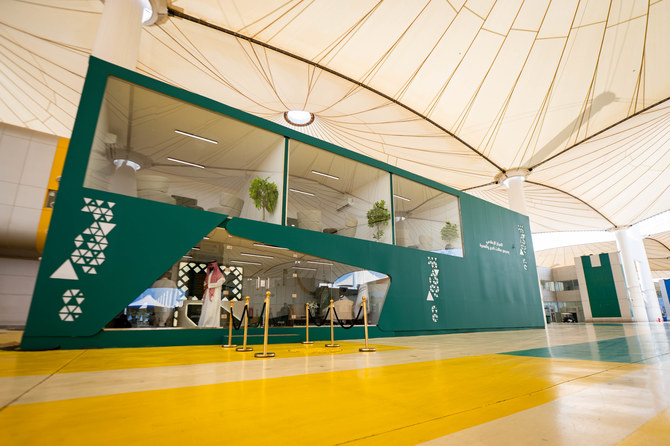
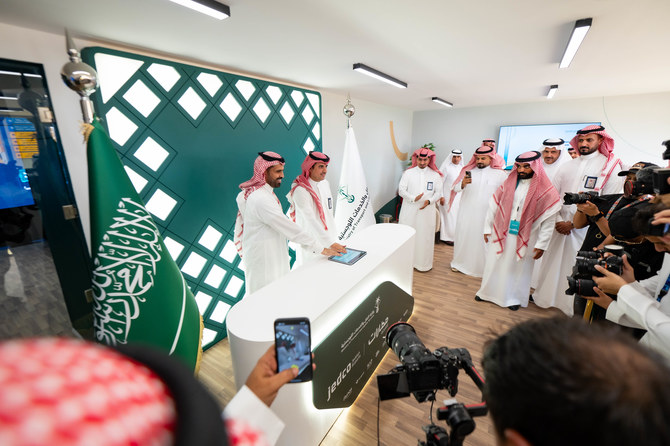
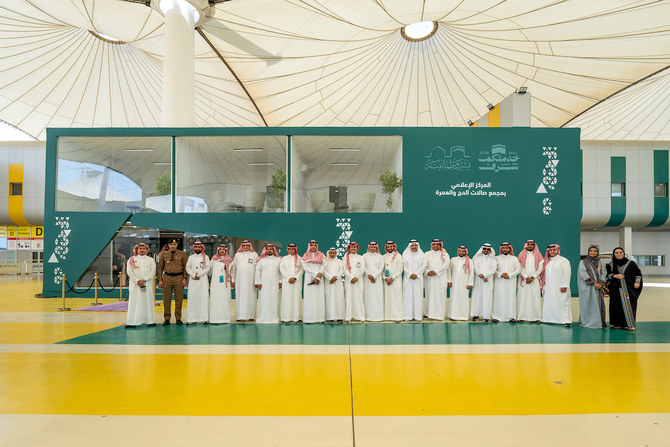


JEDDAH: The Ministry of Transport and Logistic Services launched the media center for the 2024 Hajj season on Sunday at the Hajj and Umrah terminals at King Abdulaziz International Airport in Jeddah.
The center aims to support and assist more than 1,300 journalists from 16 countries during the arrival and departure of pilgrims via the airport throughout the Hajj season.
Operating 24/7, the center offers journalists shared workspaces and real-time updates, enhancing media efficiency during the Hajj season. This is complemented by the Makkah Route Initiative led by the Ministry of Interior in a dedicated pavilion, alongside the Ministry of Hajj and Umrah and the General Authority of Media Regulation.
It also caters to local and international media outlets, including news agencies, television channels, journalists, correspondents and photographers.
Saleh Al-Zuaid, official spokesman for the Ministry of Transport, told Arab News: “The importance of the center lies in providing a place for journalists, offering multiple studios, shared workspaces, showcasing comprehensive digital transportation technologies and delivering media messages in five languages: Arabic, English, French, Urdu and Persian.”
Al-Zuaid discussed the technological advancements that will revolutionize transportation and logistics systems for pilgrims. Last year, 19 technologies were introduced to enhance the pilgrim experience, with plans to implement 32 more this year.
Notable innovations include road-cooling technology, virtual glasses for bus inspections and automatic monitoring technology, which significantly reduce bus inspection time. The implementation of these technologies aims to improve efficiency, safety and comfort for pilgrims during their journey.
Al-Zuaid said: “There are technologies we will announce for feasibility study for implementation in the coming years, some of which were launched last year and achieved high success, and will be implemented this year as well, such as the automatic monitoring technology, which reduced the bus inspection time from 60 seconds to 6 seconds, as well as the road-cooling technology implemented last year which contributed to reducing street temperatures by 12 degrees Celsius.”
Other important technologies include the luggage-free Hajj initiative, which facilitates the departure of pilgrims, to be implemented this year at King Abdulaziz International Airport and Prince Mohammed bin Abdulaziz International Airport in Madinah.
The Ministry of Transport is exploring innovative initiatives to further enhance the pilgrimage experience, such as the rubberized sidewalk initiative, the taxi app for convenient transportation, and the use of self-driving vehicles for order delivery among the new projects set to be introduced.
These initiatives focus on improving pilgrims’ overall well-being, reducing logistical challenges and enhancing accessibility to essential services.