ISLAMABAD: A special flight carrying 140 Pakistani students from the Kyrgyz capital of Bishkek landed at the Lahore airport late Saturday night, following violent attacks against foreign nationals in the city this week after a dispute between locals and migrants that led to evacuation requests.
This was the first batch of Pakistani students to arrive in the country after violence erupted in Bishkek on Friday night. Videos of a brawl between Kyrgyz and Egyptian students went viral online, prompting furious mobs to target hostels of medical universities and private lodgings of international students, including Pakistanis, in the city.
According to official statistics, around 10,000 Pakistani students are enrolled in various educational institutions in Kyrgyzstan, with nearly 6,000 residing and studying in Bishkek.
Speaking to Arab News on Saturday, many students reported the Pakistan embassy had advised them to stay indoors, though they had run out of food and water. Some even expressed fears that rioting might resume at night and requested evacuation by the authorities.
Interior Minister Mohsin Naqvi welcomed the first batch of Pakistani students as they arrived at the Allama Iqbal International Airport in Lahore and inquired about their well-being, the interior ministry said in a statement.
“Interior Minister Mohsin Naqvi asked students about the tragic incident in Bishkek and inquired about their problems,” the ministry said.
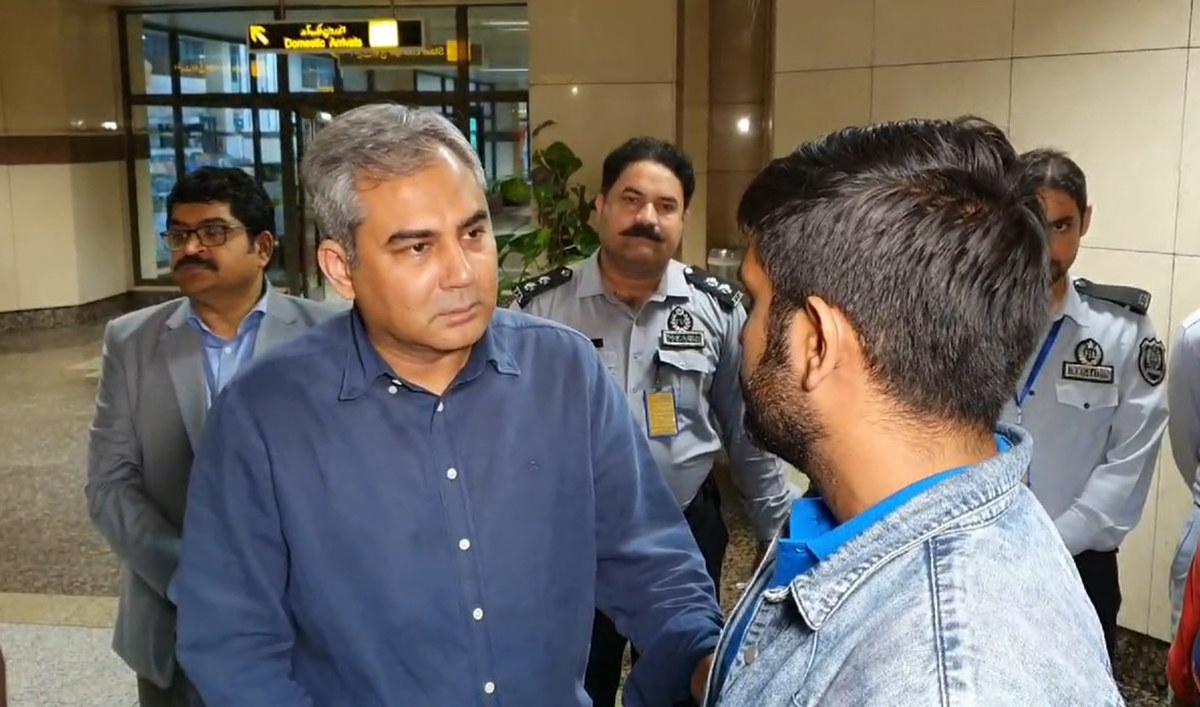
In this screengrab, taken from a video released by Pakistan’s Interior Ministry, Interior Minister Mohsin Naqvi (left) receives Pakistani students at the Allama Iqbal International Airport in Lahore on May 19, 2024, arrived from Bishkek after mobs in Kyrgyz capital attacked foreign students Friday night following a brawl with migrants. (Photo courtesy: Interior Ministry)
While the interior ministry said 140 students had arrived from Kyrgyzstan, Pakistan’s state broadcaster PTV News said 180 students had arrived in Lahore.
Naqvi said Pakistani students in Kyrgyzstan are “children of the nation,” vowing that those from cities other than Lahore would be provided free transport.
A statement released by the PM’s Office on Saturday evening said Prime Minister Shehbaz Sharif had directed Deputy Prime Minister Ishaq Dar and another cabinet member, Amir Maqam, to travel to Bishkek on Sunday and address the situation there.
The two Pakistani officials will meet with senior government officials in the Kyrgyz capital to ensure medical treatment for injured students and review arrangements for their return.
“Our first concern is the safe return of Pakistani students,” Naqvi said. “God willing, more students would be brought back via additional flights tomorrow [Sunday].”
The country’s ambassador to Kyrgyzstan Hasan Zaigham said on Saturday that five Pakistani medical students had been injured in the mob attack. One student was admitted to a local hospital with a jaw injury, while the other four were released after receiving first aid.
“No Pakistani was killed or raped in the violence,” he told Arab News over the phone, dispelling rumors circulating on social media. “The situation is under control now as Bishkek authorities have dispersed all the miscreants.”
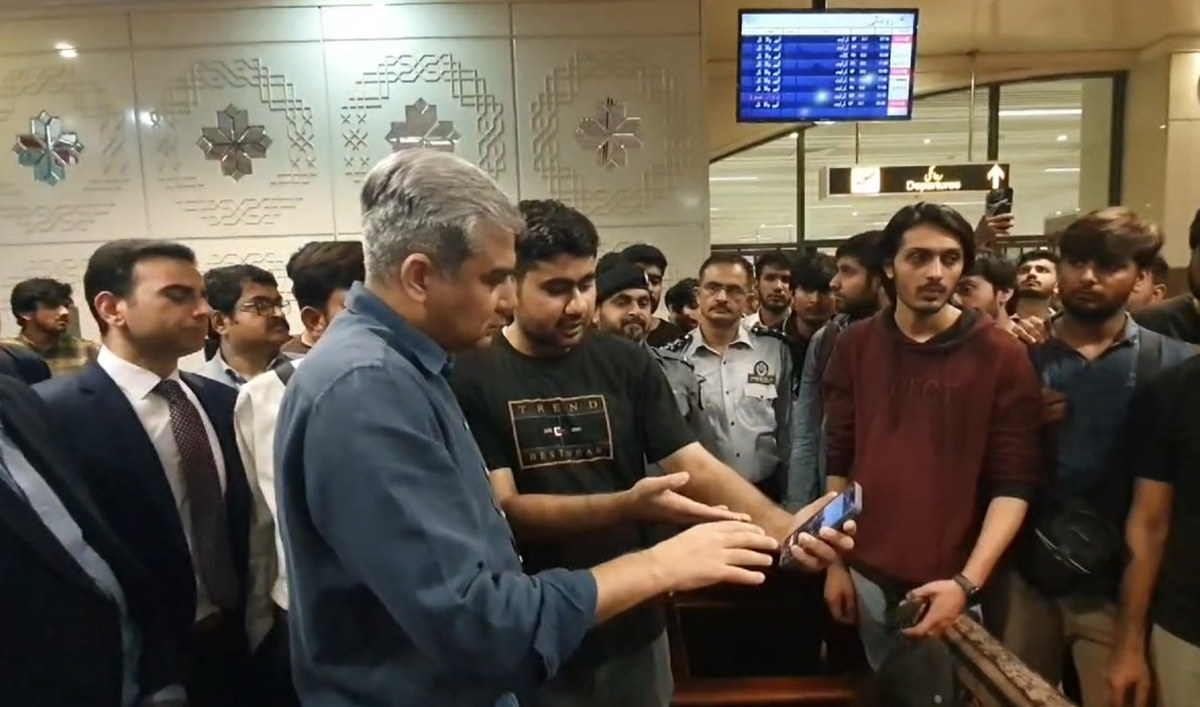
In this screengrab, taken from a video released by Pakistan’s Interior Ministry, Interior Minister Mohsin Naqvi (left) speaks to Pakistani students at the Allama Iqbal International Airport in Lahore on May 19, 2024, as they arrived from Bishkek after mobs in Kyrgyz capital attacked foreign students Friday night following a brawl with migrants. (Photo courtesy: Interior Ministry)
Separately, Pakistan’s foreign ministry said on Saturday it had summoned and handed a note of protest to Kyrgyzstan’s top diplomat in the country in response to violence against Pakistani students in Bishkek.
“It was impressed on the Kyrgyz charge d’affaires that the Kyrgyz government should take all possible measures to ensure the safety and security of Pakistani students and citizens,” Pakistan’s foreign ministry said in a statement.
The statement said the Kyrgyz health ministry had confirmed four Pakistanis were given first aid and discharged while one was still under treatment for injury.