ISLAMABAD: Prime Minister Shehbaz Sharif decided to send a two-member delegation to the Kyrgyz capital of Bishkek and offered free travel facilities to all Pakistani students stranded there on Saturday, following mob violence against foreign nationals enrolled in various universities that led to evacuation requests.
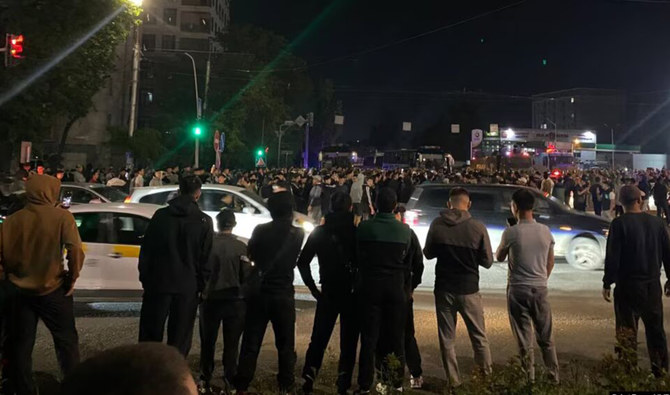
The violence erupted on Friday night after videos of a brawl between Kyrgyz and Egyptian students went viral online, prompting furious mobs to target hostels of medical universities and private lodgings of international students, including Pakistanis, in the city.
According to official statistics, around 10,000 Pakistani students are enrolled in various educational institutions in Kyrgyzstan, with nearly 6,000 residing and studying in Bishkek.
Speaking to Arab News on Saturday, many students reported the Pakistan embassy had advised them to stay indoors, though they had run out of food and water. Some even expressed fears that rioting might resume at night and requested evacuation by the authorities.
A statement released by the PM’s Office in the evening indicated that Sharif had directed Deputy Prime Minister Ishaq Dar and another cabinet member, Amir Maqam, to address the situation in Bishkek.
“Both officials will depart for Bishkek early tomorrow morning [on Sunday] via a special plane,” the statement continued. “Throughout the day, the Prime Minister had been monitoring the situation and staying in contact with the Pakistani ambassador in Bishkek.”
“Despite the satisfactory situation,” it added, “the decision to send this delegation was made to ensure necessary support and facilities for Pakistani students.”
The two Pakistani officials will meet with senior government officials in the Kyrgyz capital to ensure medical treatment for injured students and review arrangements for their return.
In an earlier statement, the prime minister noted that those who wanted to return to Pakistan would be “facilitated at the government’s expense.”
Sharif also declared that his administration would not leave the students alone during such a difficult time and would remain in contact with them and their parents through the embassy.
Meanwhile, the foreign office activated its Crisis Management Unit to facilitate and assist Pakistani nationals in the Kyrgyz Republic and their families. The unit can be contacted on the following numbers: +92519203108 and +92519203094, or via email at [email protected].
The country’s ambassador to Kyrgyzstan Hasan Zaigham said earlier in the day that five Pakistani medical students had been injured in the mob attack. One student was admitted to a local hospital with a jaw injury, while the other four were released after receiving first aid.
“No Pakistani was killed or raped in the violence,” he told Arab News over the phone, dispelling rumors circulating on social media. “The situation is under control now as Bishkek authorities have dispersed all the miscreants.”


Pakistan to send two-member delegation to Kyrgyzstan, offers free evacuation to stranded students
https://arab.news/w3yf9
Pakistan to send two-member delegation to Kyrgyzstan, offers free evacuation to stranded students

- The decision comes after five Pakistani students were injured in mob violence against foreign nationals in Bishkek
- Deputy PM Ishaq Dar will lead the delegation on Sunday morning to review arrangements for the return of students

Pakistan mulls space-based monitoring to support port expansion, maritime safety
- Minister says satellite technology could aid port planning and environmental protection
- Islamabad seeks to modernize ports as it eyes transshipment role, Central Asian trade
KARACHI: Pakistan is considering the use of space-based monitoring systems to support port expansion, maritime safety and environmental protection, the country’s maritime affairs minister said on Wednesday, as he visited the headquarters of the national space agency.
The visit comes as Islamabad seeks to position itself as a transshipment hub by upgrading cargo handling, streamlining import and export processes and offering its southern ports on the Arabian Sea to landlocked Central Asian states as trade gateways.
“Advanced space-based monitoring systems can play a vital role in safeguarding seas, improving maritime management and strengthening responses to environmental threats,” Maritime Affairs Minister Muhammad Junaid Anwar Chaudhry said, according to a statement released after his visit.
Chaudhry was briefed on satellite-based assessments identifying potential sites for new ports, as well as tools for maritime traffic monitoring and disaster response.
Pakistan has been working to expand and modernize its port infrastructure to improve efficiency and attract regional cargo flows, particularly as it seeks to enhance connectivity through its coastline along the Arabian Sea.
During the visit, officials from the Pakistan Space and Upper Atmosphere Research Commission (SUPARCO) outlined the use of high-resolution satellite imagery, artificial intelligence and digital modelling to monitor ports, track cargo dwell time, detect oil spills and support search-and-rescue operations at sea.
“We can benefit from continuous monitoring of coastal ecosystems to assess water quality, sediment dispersion and overall environmental health,” Chaudhry said, adding that data-driven approaches were essential for informed policymaking in the maritime sector.
He also highlighted the growing risks posed by climate change, including rising sea levels, coastal erosion and extreme weather events, and said stronger cooperation between maritime authorities and scientific institutions was needed to protect coastal communities and infrastructure.
SUPARCO officials said the agency was ready to develop artificial intelligence-based solutions for ports and maritime operations, including systems to address customs-related inefficiencies and improve emergency response times.
The minister said the ministry and SUPARCO would move toward formalizing cooperation through a structured framework to support joint initiatives.


