

Saudi designer unveils collection inspired by Jeddah’s Al-Balad

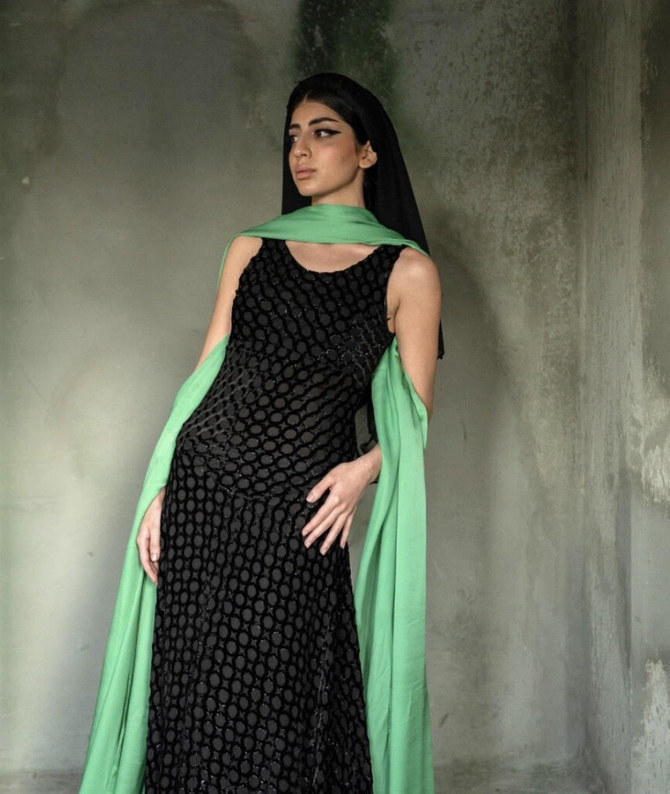
The event showcased Marzuki’s latest collection, which draws inspiration from the rich cultural heritage of the historic district of Jeddah. (Supplied)
Short Url
Updated 16 May 2024
Follow

Saudi designer unveils collection inspired by Jeddah’s Al-Balad

  • Through this collection, we invite our guests to not just wear garments, but to immerse themselves in an experience of a journey through time, culture and elegance: Makram Marzuki

JEDDAH: Saudi designer Makram Marzuki, in collaboration with Al-Balad Hospitality, hosted a captivating trunk show at heritage hotel Beit Jokhdar in Al-Balad on May 14-15.

The event showcased Marzuki’s latest collection, which draws inspiration from the rich cultural heritage of the historic district of Jeddah.

Marzuki’s latest show not only celebrated the beauty of Al-Balad but also offered a glimpse into the designer’s creative process and dedication to preserving Saudi heritage through contemporary fashion.

Speaking about the setting of the show, which emphasized telling the story beind the collection, Marzuki expressed his vision of creating a distinctive shopping experience that resonates with the history and essence of Al-Balad.

“Understanding the psychology of the Saudi woman who values luxury, we recognize her desire for more than just a generic store,” Marzuki said. 

“Our goal is to provide an engaging and enjoyable shopping experience where connections are forged and memories are made. Witnessing women greet each other warmly, sharing stories and embracing the fusion of old and new, reaffirms our belief in bringing the past into the future.”

Marzuki revealed that the collection, which features luxurious and refined pieces, is a reflection of the heritage and architectural elements of Al-Balad, such as the intricate designs of “rawasheen” or “roshan,” the patterned wooden frames on windows and balconies.

The designer highlighted the attention to detail and craftsmanship that went into creating each garment, evoking a sense of quiet luxury that aligns with the ambiance of Beit Jokhdar.

“The trunk show and the hotel seamlessly blend together,” he said. “We aimed for an atmosphere of understated elegance, echoing the hotel’s over 100-year-old legacy.” 

The designer shared insights into the design process, adding that the collaboration with Samaher Bashammakh from the Royal Institute of Traditional Arts was instrumental in bringing the collection to life as well as ensuring that every detail harmonized with the concept of luxury.

“The result is an intimate and luxurious experience, similar to browsing through a woman’s own closet,” he said. “We wanted to create a space that felt personal, where guests could immerse themselves in the brand’s ethos of sophistication and refinement.”

A white dress crafted from a luxurious cotton-silk blend and adorned with lace details reminiscent of the graceful lines of the roshan exemplified the fusion of traditional elements with modern design, he said. “Through this collection, we invite our guests to not just wear garments, but to immerse themselves in an experience of a journey through time, culture and elegance.”

Speaking about his favorite piece, he said: “The challenge of translating the delicate intricacy of the roshan into velvet jacquard fabric was immense, but the result is truly breathtaking. It’s a testament to the craftsmanship and dedication that went into every detail. This garment symbolizes the fusion of tradition and innovation, and it’s truly fantastic to see it come to life.”

Reflecting on the event, Marzuki emphasized the importance of storytelling in design and encouraged young designers to delve deep into their inspirations to create meaningful collections.

He hinted at a new collection set to launch in October, promising another showcase of exquisite craftsmanship and cultural references.


Saudi Arabia’s story began 49 years before the independence of the US

Updated 5 sec ago
Follow

Saudi Arabia’s story began 49 years before the independence of the US

On Feb. 22, 1727, nearly 300 years ago, the process of establishing the first Saudi state began in Diriyah during the reign of Imam Mohammed bin Saud, founder of the Saudi ruling family.

Diriyah was established by his seventh grandfather, Mana’ Al-Muraidi in the 15th century AD.

Sixteen of his descendants became rulers, known as imams in the first and second Saudi states and as kings in the current Saudi state.

Al-Muraidi’s lineage goes back to Bani Hanifa from the Bakr bin Wael tribe, and he is related to the Prophet Muhammad, peace be upon him, through their common ancestor, Nizar bin Ma’ad bin Adnan.

He moved to the second Diriyah in Najd from the first Diriyah, which was founded by his ancestors in the east of the Arabian Peninsula.

He is the 13th grandfather of the Custodian of the Two Holy Mosques King Salman bin Abdulaziz, and the 14th grandfather of Crown Prince Mohammed bin Salman.

The first Saudi state began 49 years before the independence of the US, and according to Western travelers themselves, it expanded remarkably during the reign of Imam Saud bin Abdulaziz, known as Saud the Great, the third ruler in its history.

According to European documents, what he did was unprecedented in terms of his correspondence with heads of states and empires on behalf of his country, including Napoleon Bonaparte, the emperor of France, and the shah of Iran.

He established a special protocol for correspondence and negotiations, as well as palaces for receiving state guests.

During his reign, the gunpowder industry developed. Imam Saud took power when a man from Iraq assassinated his father, Imam Abdulaziz, while he was leading people in prayer in 1803, shortly after his defeat of the Turks in four campaigns launched against him from Basra.

Saud the Great was known by this compound name because he expanded the size of the state, adding Makkah and Madinah to it, reaching Hodeidah in Yemen and south of Damascus, and stopping at the borders of Basra, adding to the achievements of his forebears.

The state of his grandfather, Imam Mohammed bin Saud, stopped at Sudair, Al-Mahmal, and most of Al-Arad, while the state of his father, Imam Abdulaziz, added Riyadh to it, and reached Dumat Al-Jandal and Wadi Sarhan in the north, along with parts of southern Iraq, Jazan in the south, Taif in the west, and extended his influence over Bahrain, Qatar, Ras Al-Khaimah, Muscat and Al-Hadd in the east, establishing a stability the land had not known for a long time.

During the reign of Imam Saud, which represented the peak of the state’s expansion and dominance, Mohammed Ali Pasha sent an army from Egypt, led by his son Toussaint, and Imam Saud defeated him in the Battle of Wadi Al-Safra.

The shah of Iran too sent an army against him at Muscat, and Imam Saud won another great victory there.

Ras Al-Khaimah, meanwhile, was attacked by British ships coming from India to eliminate Saudi influence there. The Saudi forces suffered severe losses before the ships headed on to Manama and bombarded Saudi forces there as well. The battles ended with a truce between the first Saudi state and Britain.

Elsewhere, quality of life and prosperity prevailed in Diriyah, as evidenced by its hosting of the seasonal market, the largest market on the Arabian Peninsula at that time, with goods coming to it from Iraq, Yemen, Oman and the Levant.

The Diriyah Bathhouse was built, which is a large building that served as a public bathhouse, similar to its counterparts in the Levant and Egypt.

Some historians have reported that a single house in Diriyah during the early days of the Saudi state was worth more than 20 times the value of a house in the rest of the Najd.

This shows that demand for housing was high, as is the case in Riyadh today, where timber prices rose significantly as a result of the urban renaissance and large-scale construction, most notably the 13 km-long Diriyah Wall, which contained 78 defensive towers.

The anniversary of its founding confirms that Diriyah, despite its destruction in 1818, has been brought back to life, thanks to the interest shown by King Salman when he was Prince of Riyadh, with the registration of At-Turaif district in Diriyah on UNESCO’s World Heritage List in 2010.

With the support of the Kingdom’s leadership, and with the Diriyah Gate project in 2019, it has become a global cultural and tourist destination that reflects its identity and ancient details with thoughtful modernity.

It will cost $63 billion and cover an area of 14 km, qualifying Diriyah to become a center of global culture.

After five years, it will include 38 hotels and 19 resorts and will contribute approximately SR27 billion ($7.2 billion), to GDP, in addition to SR20 billion in local content.

It will be ready to receive 50 million visitors annually and will employ approximately 180,000 Saudis.

• Dr. Bader bin Saud is a columnist for Al-Riyadh newspaper, a media and knowledge management researcher, an expert and university professor in crowd management and strategic planning, and the former deputy commander of the Special Forces for Hajj and Umrah in Saudi Arabia. X: @BaderbinSaud.