NEW YORK: Some social media users are calling out celebrities for what they say is inaction in the face of a humanitarian crisis in Gaza — and they’ve taken to a “blockout” to pressure the stars to take a stand.
For the blockout, users put a block on seeing any and all content from the accounts of certain celebrities on social media platforms including X, TikTok and Instagram. Some have posted about the celebrities they’ve blocked, using a hashtag such as #blockout, #blockout2024, or #celebrityblockout, while others have shared posts from users lambasting attendees of high-glamor events like the Met Gala and contrasting it with the situation in Gaza.
Blockout participants say it’s a protest because the celebrities either haven’t spoken up or haven’t said enough against Israel’s actions in Gaza during its war with Hamas. Since the war erupted Oct. 7 with Hamas’ deadly attacks, Israel’s military has killed more than 35,000 people in Gaza, according to Gaza’s Health Ministry, which doesn’t distinguish between civilians and combatants.
How does the blockout work?
On social media platforms, users see content from people they follow, as well as from those chosen for them by algorithms. In both instances, users can select options to mute or block a person or account.
Blocking the accounts of celebrities or influencers means not seeing any of the content they produce on social media — no posts, no photos or videos, no collaborations with sponsors. The number of people interacting with content brings in money, so the blocks are meant to affect views, engagement and — ultimately — paychecks.
The blockout also is meant to target celebrities’ brands by taking eyeballs and attention away from their content.
Who is being blocked?
There is no single organized list of celebrities being blocked. Some users are offering celebrity suggestions, while others are deciding on their own. Celebrities in the US and beyond have been named in the blockout.
Blocking is up to each social media user. And every celebrity, influencer or content creator must be blocked individually on each platform.
How did the blockout start?
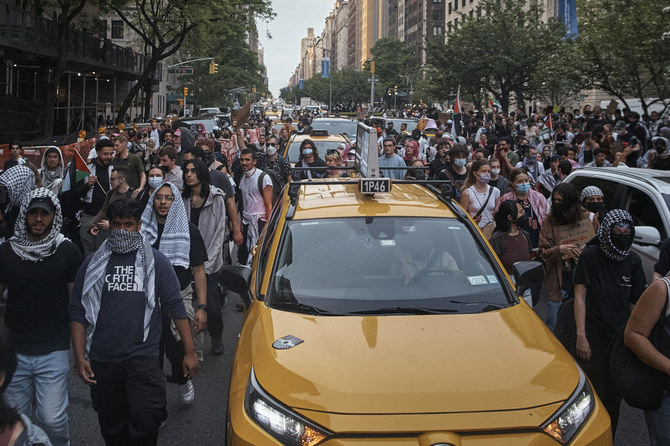
Protests around the Israel-Hamas war have grown, with encampments on college campuses around the country. Amid those movements, attention to what celebrities and influencers were, or weren’t, saying got a boost after the Met Gala last week.
The annual party draws a host of famous faces from the worlds of fashion, movies, music, sports and more. It’s known for its over-the-top arrivals carpet and the elaborate outfits celebrities wear. This year, the gala was circled by protesters for much of the evening.
Social media was flooded with images from the star-studded event. Around the same time, images circulated as Israel launched a military operation in the southern Gaza city of Rafah. That led to some users calling out the contrast between the gala’s celebrity opulence and the situation in Gaza — using images from both — and condemning celebrities for not using their platforms to speak up for those who are suffering.
Will the blockout be effective?
The effectiveness and staying power of the blockade are yet to be seen, said Beth Fossen, assistant professor of marketing at Indiana University. It might depend on the celebrity and what they’re known for — a famous person whose “brand” is tied to humanitarian causes may be more affected than one known primarily for talent, she added.
“If your identity is really tied to promoting something that is key to the boycotting, then this could potentially have really serious consequences for you,” Fossen said. “There might be some influencers that gain their fame by sort of promoting peace and then they’re being silent on this issue — followers may not forgive them.”
Is there blockout backlash?
There has been criticism of the blockout, with some saying the focus on celebrities takes attention away from what’s happening on the ground in Gaza. Others question what the parameters are for judging whether someone should be blocked — and what would constitute a well-known person speaking out or doing enough.


![]()

What is the celebrity ‘blockout’ over the war in Gaza?
Short Url
https://arab.news/mqz84
What is the celebrity ‘blockout’ over the war in Gaza?
- For the blockout, users put a block on seeing any and all content from the accounts of certain celebrities on social media platforms


Latest updates


© 2026 SAUDI RESEARCH & PUBLISHING COMPANY, All Rights Reserved And subject to Terms of Use Agreement.