ENGALURU, India: Sizzling heat across Asia and the Middle East in late April that echoed last year’s destructive swelter was made 45 times more likely in some parts of the continent because of human-caused climate change, a study Tuesday found.
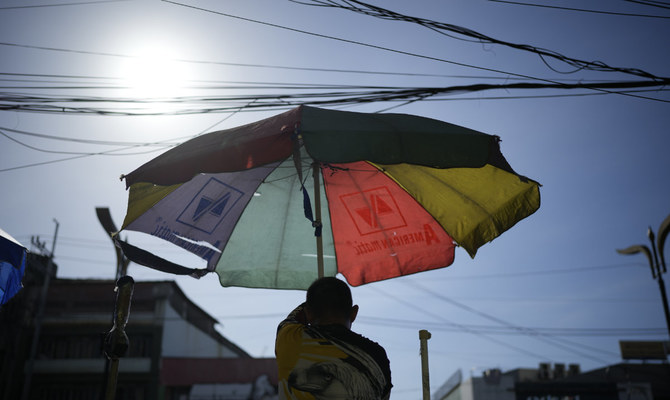
Scorching temperatures were felt across large swaths of Asia, from Gaza in the west — where over 2 million people face clean water shortages, lack of health care and other essentials due to Israeli bombardment — to the Philippines in the southeast, with many parts of the continent experiencing temperatures well above 40 degrees Celsius (104 degrees Fahrenheit) several days in a row.
The study was released by the World Weather Attribution group of scientists, who use established climate models to quickly determine whether human-caused climate change played a part in extreme weather events around the world.
In the Philippines, scientists found the heat was so extreme it would have been impossible without human-caused climate change. In parts of the Middle East, climate change increased the probability of the event by about a factor of five.
“People suffered and died when April temperatures soared in Asia,” said Friederike Otto, study author and climate scientist at Imperial College in London. “If humans continue to burn fossil fuels, the climate will continue to warm, and vulnerable people will continue to die.”
At least 28 heat-related deaths were reported in Bangladesh, as well as five in India and three in Gaza in April. Surges in heat deaths have also been reported in Thailand and the Philippines this year according to the study.
The heat also had a large impact on agriculture, causing crop damage and reduced yields, as well as on education, with school vacations having to be extended and schools closed in several countries, affecting thousands of students.
Myanmar, Laos and Vietnam broke records for their hottest April day, and the Philippines experienced its hottest night ever with a low of 29.8 degrees Celsius (85.6 degrees Fahrenheit). In India, temperatures reached as high as 46 degrees Celsius (115 degrees Fahrenheit). The month was the hottest April on record globally and the eleventh consecutive month in a row that broke the hottest month record.
Climate experts say extreme heat in South Asia during the pre-monsoon season is becoming more frequent and the study found that extreme temperatures are now about 0.85 degrees Celsius (1.5 Fahrenheit) hotter in the region because of climate change.
Internally displaced people, migrants and those in refugee camps were especially vulnerable to the searing temperatures, the study found.
“These findings in scientific terms are alarming,” said Aditya Valiathan Pillai, a heat plans expert at New Delhi-based think tank Sustainable Futures Collaborative. “But for people on the ground living in precarious conditions, it could be absolutely deadly.” Pillai was not part of the study.
Pillai said more awareness about heat risks, public and private investments to deal with increasing heat and more research on its impacts are all necessary to deal with future heat waves.
“I think heat is now among the foremost risks in terms of personal health for millions across the world as well as nations’ economic development,” he said.


![]()

Sweltering heat across Asia was 45 times more likely because of climate change, study finds
Short Url
https://arab.news/2wbkp
Sweltering heat across Asia was 45 times more likely because of climate change, study finds


Latest updates







© 2026 SAUDI RESEARCH & PUBLISHING COMPANY, All Rights Reserved And subject to Terms of Use Agreement.