GCC prioritizes economic diversification for sustainable growth, says official 

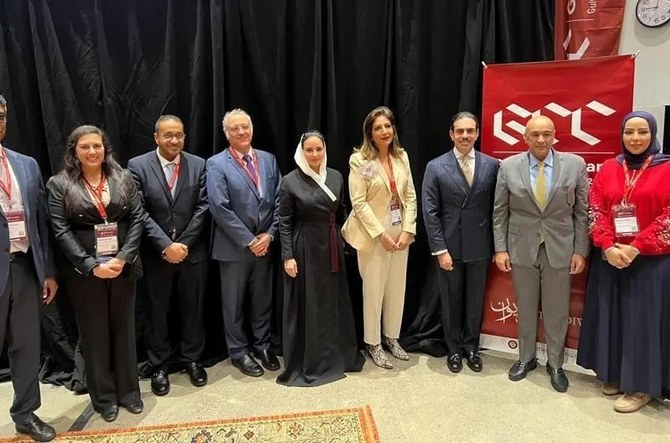
During the Gulf Creatives Conference, organized by the Diwan at Harvard University in Cambridge, Massachusetts, Al-Budaiwi outlined a vision that embraces diverse sectoral reforms. SPA
Short Url
Updated 12 May 2024
Follow

GCC prioritizes economic diversification for sustainable growth, says official 

RIYADH: The Gulf Cooperation Council aims to reduce reliance on oil revenues by implementing a comprehensive vision for economic diversification, as emphasized by its Secretary-General, Jasem Al-Budaiwi. 

During the Gulf Creatives Conference, organized by the Diwan at Harvard University in Cambridge, Massachusetts, Al-Budaiwi outlined a vision that embraces diverse sectoral reforms. These initiatives are aimed at strengthening economic resilience and attracting foreign investments, the Saudi Press Agency reported. 

He noted GCC countries have positioned themselves as competitive digital hubs on the global map, supported by their favorable geographic location and young population. 

“The strategic location, coupled with robust infrastructure, paves the way for the council member states to attract international partnerships that support their long-term development goals,” Al-Budaiwi said. 

He added: “This dynamic approach is vital for sustaining economic growth and ensuring the resilience of Gulf economies in the face of global economic fluctuations and regional challenges.” 

Additionally, Al-Budaiwi emphasized the numbers and data supporting these plans and showcased the advancements made by GCC nations, including the establishment of the Customs Union, the GCC Common Market, and the Unified Economic Agreement. He cited Saudi Arabia’s NEOM project as an example of urban development initiatives within GCC nations. 

He explained that smart cities are designed to reduce waste, enhance energy efficiency, and streamline urban management by leveraging artificial intelligence and the Internet of Things. 

He continued by stating that this further underscores the GCC nations’ commitment to technologically advanced and environmentally friendly urban design, as well as the increased emphasis on cybersecurity to mitigate growing risks and maintain confidence in the digital economy. 

Moreover, Al-Budaiwi emphasized the transition from oil-dependent to diversified economies and expressed satisfaction with the outstanding economic and integration achievements of the GCC countries. 

In February, he held a series of meetings in Riyadh with foreign ambassadors to Saudi Arabia. 

Al-Budaiwi met with the South Korean Ambassador to Saudi Arabia, Choi Byung Hyuk, at the general secretariat headquarters in Riyadh. 

During the meeting, the secretary-general discussed the developments in the free trade agreement between the GCC countries and South Korea, which was signed in December 2023. 

Both sides expressed their desire to enhance cooperation between nations and increase focus on mutual interests such as education, health, investment, and pharmaceuticals. 

The meeting also reviewed relations between the GCC and South Korea, emphasizing the importance of enhancing strategic dialogue through the areas of cooperation outlined in the joint action plan.


Saudi Arabia’s construction costs see 1% annual rise in November: GASTAT 

Updated 8 sec ago
Follow

Saudi Arabia’s construction costs see 1% annual rise in November: GASTAT 

RIYADH: Saudi Arabia’s construction costs rose at a steady pace in November, signaling resilience in the sector as the Kingdom continues to manage rising labor and energy expenses. 

The Construction Cost Index climbed to 101.75 points in November, up 1 percent from a year earlier and broadly unchanged from October, according to data from the General Authority for Statistics. 

The steady momentum in Saudi Arabia’s construction sector aligns with a broader trend across the Gulf Cooperation Council, as regional economies push to diversify away from hydrocarbons. 

In July, real estate consultancy Knight Frank said Saudi Arabia’s construction output value is expected to reach $191 billion by 2029, representing a 29.05 percent increase from 2024, driven by residential development, ongoing giga-projects and rising demand for office space. 

In its latest report, GASTAT stated: “The CCI recorded a 1 percent increase in November 2025, maintaining the same growth rate observed in October 2025. This increase is mainly attributed to a 1 percent rise in construction costs for the residential sector and a 1 percent rise in construction costs for the non-residential sector.” 

In the residential sector, labor costs rose 1.5 percent year on year in November, while equipment and machinery rental costs increased 1.3 percent over the same period. 

Energy prices recorded a sharp increase of 9.9 percent compared with November 2024. 

Basic material costs edged up 0.2 percent, driven by a 1.4 percent rise in cement and concrete prices and a 1.1 percent increase in raw material costs. 

In the non-residential sector, the Construction Cost Index increased 1 percent year on year in November, mainly due to a 1.2 percent rise in equipment and machinery rental costs. 

Labor costs increased 1.1 percent, while energy prices continued their upward trend, rising 9.9 percent over the year. 

Basic material costs rose 0.3 percent, reflecting a 2.5 percent increase in wood and carpentry prices and a 1.4 percent rise in raw material costs. 

The Construction Cost Index tracks changes in construction input costs across 51 items, with prices collected monthly from 13 regions through field surveys of contractors, engineering offices and construction material suppliers. The base year is 2023, and the index is published monthly.