

What We Are Reading Today: The Shield of Achilles

Photo/Supplied
Short Url
Updated 11 May 2024
Follow

What We Are Reading Today: The Shield of Achilles

Author: W. H. Auden Edited by Alan Jacobs

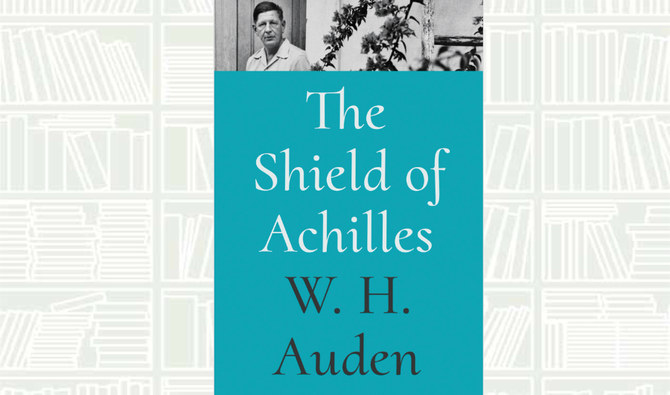
“The Shield of Achilles,” which won the National Book Award in 1956, may well be W. H. Auden’s most important, intricately designed, and unified book of poetry. In addition to its famous title poem, which reimagines Achilles’s shield for the modern age, when war and heroism have changed beyond recognition, the book also includes two sequences—“Bucolics” and “Horae Canonicae”—that Auden believed to be among his most significant work.

Featuring an authoritative text and an introduction and notes by Alan Jacobs, this volume brings Auden’s collection back into print for the first time in decades and offers the only critical edition of the work.

As Jacobs writes in the introduction, Auden’s collection “is the boldest and most intellectually assured work of his career, an achievement that has not been sufficiently acknowledged.” Describing the book’s formal qualities and careful structure, Jacobs shows why The Shield of Achilles should be seen as one of Auden’s most central poetic statements—a richly imaginative, beautifully envisioned account of what it means to live, as human beings do, simultaneously in nature and in history.



Book Review: ‘Small Things Like These’ by Claire Keegan

Updated 19 February 2026
Follow

Book Review: ‘Small Things Like These’ by Claire Keegan

In “Small Things Like These,” Irish writer Claire Keegan delivers a quietly devastating meditation on conscience, courage and compassion.

Set in a small Irish town in 1985, the novella follows Bill Furlong, a coal merchant and devoted father whose steady routine is disrupted when he uncovers disturbing secrets within a local convent’s Magdalene laundry, institutions known for placing women in harsh working conditions under the guise of care. 

What unfolds is not a story of grand heroics but of moral awakening and quiet bravery. Keegan’s writing is economical yet deeply expressive, her sentences carrying a stillness that mirrors the winter atmosphere and the emotional restraint of her characters.

Furlong’s dilemma, whether to remain silent or act, reflects a broader question about how ordinary people respond to injustice when it happens in plain sight and when society prefers to look away. 

Keegan’s restraint is one of her greatest strengths. The novella avoids overt judgment or sentimentality, relying instead on nuance, rhythm and suggestion.

Everyday details, a gesture or a silence, reveal the quiet conflicts of conscience. Furlong’s character embodies the tension between comfort and conviction, reminding readers that doing nothing is itself a choice and that small decencies can carry immense moral weight. 

The book’s impact lies in its understatement. Within its brief length, Keegan captures the weight of an entire community’s silence and the redemptive power of individual decency. Her prose feels timeless in its precision, emotional intelligence and empathy. 

“Small Things Like These” is a beautiful, haunting work that lingers long after it ends.

It asks readers to consider how goodness survives in a world inclined toward indifference and how small acts can illuminate even the darkest corners of collective memory.