- Agriculture department says no other place worldwide where nurseries sprawl whole city
- Plant exporters urge government to lift ban on import of seeds and new plant varieties
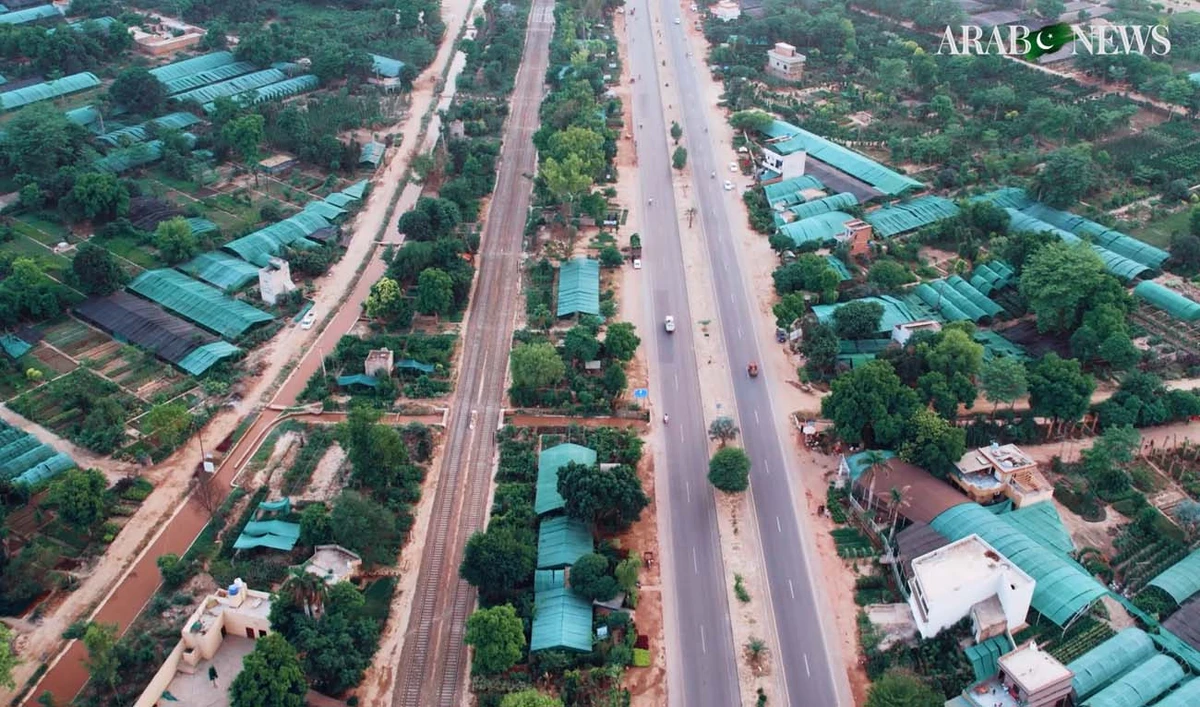
Pattoki, PAKISTAN: From a bird’s-eye view, dozens upon dozens of nurseries can be seen dotting the city for several kilometers, featuring colorful flowers, massive trees and decorative plants. Around them, hundreds of workers flit about planting and trimming plants and plucking weed from the ground and out of clay pots.
This is a scene from Pattoki, a city in the Kasur district of Pakistan’s most populous Punjab province, that exporters and government officials say is the largest nursery market in Asia. Spread over a thousand hectares, the market employs around 100,000 people directly or indirectly.
“This [nursery] is spread over ten villages and each village’s population is estimated to be around 10,000 people,” exporter Lala Shaukat told Arab News in Pattoki last week. “This is a profitable business and people are earning well from it, and this [Pattoki] has become Asia’s biggest [nursery] market.”
“Pattoki is indeed Asia’s largest nursery due to its sprawl at a single place, in one city, and this is the biggest market in Pakistan from where the plants and flowers are not only supplied across the country, but also exported to Saudi Arabia, UAE and other Gulf countries,” said Dr. Basharat Saleem, a deputy director at the Punjab general agriculture directorate.
In Pattoki, an average nursery is spread over ten hectares with 30-40 gardeners taking care of around 350 types of plants and flowers that are sold both locally and exported.
“Around 350 varieties [of different plants] are available with us [at this nursery], including palm trees and shadow trees,” Bilal Ahmed, a nursery owner, told Arab News. “Then there are fruit plants and flower plants which are available with us in abundance.”
GULF EXPORTS
Exporter Sheraz Ali said Pakistan’s plants and flower exports to Gulf countries had increased since 2018 from around 15 containers yearly to 250 in 2024.
“In one container, around 10,000-12,000 plants are going [exported] and its value is around 3 million ($10,782) to 3.5 million rupees ($12,578),” Ali told Arab News. “In one acre, an average of 40,000-50,000 plants [are being planted].”
The plant protection department agreed with Ali, saying at least 250 containers were shipped yearly, with the Gulf region being a major destination.
“The exports of our plants and flowers have registered a significant increase in the Gulf region in the last couple of years, and the exporters’ number of 250 shipping containers for this year seems to be true,” said Dr. Khalid Zafar, a deputy director at the plant protection department, who said exact export numbers were not readily available with his department at the moment.
Saudi Arabia and the UAE were the closest destinations to Pakistan where shipments could reach within a week, exporters said. .
“We have been focusing on roses as per their demand to export them to bring dollars to our market, so that it could play a role in our country’s progress,” Ali added.
For consignments that have to be exported, plants and flowers are transferred from clay pots to a soilless medium known as cocopeat. This is a necessary step as globally exporting clay from one country to another is banned for fear that soil could transfer viruses and bacteria.
“First of all, to export to Saudi Arabia, Dubai and all these Arab countries, there should be soilless media as you cannot transfer clay from one country to another because it may contain viruses, bacteria and there is a huge chance of the spread of diseases so you can make it soilless,” Ali explained.
“So we import cocopeat from Sri Lanka to make it soilless and then use it in plants after taking it through a certain process.”
“GOVERNMENT SUPPORT”
Pakistani traders and growers, however, said despite the nurseries and flower markets being a “billion-dollar industry,” farmers were struggling to grow new varieties of plants and flowers and bag more orders from abroad.
“Dubai, Saudi Arabia, Kuwait, Oman, it is a huge market for us. I am exporting to only one country, Dubai [UAE], and the quantity to other countries is negligible,” exporter Shaukat, who has been in the business for 30 years, said. “We need the government’s assistance to boost exports. The government should cooperate with us and our exports can witness a huge increase. Unless we are presented as an industry, we cannot increase our exports.”
Shaukat said the government’s decision to ban the import of plants and seedlings to Pakistan had damaged business because growers could not bring in new varieties of plants.
“The world demands new varieties of [plants] as people don’t like the fifty-year-old variety,” Shaukat told Arab News.
Ahmed, the nursery owner, agreed that government support and incentives were key to the industry’s future growth.
“This is a billion-dollar industry in Pakistan and there is no focus of the government or any institution on it,” he said as he walked through a row of plants.
“If there is focus, this billion-dollar industry can earn huge revenue for both the government and farmers.”