

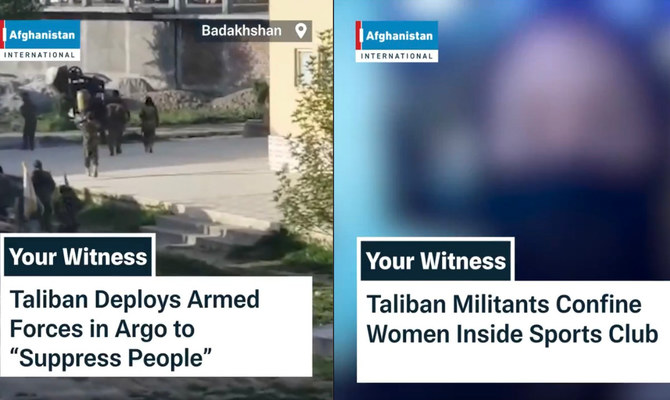

KABUL, Afghanistan: The Taliban on Thursday warned journalists and experts against working with Afghanistan International TV, saying they would be committing a crime if they cooperated with the station. It’s the first time they have told people not to cooperate with a specific outlet.
Afghanistan International TV, which is headquartered in London, is accessible through satellite, cable and social media.
A spokesman for the Taliban-controlled Ministry of Information and Culture alleged the station was committing professional violations and violating moral and legal boundaries.
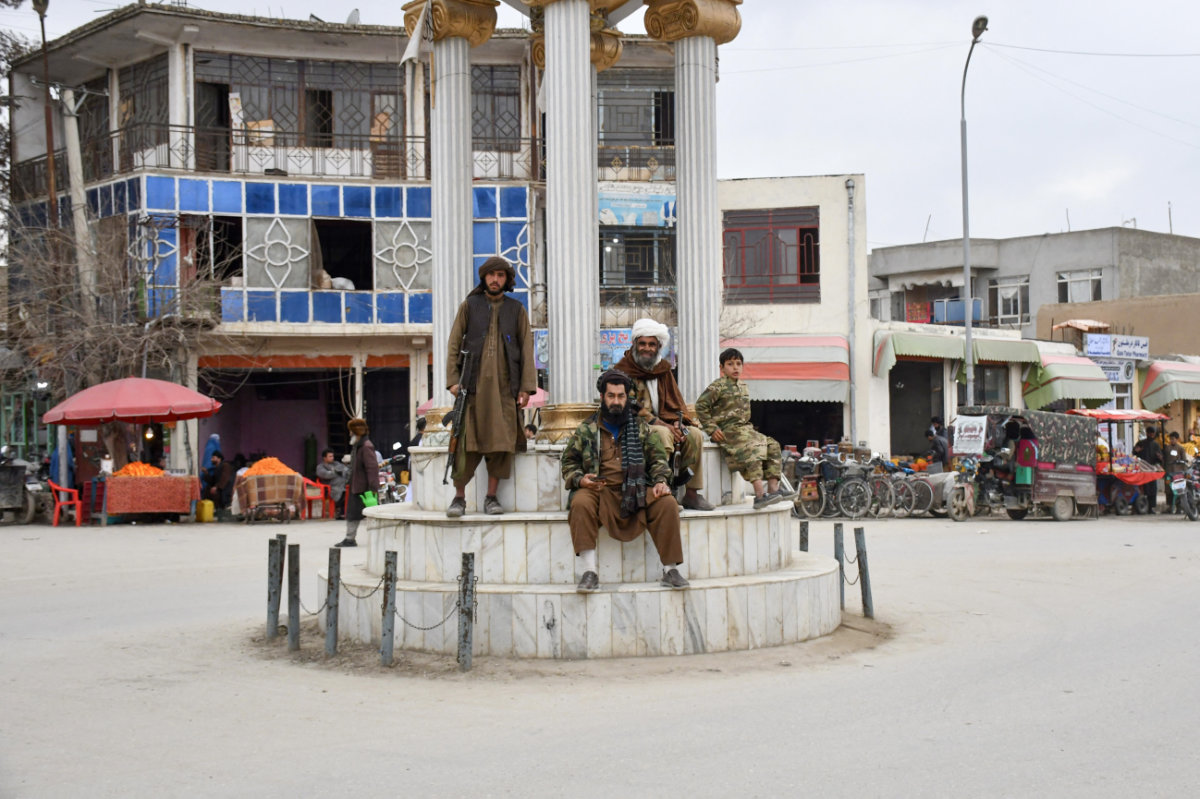
Taliban security personnel sit along a street in Faryab province on March 10, 2024. (AFP)
The Media Violations Commission wanted all journalists and experts in Afghanistan to cease their collaboration with the station, said ministry spokesman Habib Ghofran.
“At the commission’s meeting held yesterday (Wednesday), it was decided that participating in discussions and facilitating the broadcast of this media outlet in public places is prohibited,” added Ghofran.
The deputy minister for broadcasting Zia ul Haq Haqmal said people would be committing a crime if they cooperated with the station.
He cited 10 reasons to avoid working with Afghanistan International TV, including its alleged distortion or falsification of information and campaigning against the ruling system.
“If someone does not cooperate on the basis of all these 10 reasons, then it’s the court’s job to give a punishment,” said Haqmal.
The director of Afghanistan International TV, Harun Najafizada, said the commission’s decision would not affect the channel because it had no employees or freelancers in the country.
“We don’t have anyone on the ground and rely on the reporting of Afghan citizens,” said Najafizada. “That’s more challenging, but we have tough verification. It’s a threat to free media, to other media, and to put pressure on us to forgo our professional standards. It’s not going to work.”
Afghanistan fares abysmally in terms of press freedom. The latest index from Reporters without Borders ranked the country 178 out of 180. It ranked 152 last year.
The organization said three radio reporters were arrested in April for broadcasting music and receiving calls from female listeners during shows. Local authorities weren’t available to confirm the arrests.
Also last month, the Taliban suspended two TV stations for failing to “consider national and Islamic values.”
The director for one of the suspended stations, Barya TV, rejected the Taliban’s allegations. The station is still off air.
Latif Sadiq said the station wasn’t informed about the suspension. “The reports that they repeatedly warned (Barya) are absolute lies,” Sadiq said Thursday. “They have decided on their own that (Barya) television is off, broadcasting is off, and they said the case will go to court.”
Many journalists lost their jobs after the Taliban takeover in 2021, with media outlets closing over a lack of funds or because their staff left the country. Women journalists face additional hardships because of work bans and travel restrictions.
During their previous rule in the late 1990s, the Taliban barred most television, radio and newspapers.


