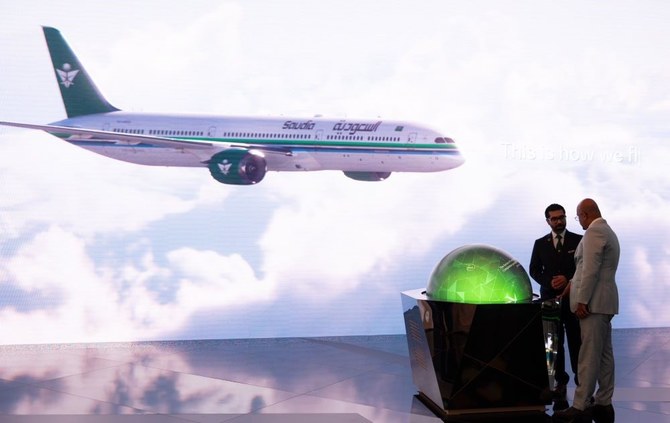

RIYADH: Saudia has unveiled its operational plan for this year’s Hajj season, allocating more than 1.2 million airline seats for pilgrims visiting the Kingdom.
The Kingdom’s national carrier boasts more than 150 aircraft in its fleet, and has pledged to deliver “top-notch services” to pilgrims during Hajj, the Saudi Press Agency reported.
The airline’s operational period for the Hajj season spans 74 days, beginning May 9. It includes both arrivals and returns.
Saudia has organized specialized teams to oversee performance monitoring, lounge operations, coordination with other sectors as well as an emergency plan in collaboration with relevant stakeholders.
Virtual simulations have been conducted at Jeddah and Madinah international airports to prepare for Hajj.
Saudia is welcoming pilgrims from the Grand Mosque through five domestic airports: Jeddah, Madinah, Riyadh, Dammam and Yanbu, the SPA reported.
More than 11,000 frontline employees and aircraft maintenance technicians will work throughout the season. The Makkah Route initiative will cater to 120,000 pilgrims, while the “Hajj with No Bags” service will also run.
The airline plans to handle 270,000 bags and 240,000 Zamzam water bottles during Hajj.
Amer Alkhushail, CEO of Saudia Hajj and Umrah, said that the national carrier is “honored” to play a vital role in serving pilgrims, aligning with the objectives of the Kingdom’s Vision 2030.
Saudia has gained “invaluable experience” from previous Hajj seasons, contributing to the development and implementation of strategic initiatives, he added.
“As part of our preparations for the upcoming Hajj season, the Saudia Group is committed to forging agreements with government delegations and travel agents. We are dedicated to ensuring adequate seat capacity and extending our services to meet demand in over 100 destinations across four continents,” Alkhushail said.
“Moreover, we are facilitating reservation and ticket issuance through electronic channels and Saudia Group offices. Additionally, we are conducting awareness campaigns to educate pilgrims about luggage requirements, including dimensions, weights and prohibited materials for air transport.
“Furthermore, we are poised to support the implementation of flights through the Makkah Route Initiative.”
Through its workforce, Saudia can provide communication to pilgrims from around the world in 30 languages, he added.
Onboard meals are tailored to accommodate diverse preferences, Alkhushail said, highlighting Saudia’s in-flight entertainment, which offers pilgrims educational and guidance materials developed in collaboration with the Saudi Ministry of Hajj and Umrah.
Saudia also offers luggage collection services from pilgrims’ residences, easing travel after the completion of Hajj rituals, he added.