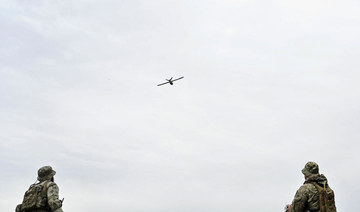
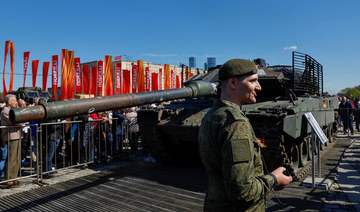
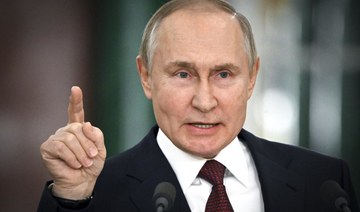
MOSCOW: President Vladimir Putin has ordered the Russian military to hold nuclear weapons drills involving the navy and troops based near Ukraine, the defense ministry said Monday.
Putin has upped his nuclear rhetoric since the Ukraine conflict began, warning in his address to the nation in February there was a “real” risk of nuclear war.
“During the exercise, a set of measures will be taken to practice the preparation and use of non-strategic nuclear weapons,” the defense ministry said.
Non-strategic nuclear weapons, also known as tactical nuclear weapons, are designed for use on the battlefield and can be delivered via missiles.
The ministry said the exercises would take place “in the near future” and were aimed at ensuring Russia’s territorial integrity in the face of “threats by certain Western officials.”
Aircraft and naval forces will take part, as well as troops from the Southern Military District, which borders Ukraine and includes the occupied Ukrainian territories, it said.
Western officials have become increasingly alarmed by the Kremlin’s nuclear rhetoric during the offensive in Ukraine, with Putin frequently invoking Russia’s nuclear doctrine.
Last year Russia ditched its ratification of the Comprehensive Nuclear Test Ban Treaty and pulled out of a key arms reduction agreement with the United States.


Russia’s president Putin orders nuclear drills with troops near Ukraine

https://arab.news/6tvz9
Russia’s president Putin orders nuclear drills with troops near Ukraine
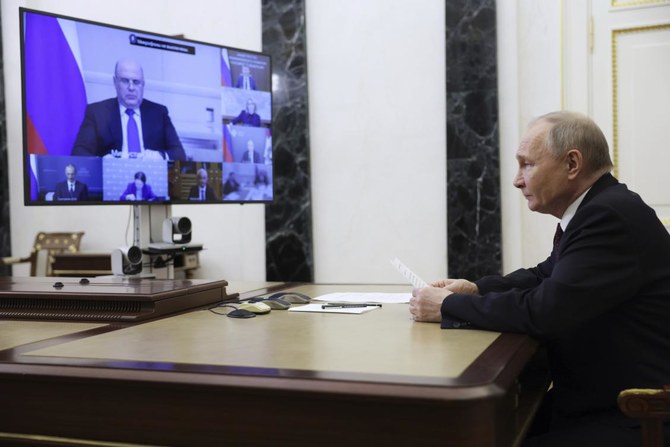
- Putin has upped his nuclear rhetoric since the Ukraine conflict began, warning in his address to the nation in February there was a ‘real’ risk of nuclear war


British foreign ministry official says some Muslims in UK want to ‘challenge values’ of the country
- Was responding to comments made by right-wing politician Nigel Farage, the honorary president of Reform UK
LONDON: A British foreign office minister said on Monday some Muslims in the UK wanted to “challenge the values” of the country.
Anne-Marie Trevelyan’s was speaking after right-wing politician Nigel Farage, the honorary president of Reform UK, told Sky News on Sunday there was a growing proportion of British Muslims who “loathed” the UK’s values, citing a study that claimed 46 percent supported Hamas.
Trevelyan told LBC Radio on Monday that she believed a small minority of British Muslims matched the description.
“The vast proportion of British Muslims are wonderful, peace-loving, community-minded people, certainly in the northeast where I’m based, we have fantastic communities and they are a really important part of our social fabric,” she said.
“There are a very small proportion for whom they want to challenge those values that we hold dear in the UK, which are British values, and there we need to continue to work in community to bring those people to this.
“The UK has incredible values of freedom of speech, freedom of choice … these are incredibly important values, but they have to be nurtured and looked after, and where there are those who would threaten them we need to make sure that we deal with that,” she said.
Bridget Phillipson of the Labour Party, the shadow education secretary, slammed Farage’s comments as “incendiary rhetoric,” and told the same LBC show: “What we need in this election is a sense of how we bring our country together, how we focus on a more positive and hopeful mission for what our country can be — not this kind of division.”


WHO chief urges countries to quickly seal pandemic deal
- Scarred by COVID-19, nations have spent two years trying to forge binding commitments on pandemic prevention, preparedness and response
GENEVA: The World Health Organization chief on Monday urged countries to nail down a landmark global agreement on handling of future pandemics after they missed a hard deadline.
Scarred by COVID-19 — which killed millions, shredded economies and crippled health systems — nations have spent two years trying to forge binding commitments on pandemic prevention, preparedness and response.
Negotiators failed to clinch a deal ahead of this week’s World Health Assembly — the annual gathering of WHO’s 194 member states — the deadline for concluding the talks.
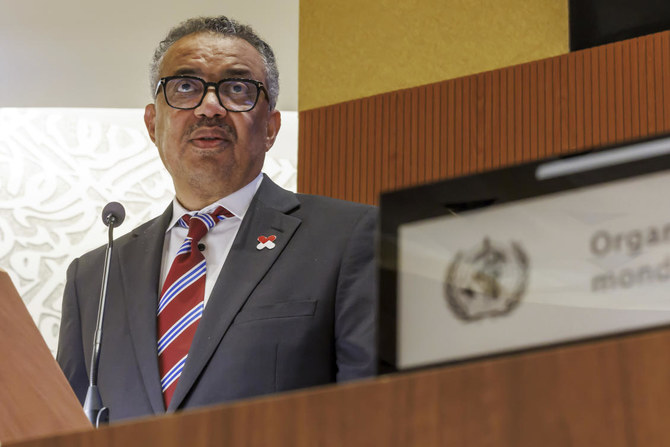
WHO chief Tedros Adhanom Ghebreyesus opened the assembly Monday, saying he was confident that an agreement would be secured.
“Of course, we all wish that we had been able to reach a consensus on the agreement in time for this health assembly and crossed the finish line,” he said.
“But I remain confident that you still will, because where there is a will, there is a way.”
Tedros said the task before negotiators had been “immense, technically, legally, and politically,” and that they had been “operating on a very ambitious time line.”
“You have demonstrated a clear commitment to reaching an agreement,” he said, adding that negotiators had “worked long days and nights,” closing meetings as late as 4:00 a.m.
He hailed their dedication to push forward despite “a torrent of misinformation that was undermining your negotiations.”
While missing Friday’s deadline, countries have voiced a commitment to keep pushing for an accord.
Negotiators are due on Tuesday to present the outcome of the talks to the assembly, which runs until June 1, and the assembly will take stock and decide what to do next.
“I know that there remains among you a common will to get this done, so, there must always be a way,” Tedros said.
“Meaning the solution is in your hands,” he stressed.
Parallel talks have also taken place on revising the International Health Regulations, which were first adopted in 1969 and constitute the existing international legally binding framework for responding to public health emergencies around the world.
The proposed amendments to the IHR, including adding more nuance to a system meant to alert countries to potential health emergencies of global concern, might have a better chance of being adopted during this week’s assembly, observers said.
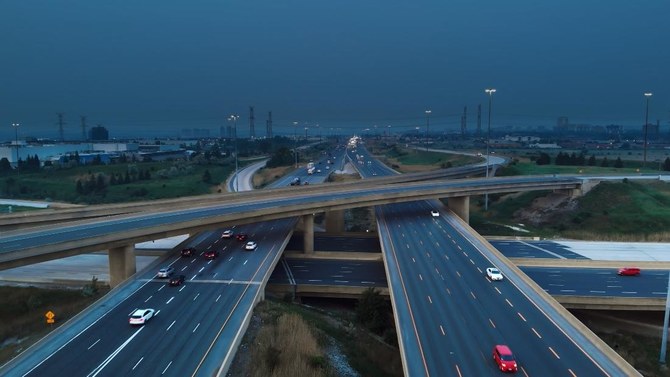
Latest deadly weather in US kills at least 18 as storms carve path of ruin across multiple states
- The storms inflicted their worst damage in a region spanning from north of Dallas to the northwest corner of Arkansas
- In Texas, about 100 people were injured and more than 200 homes and structures destroyed
VALLEY VIEW, Texas: Powerful storms killed at least 18 people, injured hundreds and left a wide trail of destruction across Texas, Oklahoma and Arkansas after obliterating homes and destroying a truck stop where dozens sought shelter during the latest deadly weather to strike the central US
The storms inflicted their worst damage in a region spanning from north of Dallas to the northwest corner of Arkansas, and the system threatened to bring more violent weather to other parts of the Midwest. By Monday, forecasters said, the greatest risk would shift to the east, covering a broad swath of the country from Alabama to near New York City.
Kentucky Gov. Andy Beshear declared a state of emergency early Monday in a post on social media platform X, citing “multiple reports of wind damage and tornadoes.”
Seven deaths were reported in Cooke County, Texas, near the Oklahoma border, where a tornado Saturday night plowed through a rural area near a mobile home park, Texas Gov. Greg Abbott said at a news conference Sunday. The dead included two children, ages 2 and 5. Three family members were found dead in one home, according to the county sheriff.
Storms also killed two people and destroyed houses in Oklahoma, where the injured included guests at an outdoor wedding, eight people in Arkansas and one person in Kentucky. Tens of thousands of residents were without power across the region.
In Texas, about 100 people were injured and more than 200 homes and structures destroyed, Abbott said, sitting in front of a ravaged truck stop near the small agricultural community of Valley View. The area was among the hardest hit, with winds reaching an estimated 135 mph (217 kph), officials said.
“The hopes and dreams of Texas families and small businesses have literally been crushed by storm after storm,” said Abbott, whose state has seen successive bouts of severe weather, including storms that killed eight people in Houston earlier this month.
Abbot signed an amended severe weather disaster declaration on Sunday to include Denton, Montague, Cooke and Collin on a list of counties already under a disaster declaration sparked by storms and flooding in late April.
Hugo Parra, who lives in Farmers Branch, north of Dallas, said he rode out the storm with 40 to 50 people in the bathroom of the truck stop. The storm sheared the roof and walls off the building, mangling metal beams and leaving battered cars in the parking lot.
“A firefighter came to check on us and he said, ‘You’re very lucky,’” Parra said. “The best way to describe this is the wind tried to rip us out of the bathrooms.”
Multiple people were transported to hospitals by ambulance and helicopter in Denton County, also north of Dallas.
No more deaths are expected and nobody was reported missing in Texas, Abbott said, though responders were doing one more round of searches just in case.
Eight people died statewide in Arkansas, Gov. Sarah Huckabee Sanders confirmed in a news conference Sunday evening. An emergency official said two of the deaths were attributed to the circumstances of the storm but not directly caused by weather, including a person who suffered a heart attack and another who was deprived of oxygen due to a loss of electricity.
The deaths included a 26-year-old woman who was found dead outside a destroyed home in Olvey, a small community in Boone County, according to Daniel Bolen of the county’s emergency management office. One person died in Benton County, and two more bodies were found in Marion County, officials said.
In Oklahoma, two people died in Mayes County, east of Tulsa, officials said.
In Kentucky, a man was killed Sunday in Louisville when a tree fell on him, police said. Louisville Mayor Craig Greenburg confirmed on social media it was a storm-related death.
A deadly series of storms
The destruction continued a grim month of deadly severe weather in the nation’s midsection.
Tornadoes in Iowa last week left at least five people dead and dozens injured. The deadly twisters have spawned during a historically bad season for tornadoes, at a time when climate change contributes to the severity of storms around the world. April had the second-highest number of tornadoes on record in the country.
Meteorologists and authorities issued urgent warnings to seek cover as the storms marched across the region late Saturday and into Sunday. “If you are in the path of this storm take cover now!” the National Weather Service office in Norman, Oklahoma, posted on X.
Harold Brooks, a senior scientist at the National Severe Storms Laboratory in Norman, said a persistent pattern of warm, moist air is to blame for the string of tornadoes over the past two months.
Homes destroyed, roads blocked
Residents awoke Sunday to overturned cars and collapsed garages. Some residents could be seen pacing and assessing the damage. Nearby, neighbors sat on the foundation of a wrecked home.
In Valley View, near the truck stop, the storms ripped the roofs off homes and blew out windows. Clothing, insulation, bits of plastic and other pieces of debris were wrapped around miles of barbed wire fence line surrounding grazing land in the rural area.
Kevin Dorantes, 20, was in nearby Carrollton when he learned the tornado was bearing down on the Valley View neighborhood where he lived with his father and brother. He called the two of them and told them to take cover in the windowless bathroom, where they rode out the storm and survived unharmed.
As Dorantes wandered through the neighborhood of downed power lines and devastated houses, he came upon a family whose home was reduced to a pile of splintered rubble. A father and son were trapped under debris and friends and neighbors raced to get them out, Dorantes said.
“They were conscious but severely injured,” Dorantes said.
Widespread power outages
The severe weather knocked out power for tens of thousands of homes and businesses in the path of the storms.
On Monday, more than 187,000 customers were without power in Kentucky, according to the tracking website poweroutage.us. Some 84,000 customers were without power in Alabama; 74,000, West Virginia; 70,000, Missouri; and 63,000, Arkansas.
Inaccessible roads and downed power lines in Oklahoma also led officials in the town of Claremore, near Tulsa, to announce on social media that the city was “shut down” due to the damage.
More severe weather forecast
The system causing the latest severe weather was expected to move east over the rest of the holiday weekend.
The Indianapolis 500 started four hours late after a strong storm pushed into the area, forcing Indianapolis Motor Speedway officials to evacuate about 125,000 race fans.
More severe storms were predicted in Illinois, Missouri, Kentucky and Tennessee.
The risk of severe weather moves into North Carolina and Virginia on Monday, forecasters said.
To follow the progress of the storm system, see The Associated Press Tornado Tracker.
New Sri Lankan envoy hopes for closer partnership in Saudi Vision 2030
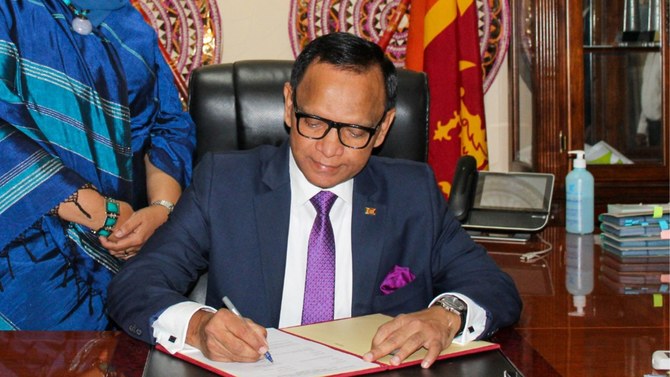
- Omar Lebbe Ameer Ajwad is a career diplomat with 26 years of experience
- Island nation wants to tap into possibilities posed by Saudi megaprojects
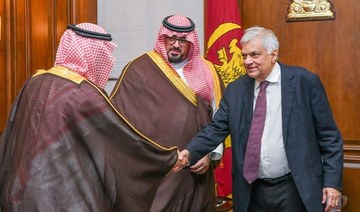
COLOMBO: Sri Lanka hopes to work closer with Saudi Arabia in tourism, labor and renewable energy sectors to support the Kingdom’s Vision 2030, the island nation’s new ambassador told Arab News as he assumed his post in Riyadh on Monday.
A career diplomat, Omar Lebbe Ameer Ajwad concurrently served as ambassador in Oman and Yemen from 2019 to 2022. He had previously served as Sri Lanka’s acting high commissioner in Singapore and deputy high commissioner in Chennai, India.
With around 26 years of experience, one of his earliest postings was as the deputy chief of mission at the Sri Lankan Embassy in Riyadh.
As he lauded Saudi Arabia’s Vision 2030, Ajwad said that Sri Lanka can contribute to the transformation and diversification project.
“Sri Lanka wishes to partner with Saudi Arabia in this transformative journey. Therefore, my primary focus would be on promoting economic diplomacy,” he told Arab News over the weekend.
“Sri Lanka and Saudi Arabia are well poised for greater connectivity and deeper economic cooperation and synergies.”
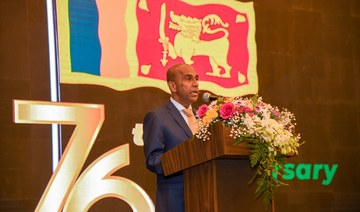
With Saudi Arabia and Sri Lanka celebrating their 50th anniversary of diplomatic relations this year, Ajwad is set on charting pathways for future cooperation “to achieve another milestone of productive relations.”
Key sectors in Saudi Arabia’s diversification efforts, such as tourism, transportation and logistics, and renewable energy “correspond to Sri Lanka’s potentials and priorities,” he added.
As such, Sri Lanka wants to tap into the possibilities posed by Saudi megaprojects, including the flagship multibillion-dollar NEOM smart city.
“Sri Lanka’s skilled and semi-skilled workforce could support various aspects of construction, engineering, and service industries required for projects such as NEOM,” Ajwad said.
Sri Lankan workers can provide expertise and technology in NEOM’s renewable energy sector, agricultural projects and the city’s information technology development.
Saudi Arabia is a major labor-receiving country for Sri Lanka, with tens of thousands of workers from the island nation living in the Kingdom — making it one of the main sources of foreign remittances for Colombo.
“NEOM also aims to become a major tourist destination. Sri Lanka’s well-established tourism sector expertise, especially in sustainable and eco-tourism, can provide insights and professional services to develop NEOM’s hospitality sector,” the ambassador said.
Ajwad will work on increasing engagements between Saudi and Sri Lankan public and private sectors through political consultation between their foreign ministries and setting up a bilateral business council.
“I strongly believe that the setting up of strong platforms for the bilateral engagements will serve as a catalyst for the much-needed information flow, networking, and follow-up with a view to fostering greater cooperation between the two countries.”
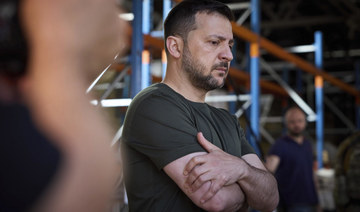
Ukraine’s Zelensky visits Spain in pursuit of more weapons to fight Russia with
- A Western intelligence assessment suggested that Russia’s Kharkiv offensive has subsided
- Zelensky had been due to visit Spain earlier this month but he postponed all his foreign trips after the Kremlin’s forces launched a cross-border offensive in the northeastern Kharkiv region
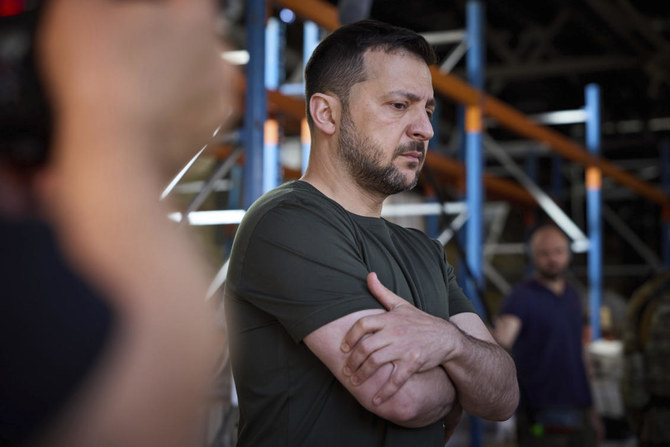
MADRID: Ukrainian President Volodymyr Zelensky arrived in Madrid on Monday where he was expected to sign a bilateral security agreement with Spain that will help his country fight its more than two-year war with Russia amid a recent offensive by the Kremlin’s forces.
Spain’s King Felipe VI met Zelensky at the capital’s Barajas airport. The Ukrainian leader was due to hold talks with Prime Minister Pedro Sánchez about what local media reported is a planned 1.1 billion-euro ($1.2 billion) agreement for Spain to supply Ukraine with more weapons.
Zelensky had been due to visit Spain earlier this month but he postponed all his foreign trips after the Kremlin’s forces launched a cross-border offensive in the northeastern Kharkiv region and left Ukrainian troops reeling.
That push has further strained Ukraine’s already depleted army, which in recent months has been fighting Russia’s intense drive deeper into the partially occupied eastern Donetsk region. Zelensky said on Sunday that the Kremlin’s army is mustering at another point in Russia, farther north but close to the approximately 1,000-kilometer (600-mile) front line, presumably to try to crack Ukrainian resistance in the area.
A Western intelligence assessment suggested that Russia’s Kharkiv offensive has subsided.
“The northern Kharkiv front has likely stabilized with Russian territorial control fragmented and not joined up,” the UK defense ministry said Sunday. “Russia’s gains in this axis will be limited in the coming week, as Russia’s initial momentum has been contained by Ukrainian resistance.”
That is in line with Zelensky’s claim last Friday that Ukrainian forces have secured “combat control” of areas where Russian troops entered the Kharkiv region.
The onslaught unfolding as the weather improves has brought Ukraine’s biggest military test since Russia’s full-scale invasion in February 2022. Slow deliveries of support by its Western partners, especially a lengthy delay in US military aid, have left Ukraine at the mercy of Russia’s bigger army and air force.
Spanish newspaper El Pais, citing unidentified sources familiar with the bilateral deal, said it would include another batch of US-made Patriot air defense systems that Ukraine has long pleaded for to help it fend off Russian missile attacks.
Other items include more Leopard tanks for Ukraine and 155mm artillery shells that are the most used by Ukraine on the battlefield, El Pais said. Spain will also continue training Ukrainian troops and treating its wounded soldiers.