Saudi banks’ funding profile changing on rising mortgage demand: S&P Global

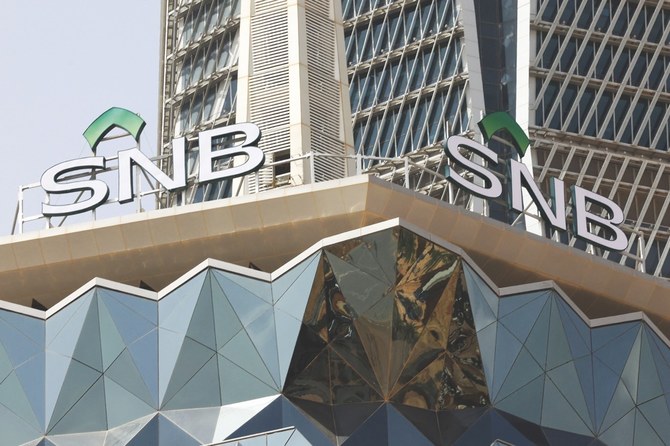
Mortgage financing represented 23.5 percent of Saudi banks’ total credit allocation at the end of 2023, compared to 12.8 percent in 2019. (AFP)
Short Url
Updated 12 May 2024
Follow

Saudi banks’ funding profile changing on rising mortgage demand: S&P Global

RIYADH: Saudi banks are expected to pursue alternative funding strategies to deal with the rapid expansion in lending, fueled by the demand for new mortgages, according to S&P Global.
In its latest report, the credit-rating agency stated that the funding profiles of financial institutions in the Kingdom are set to undergo changes, primarily driven by a state-backed initiative to boost home ownership.
According to the analysis, mortgage financing represented 23.5 percent of Saudi banks’ total credit allocation at the end of 2023, compared to 12.8 percent in 2019.
“The ongoing financing needs of the Vision 2030 economic initiative and relatively sluggish deposits growth, is likely to incentivize banks to seek alternative sources of funding, including external funding,” said S&P Global.  
The report also predicted that this pursuit of external funding could potentially impact the credit quality of Saudi Arabia’s banking sector.
According to the US-based rating agency, lending growth among Saudi banks has outpaced deposits, with the loan-to-deposit ratio exceeding 100 percent in 2022, up from 86 percent at the end of 2019.
S&P Global expects this trend to persist, particularly with corporate lending playing a more significant role in growth over the next few years. “We consider Saudi banks are likely to turn to alternative funding strategies to fund that expansion,” the report said.  

HIGHLIGHTS

100%

According to the US-based rating agency, lending growth among Saudi banks has outpaced deposits, with the loan-to-deposit ratio exceeding 100 percent in 2022, up from 86 percent at the end of 2019.

It added: “We consider, however, that the risk created by the maturity mismatch is mitigated by the relative stability of Saudi deposits.”   The agency also predicted that Saudi banks’ foreign liabilities will continue to increase, rising from about $19.2 billion at the end of 2023 to meet the funding requirements of strong lending growth, particularly amidst lower deposit expansion.
The report highlighted that Saudi banks have already tapped international capital markets, and the credit rating agency expects this trend to continue for the next three to five years.
According to S&P Global, the Saudi banking system could transition from a net external asset position of SR42.9 billion, or 1.6 percent of lending, at the end of 2023 to a net external debt position within a few years.
In April, S&P Global, in another report, stated that banks in the Kingdom are anticipated to experience robust credit growth ranging between 8 to 9 percent in 2024.
The agency noted that this credit expansion will be propelled by corporate lending, fueled by increased economic activities driven by the Vision 2030 program.
Moreover, the report added that the Saudi government and its related entities are expected to inject deposits into the banking system, thereby supporting the credit growth of financial institutions in the Kingdom.


Saudi POS transactions see 20% surge to hit $4bn: SAMA

Updated 05 December 2025
Follow

Saudi POS transactions see 20% surge to hit $4bn: SAMA

RIYADH: Saudi Arabia’s total point-of-sale transactions surged by 20.4 percent in the week ending Nov. 29, to reach SR15.1 billion ($4 billion).

According to the latest data from the Saudi Central Bank, the number of POS transactions represented a 9.1 percent week-on-week increase to 240.25 million compared to 220.15 million the week before.

Most categories saw positive change across the period, with spending on laundry services registering the biggest uptick at 36 percent to SR65.1 million. Recreation followed, with a 35.3 percent increase to SR255.99 million. 

Expenditure on apparel and clothing saw an increase of 34.6 percent, followed by a 27.8 percent increase in spending on telecommunication. Jewelry outlays rose 5.6 percent to SR354.45 million.

Data revealed decreases across only three sectors, led by education, which saw the largest dip at 40.4 percent to reach SR62.26 million. 

Spending on airlines in Saudi Arabia fell by 25.2 percent, coinciding with major global flight disruptions. This followed an urgent Airbus recall of 6,000 A320-family aircraft after solar radiation was linked to potential flight-control data corruption. Saudi carriers moved swiftly to implement the mandatory fixes.

Flyadeal completed all updates and rebooked affected passengers, while flynas updated 20 aircraft with no schedule impact. Their rapid response contained the disruption, allowing operations to return to normal quickly.

Expenditure on food and beverages saw a 28.4 percent increase to SR2.31 billion, claiming the largest share of the POS. Spending on restaurants and cafes followed with an uptick of 22.3 percent to SR1.90 billion.

The Kingdom’s key urban centers mirrored the national decline. Riyadh, which accounted for the largest share of total POS spending, saw a 14.1 percent surge to SR5.08 billion, up from SR4.46 billion the previous week. The number of transactions in the capital reached 75.2 million, up 4.4 percent week-on-week.

In Jeddah, transaction values increased by 18.1 percent to SR2.03 billion, while Dammam reported a 14 percent surge to SR708.08 million.

POS data, tracked weekly by SAMA, provides an indicator of consumer spending trends and the ongoing growth of digital payments in Saudi Arabia. 

The data also highlights the expanding reach of POS infrastructure, extending beyond major retail hubs to smaller cities and service sectors, supporting broader digital inclusion initiatives. 

The growth of digital payment technologies aligns with the Kingdom’s Vision 2030 objectives, promoting electronic transactions and contributing to the nation’s broader digital economy.