

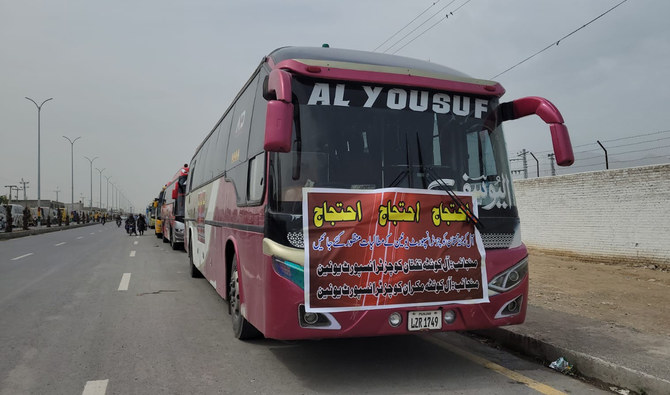
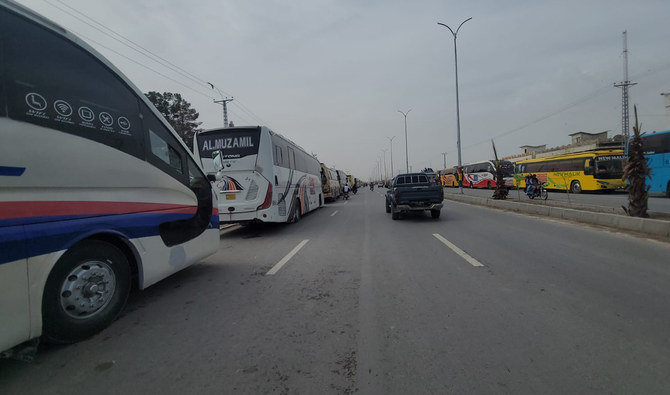

QUETTA: Transporters in Pakistan’s southwestern Balochistan province continued their protest on Thursday, they said, after the failure of a second round of talks with the government over a new security plan for highways.
An alliance of transporters in the provincial capital of Quetta has been protesting for the last two weeks the government’s new standard operating procedures (SOPs) aimed at providing maximum security to passengers traveling through one of the key provincial highways in Pakistan.
The government in the restive province last month announced to revise its security plan for the Quetta-Taftan highway after gunmen killed nine passengers, who hailed from the eastern Punjab province, after abducting them from a bus near the Noshki district in Balochistan.
The second round of talks between representatives of the transporters and the government failed and the transporters said they would continue their protest in the provincial capital.
“A 12-member delegation of transporters met with the government’s negotiation committee today for the 2nd round of talks in order to discuss concerns of local transporters, but the meeting ended without any result,” Mehmood Badini, a representative of the transporters’ alliance who was part of the talks, told Arab News on Thursday.
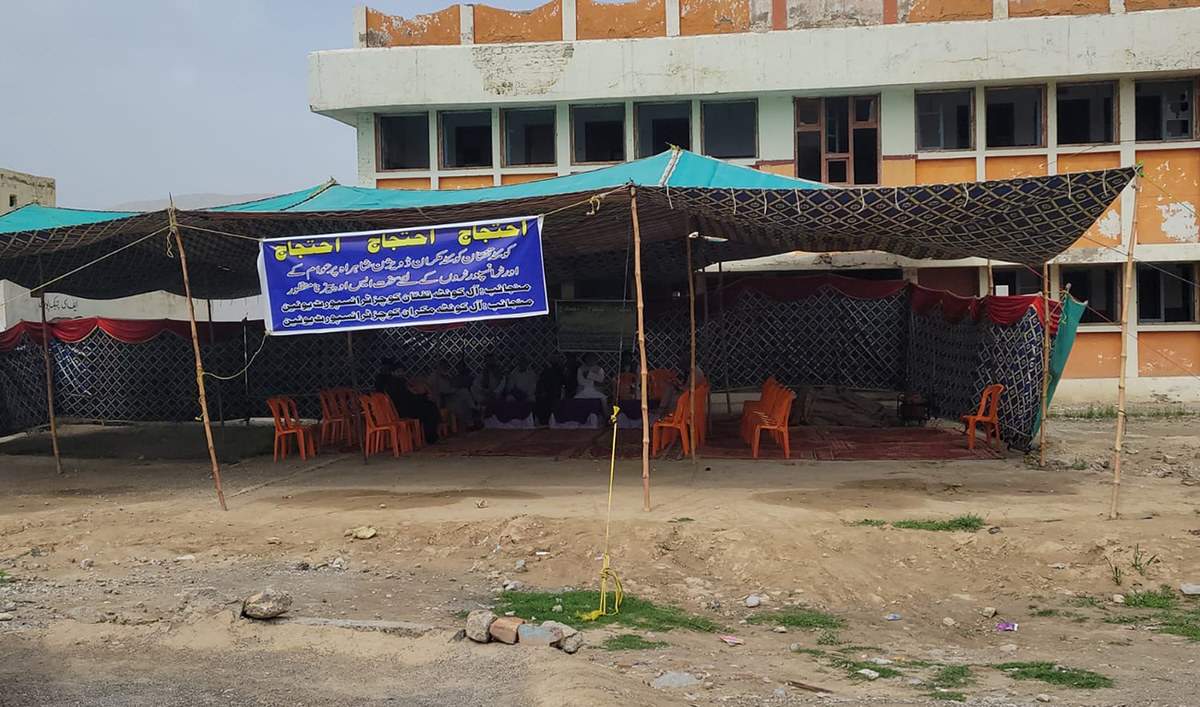
Transporter's association camp during a public transport strike against the new highway security plan in Quetta on May 2, 2024. (AN photo)
“We stand on our demands but the government officials have said that they will call a high-level meeting to discuss our demands in the coming days. We have decided to continue our strike on all major routes unless our demands are met.”
The mineral-rich province of Balochistan has been the scene of a low-level insurgency by Baloch separatist groups demanding independence from the central government in Islamabad. The militants usually target police and security forces or infrastructure.
Although the government says it has quelled the insurgency, violence in Balochistan has persisted. The attack in Noshki sparked widespread condemnation and prompted the provincial government to revise its security plan for highways.
Saeed Ahmed Lehri, chairman of the All Balochistan Transporters Alliance, said the transporters were on a strike at the N-40 Quetta-Taftan highway, N-85 Quetta-Makran Highway, N-25 Quetta-Karachi highway and N-65 Balochistan-Sindh highway against government’s new travel security SOPs.
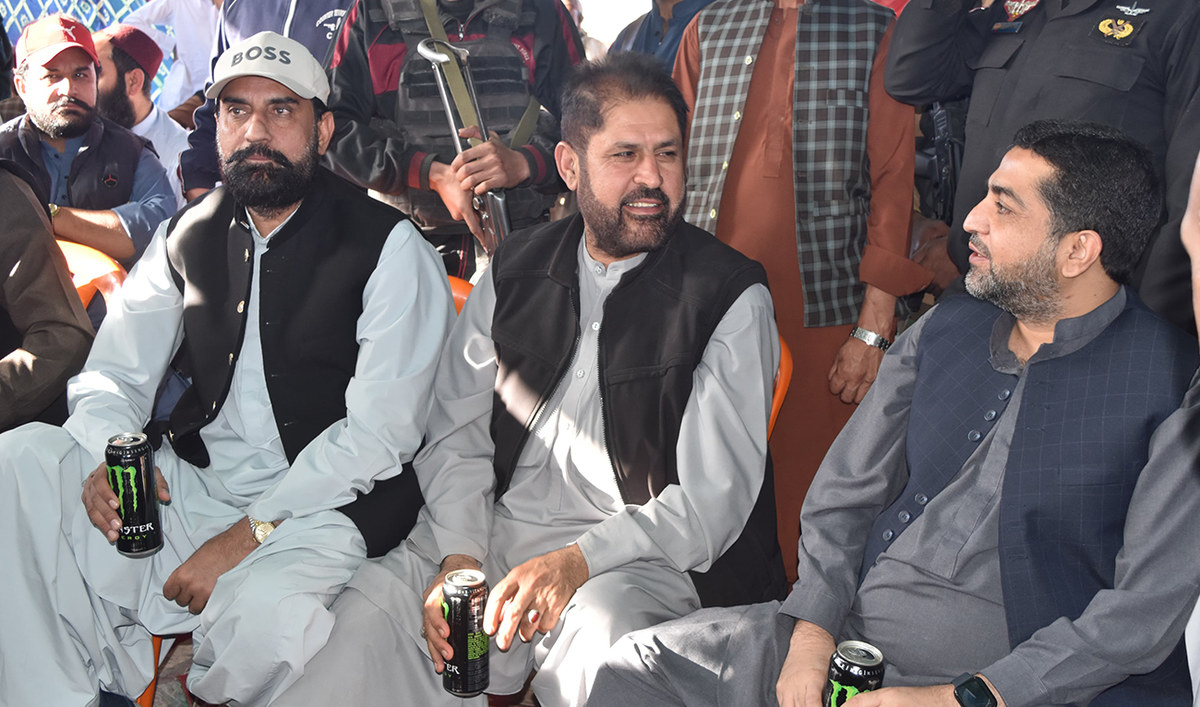
Transporter's association camp during a public transport strike against the new highway security plan in Quetta on May 2, 2024. (AN photo)
“The government has established new security check-posts at the N-40 Quetta-Taftan highway and security forces are directed to check all buses at every check-post,” he said. “The New SOPs would cause delay for passengers and drivers, even the government is going to prevent transporters from the deployment of two private security guards inside buses at their own expense.”
Shahid Rind, a spokesman for the Balochistan government, said they would keep negotiating with the transporters in the coming days to find a “concrete solution” to the issue.
“The government’s prime responsibility is the passengers’ safety and security, hence we won’t step back from this stance,” he told Arab News. “But there will be more rounds of talks with the transporters.”
Rind said the government had revised its security plan and decided to establish new security check-posts at all highways after the Noshki attack.
“Balochistan has a vast landscape while in some areas mobile networks do not work,” he added.


