Morocco’s farming revolution: defying drought with science

1 / 3
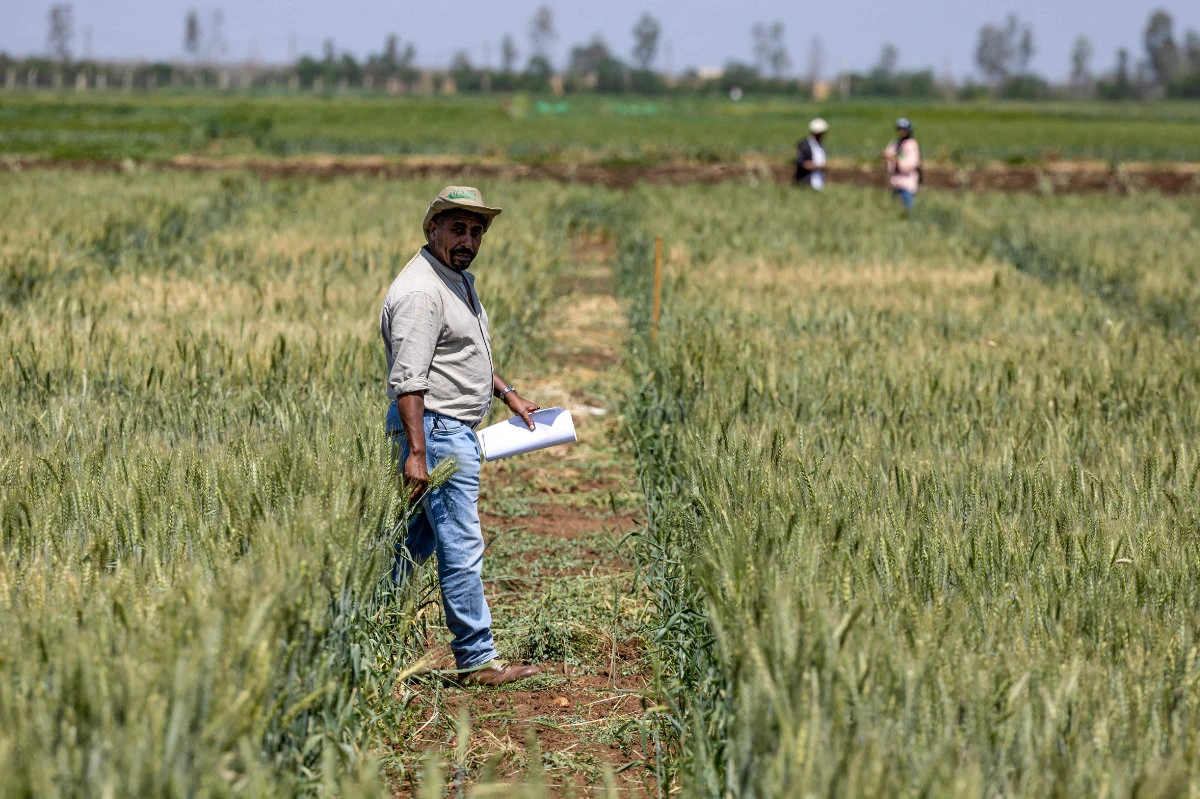
A researcher from the International Center for Agricultural Research in Dry Areas walks in a cultivated field in the Marchouch region of northwestern Morocco on April 18, 2024. (AFP)
2 / 3
A researcher from the International Center for Agricultural Research in Dry Areas walks in a cultivated field in the Marchouch region of northwestern Morocco on April 18, 2024. (AFP)
3 / 3
A researcher from the International Center for Agricultural Research in Dry Areas holds a bag of resilient seeds in the Marchouch region of northwestern Morocco on April 18, 2024. (AFP)
Short Url
Updated 02 May 2024
Follow

Morocco’s farming revolution: defying drought with science

  • In the face of “extremely high” water stress, Morocco's cultivated areas are expected to shrink to 2.5 million hectares drastically
  • The kingdom's agricultural research agency aims to develop genotypes that not only withstand drought and heat but also yield abundantly

MARCHOUCH, Morocco: In the heart of sun-soaked Morocco, scientists are cultivating a future where tough crops defy a relentless drought, now in its sixth year.

“Look at these beautiful ears of wheat,” said Wuletaw Tadesse Degu, the head of wheat breeding at the International Center for Agricultural Research in Dry Areas (ICARDA).
“The difference in quality between our field and others is striking,” he said, pointing toward a lush expanse in Marchouch, south of Rabat, that stood in stark contrast with the barren lands elsewhere.
By 2040, Morocco is poised to face “extremely high” water stress, a dire prediction from the World Resources Institute, a non-profit research organization.
Figures from the North African country’s central bank paint a grim picture.
Cultivated areas across the kingdom are expected to shrink to 2.5 million hectares in 2024 compared with 3.7 million last year, with cereal yields more than halving to 25 million quintals (2.5 million tons) over the same period.
“It has become essential to use resilient seeds and to employ them as quickly as possible,” said Tadesse, whose center recently inaugurated a plant gene bank.
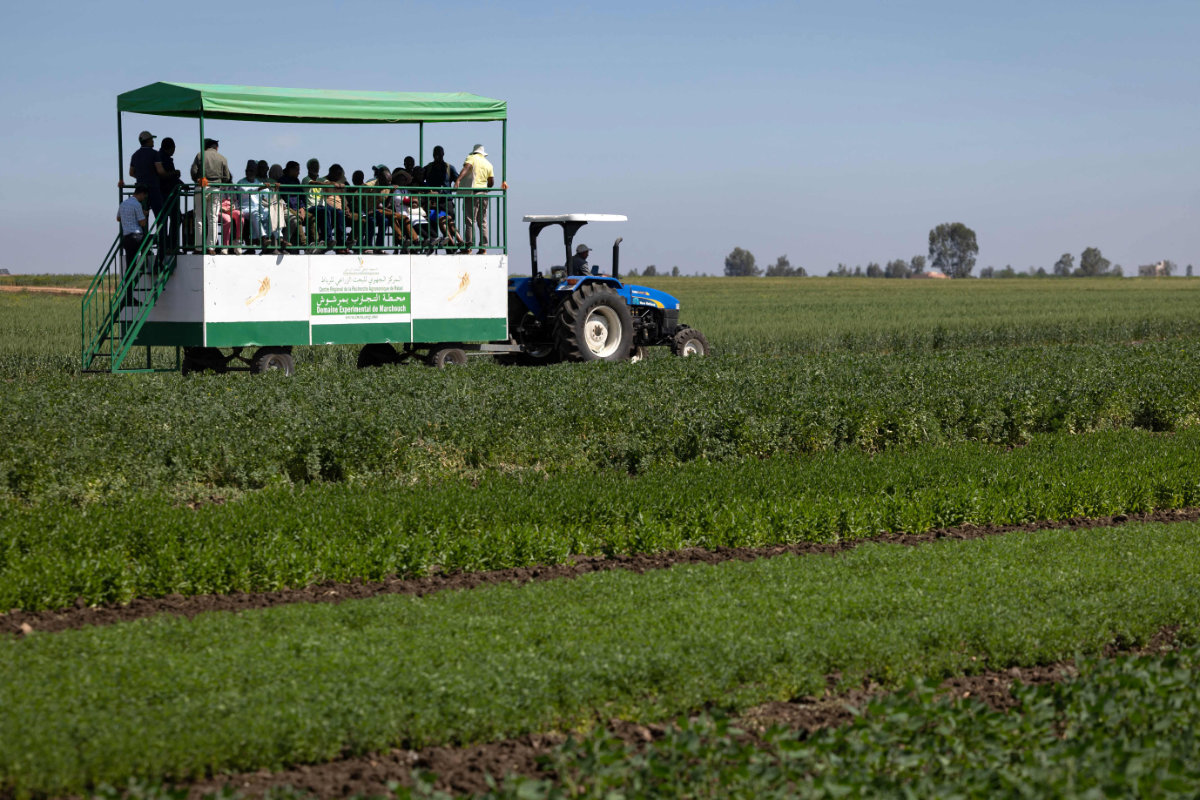


A delegation from the IRNA Regional Center for Agricultural Reasearch in Rabat visit a cultivated field in the Marchouch region of northwestern Morocco on April 18, 2024. (AFP)

Tadesse’s mission is to develop genotypes that not only withstand drought and heat but also yield abundantly.
Last year, while the nation struggled, Marchouch achieved a yield of four tons per hectare with just 200 millimeters of rainfall.
Controlled irrigation and strategic sowing techniques are behind this agricultural revolution.
Looking to maximize production, farmers are experimenting with planting times and judicious irrigation.
Even a scant 10 millimeters of water, carefully applied, transformed barren soil into thriving fields.
Barley, too, has seen a resurgence, with yields jumping from 1.5 to two tons per hectare last year, thanks to climate-smart genotypes, said Miguel Sanchez Garcia, a barley specialist at ICARDA.
The center, which operates in 17 countries in Africa and Asia, says it has developed 30 “elite lines” of grain.
Most of them are produced in Morocco by breeding genotypes of wild wheat with different ancestors, said ICARDA genetics researcher Ahmed Amri.
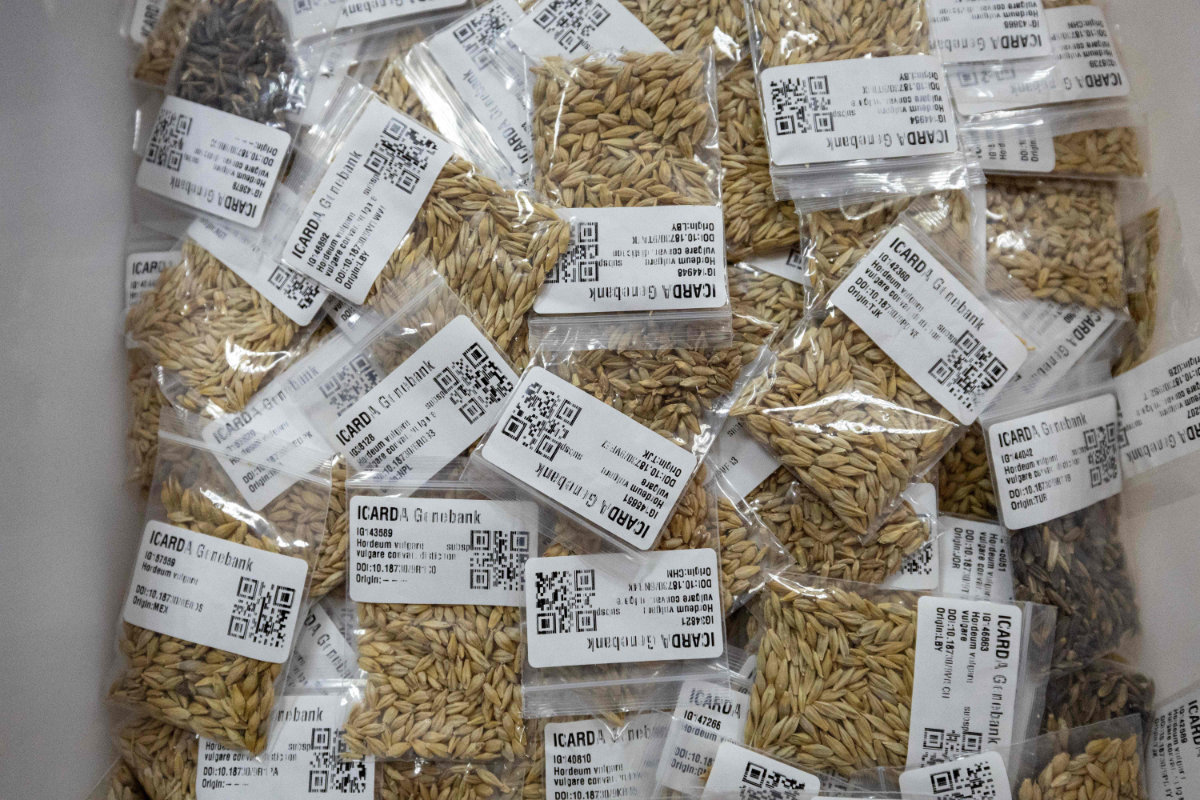


Bags of resilient seeds from the International Center for Agricultural Research in Dry Areas are kept in a box in the Marchouch region of northwestern Morocco on April 18, 2024. (AFP)

Moroccan agricultural authorities approved six new wheat and barley varieties last year, but bureaucratic hurdles loom large.
Approval processes drag on, impeding the timely dissemination of new varieties to farmers, researchers at the center said, resulting in a five-year journey from approval to market-ready seeds.
“The certification system takes too long and should be revised quickly,” said Moha Ferrahi, head of genetic resources conservation and improvement at the National Institute of Agricultural Research.
Ferrahi also pointed to the lack of engagement from private companies and farmers who opt for “foreign seeds to have a quicker return on investment while these seeds are not adapted to the climate of Morocco.”
Yet many see room for improvement, even in a drought-hit country where the average citizen consumes about 200 kilogrammes of wheat per year — significantly above the world’s average, according to official figures.
“Unlike countries like Egypt or Ethiopia, Morocco has chosen to liberalize its market,” said researcher Amri, meaning that authorities have no control over what varieties farmers select.
But Amri remains convinced that, coupled with the national agricultural program, the widespread adoption of resilient varieties will help offset mounting losses.


Gulf countries offer support to Yemen’s legitimate government, Saudi security

Updated 31 December 2025
Follow

Gulf countries offer support to Yemen’s legitimate government, Saudi security

  • Qatar, Kuwait say their security is based on the security of Saudi Arabia and the GCC
  • Bahrain said it had confidence in the leadership of Saudi Arabia and the UAE to contain differences

LONDON: Gulf and Arab countries on Tuesday offered support to the internationally recognized government in Yemen after the UAE withdrew its forces from the country.

The statements were issued after the military coalition supporting Yemen’s government carried out airstrikes on a shipment of weapons and vehicles destined for southern separatist forces.

The shipment arrived in the port of Mukalla on board two vessels from Fujairah in the UAE.

The Emirates was asked by Rashad Al-Alimi, head of Yemen’s presidential council, to withdraw its troops from Yemen within 24 hours.

Saudi Arabia said the separatists, operating under the Southern Transitional Council and supported by the UAE, posed a direct threat to the Kingdom’s national security and regional stability by recently seizing territory in the  governorates of Hadramaut and Al-Mahra.

Qatar said it was following the developments “with keen interest.”

A foreign ministry statement said Doha fully supported the legitimate Yemeni government and stressed the importance of preserving Yemen's unity and  safeguarding the interests of the Yemeni people.

It added that the security of Saudi Arabia and the security of the member states of the Gulf Cooperation Council (GCC) “constitute an inseparable part of the security of the State of Qatar, reflecting the deep-rooted fraternal ties and shared destiny that unite the GCC states.”

The ministry commended the statements issued by Saudi Arabia and the UAE “which reflect a commitment to prioritizing the interests of the region.”

Kuwait also offered “unwavering support” for Yemen’s government and said the security of Saudi Arabia and GCC is the basis of its own national security.

Its foreign ministry praised the “responsible approach” taken by both Saudi Arabia and the UAE.

Bahrain, the current GCC chair, said it had confidence in the leadership of Saudi Arabia and the UAE “and their ability to contain any differences in viewpoints within the framework of a unified Gulf.”

The foreign ministry statement offered “unequivocal” support toward regional and international initiatives and efforts aimed at reaching a comprehensive and lasting political solution in Yemen.

Egypt said it had full confidence in Saudi Arabia and the UAE “to handle the current developments in Yemen with wisdom.”

Cairo will continue efforts toward a comprehensive political settlement for Yemen, the statement said.