Philippines bets on wellness, medical tourism to attract Middle Eastern visitors

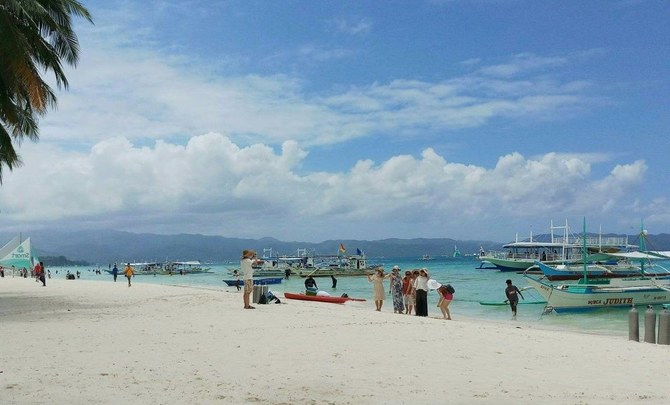
Tourists on Boracay Island, Aklan province, the Philippines, Apr. 6, 2018. (AFP)
Short Url
Updated 01 May 2024
Follow

Philippines bets on wellness, medical tourism to attract Middle Eastern visitors

  • Philippines wants position as a leading halal tourism destination
  • Nation aims to welcome 7.7m international visitors in 2024

MANILA: The Philippine tourism sector is shifting to promote the country as a medical and wellness destination, expanding beyond its recreational profile to attract more visitors from the Middle East.

More than 2 million international travelers visited the Philippines since the beginning of the year, with receipts between January and April reaching $2.7 billion. This data, the Department of Tourism said last week, was a 120 percent recovery rate from the same period in 2019 — before COVID-19 lockdowns brought the industry to a standstill.

The department’s data also showed a 10 percent increase in visitors arriving from Gulf countries, especially Saudi Arabia and the UAE, which are among the Philippine government’s key emerging-market targets.

To further boost their arrivals and make the country a more attractive destination, tourism stakeholders are shifting their strategy to focus more on the wellness sector, Philippine Tour Operators Association President Arjun Shroff told Arab News.

“This strategic shift aims to position the Philippines as an emerging medical and wellness destination in Asia, expanding beyond its traditional recreational tourism offerings like beaches and diving spots,” he said.

Efforts have also been undertaken to expand the footprint of halal services and goods.

The predominantly Catholic Philippines — where Muslims constitute about 10 percent of the nearly 120 million population — plans to raise 230 billion pesos ($4 billion) in investments and generate around 120,000 jobs by expanding its domestic halal industry by 2028.

The cross-sector efforts include tourism as well, with the Philippines trying to position itself as a leading halal tourism destination.

“We have recently implemented a range of strategic initiatives to enhance our appeal to visitors from the Middle East. Central to our approach is a commitment to inclusivity, ensuring that all tourists feel welcome and safe,” Shroff said.

“In line with this commitment, we have actively promoted halal establishments to cater to the dietary preferences of Middle Eastern travelers. By offering a variety of halal dining options, we aim to provide a seamless and enjoyable culinary experience.”

Filipinos have been exposed to the Middle East, especially Gulf countries, which are home to some 2 million Philippine expats. They understand cultural differences and many also know Arabic.

The tourism sector has lately been tapping into Arabic-speaking talent to help facilitate tours for Middle Eastern travelers.

“We have invested in bilingual tour guides proficient in Arabic ... These guides play a vital role in facilitating communication, providing valuable insights, and enhancing the overall experience for our Middle Eastern guests,” Shroff said.

“Philippine travel and tourism agencies strategically target the Middle East market ... (it) holds great potential for the Philippines.”

In 2024, the Philippines is targeting to welcome 7.7 million international visitors, nearly its pre-pandemic record-breaking achievement in 2019 which ended with 8.26 million inbound arrivals.

Floods in Mozambique displace more than 300,000 people in one province, governor says

Updated 4 sec ago
Follow

Floods in Mozambique displace more than 300,000 people in one province, governor says

  • The premier of one of the provinces in South Africa impacted by weeks of heavy rains said that the damage there could be around $250 million

MAPUTO, Mozambique: More than 300,000 people have been displaced by flooding in a province in Mozambique, its governor said Monday. Authorities had already announced that around 40 percent of the Gaza province has been submerged by floodwater following weeks of torrential rain in parts of southern Africa.
Mozambican President Daniel Chapo has canceled his trip to the World Economic Forum in Davos, Switzerland, because of the severe flooding impacting central and southern parts of the country, according to the state-run daily newspaper Noticias.
Gaza governor Margarida Mapandzene Chongo said around 327,000 people were being housed in dozens of temporary shelters like schools and churches. They had fled or been evacuated from flooded or flood-threatened areas of the southern province that has a population of about 1.4 million.
Humanitarian organizations said earlier this month they feared around 200,000 people would be impacted by the extreme weather in Mozambique, but it appears that number has been exceeded. Inocencio Impissa, a Cabinet minister and spokesperson for the government, said nearly 600,000 people had been affected in the two provinces of Gaza and neighboring Maputo.
Chongo said authorities were now calling for the evacuation of everyone from the lower parts of Gaza’s provincial capital of Xai-Xai as more flooding threatens that city of around 115,000 people that lies next to the Limpopo River. Streets in Xai-Xai resembled rivers as floodwater surged through parts of the city, according to videos on the city’s official Facebook page.
Images from the nearby town of Chokwe that was the site of earlier evacuations show floodwater almost entirely covering houses and other buildings, with only the tips of some of their roofs visible.
Weeks of heavy rains have left more than 100 people dead in Mozambique, South Africa and Zimbabwe, with major rescue efforts still underway in Mozambique and South Africa. Mozambican authorities said the severe flooding in northern South Africa was now impacting Gaza — which borders South Africa — as rivers flowing into Mozambique had burst their banks.
Chongo said “the situation is likely to worsen” in Gaza because of heavy rains in southern Zimbabwe that would also ultimately flow toward her province.
Mozambique, a nation of 34 million people on the southeastern coast of Africa, has borne the brunt of devastating cyclones and a crippling drought in recent years. Several provinces have been hit by these floods, with conditions in three of them described by authorities as “critical.”
A countrywide red alert warning, the highest level, has been issued over the weather.
The National Institute for Disaster Risk Reduction, which is coordinating rescue operations, said around 110 people were rescued by helicopter on Sunday while trapped in trees or other high points. They included children, elderly people and one pregnant woman about to go into labor.
Minister of Transport and Logistics João Matlombe said around 40 percent of Gaza was submerged by water, 152 kilometers (94 miles) of roads across the country had been completely destroyed and more than 3,000 kilometers (1,864 miles) of roads were damaged.
The recovery cost for Mozambique could run to hundreds of millions of dollars. The premier of one of the provinces in South Africa impacted by weeks of heavy rains said that the damage there could be around $250 million.