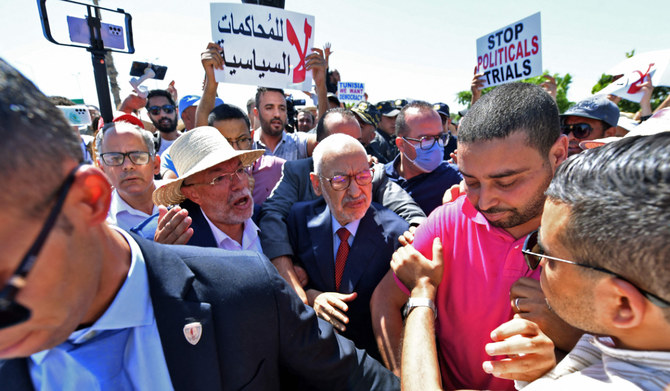

TUNIS, Tunisia: Tunisia’s main opposition coalition said Tuesday it won’t take part in the North African country’s upcoming presidential election unless President Kais Saied’s political opponents are freed and judicial independence is restored.
More than 20 political opponents have been charged or imprisoned since Saied consolidated power in 2021 by suspending parliament and rewriting the country’s constitution. Voters weary of political and economic turmoil approved his constitutional changes in a 2021 referendum with low turnout.
Saied is widely expected to run in the presidential election, likely to take place in September or October. It is unclear if anyone will challenge him.
The National Salvation Front, a coalition of the main opposition parties including once-powerful Islamist movement Ennahdha, expressed concern that the election wouldn’t be fair, and laid out its conditions for presenting a candidate.
They include freeing imprisoned politicians, allowing Ennahdha’s headquarters to reopen, guaranteeing the neutrality and independence of the electoral commission and restoring the independence of the judicial system, according to National Salvation Front president Ahmed Nejib Chebbi.
Ennahdha’s headquarters were shut down a year ago, and its leader Rached Ghannouchi – a former parliament speaker – was sentenced to 15 months in prison on charges of glorifying terrorism. His supporters say the charge is politically driven.
Under the constitutional changes Saied introduced, the president can appoint members of the electoral authority as well as magistrates.
Tunisia’s earlier charter had been seen as a model for democracies in the region.
Tunisia built a widely praised but shaky democracy after unleashing Arab Spring popular uprisings across the region in 2011. Its economic woes have deepened in recent years, and it is now a major jumping off point for migrants from Tunisia and elsewhere in Africa who take dangerous boat journeys toward Europe.