TUNIS: More than 30 Tunisian law professors on Wednesday called for the release of several political opposition figures arrested last year, pointing out that the 14-month legal limit for pre-trial detention had passed.
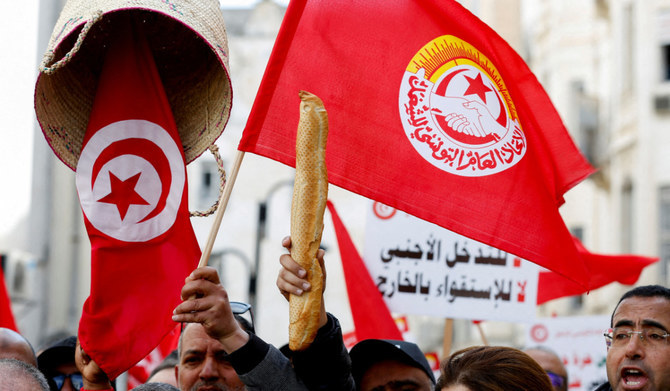
Since a flurry of arrests in February 2023, around 40 critics of President Kais Saied have been facing charges of “conspiracy against the state.”
Eight of the critics have been detained since, and have yet to see trial.
They were expected to be released earlier this month after their detention was extended twice — four months each time — following an initial six-month stint, their lawyers said.
Yet all eight remain in detention after a court hearing on their case was put off until May 2.
This means they have been detained for more than 14 months without trial, which is the limit under Tunisian law.
“Keeping them in prison beyond the period of preventive detention is a violation (of Tunisian law),” read a statement signed by 33 law professors, including three deans.
The professors said the eight must be released, accusing the Tunisian authorities of putting them in what they called “forced detention.”
The country’s anti-terrorism court is investigating the political opponents for trying to “change the nature of the state” under Tunisia’s penal code.
In a letter addressed to President Saied last month, rights group Amnesty International called for the “immediate and unconditional” release of the detainees.
“I call on you to cease your targeted arrests of critics for the peaceful exercise of their rights to freedom of expression,” the letter read.
Saied, a former law professor, has ruled by decree since orchestrating a sweeping power grab in July 2021 in Tunisia, which saw the onset of what came to be known as the Arab Spring a decade earlier.
The eight detainees include former Islamist-inspired Ennahdha party figure Abdelhamid Jelassi, co-founder of the left-wing National Salvation Front coalition Jawhar Ben Mbarek and political activist Khayam Turki.
After the wave of arrests last year, the United Nations voiced alarm over “the deepening crackdown against perceived political opponents and civil society in Tunisia, including attacks on the independence of the judiciary.”
Critics have denounced Saied’s crackdown on opponents, accusing him of exploiting Tunisia’s judiciary as the country prepares for presidential elections set to take place later this year.


![]()


Tunisia law professors call for release of detained opposition figures
Short Url
https://arab.news/9tbve
Tunisia law professors call for release of detained opposition figures
- Since a flurry of arrests in February 2023, around 40 critics of President Kais Saied have been facing charges of “conspiracy against the state“
- Eight of the critics have been detained since, and have yet to see trial


MSF suspends some Gaza hospital work over presence of gunmen, suspected weapons transfers, group says
- Charity also concerned of possible weapons movement at hospital
- Suspension cites neutrality concerns, repeated security breaches
Medecins Sans Frontieres has halted “non-critical” medical activities at a major hospital in southern Gaza following reports from patients and its own staff of armed men inside the facility and concerns over the movement of weapons within it.
MSF’s statement appeared to mark the first time that an international humanitarian group in Gaza has publicly reported the presence of armed men in a hospital or the possible use of such a facility for moving weapons.
The Geneva-based medical charity said non-essential operations at Nasser Hospital in Khan Younis were suspended on January 20 over concerns with the “management of the structure, the safeguarding of its neutrality, and security breaches.”
In recent months, patients and personnel had “seen armed men, some masked,” in areas of the hospital compound, MSF said.
The Hamas-run Interior Ministry said in a statement it was committed to preventing any armed presence inside hospitals, and that legal action would be taken against violators. It suggested that armed members of certain Gazan families had recently entered hospitals, but did not identify those involved.
‘Unacceptable acts’ reported, including weapons movements
Israel and Hamas agreed to a ceasefire in October as part of a US plan to end the war in Gaza. Both sides have repeatedly accused each other of violations.
Since the ceasefire, “MSF teams have reported a pattern of unacceptable acts, including the presence of armed men, intimidation, arbitrary arrests of patients, and a recent situation of suspicion of movement of weapons,” it said.
According to Gaza’s Health Ministry, more than 590 Palestinians have been killed by Israeli troops in the territory since the ceasefire began, while Palestinian militants have killed four Israeli soldiers in the same period.
MSF, also known as Doctors Without Borders, disclosed the Nasser Hospital suspension in a “frequently asked questions” section on its website about its work in Gaza, last updated on February 11.
The armed men had been seen in areas of the hospital compound where MSF does not carry out activities, but their presence, along with suspected weapons transfers, posed serious security risks to patients and personnel, MSF said.
An MSF representative told Reuters the organization continued to support some critical services at Nasser Hospital, including inpatient and surgical care for certain patients requiring lifesaving treatment.
‘Hospitals must remain neutral spaces’
MSF said it had expressed concern to the relevant authorities, without detailing whom the reports were submitted to.
“Hospitals must remain neutral, civilian spaces, free from military presence or activity, to ensure the safe and impartial delivery of medical care,” MSF said.
Israel last month ordered MSF and 30 other international organizations to stop its work in Gaza and the Israeli-occupied West Bank if they did not meet new rules, including sharing details about their staff.
MSF on January 30 said it would not submit a staff list to Israel after failing to receive assurances over their safety.
Parts of tunnel network found under hospitals
The Israeli military says it has targeted hospitals during the war because Hamas fighters were operating inside them, and parts of Hamas’ tunnel network have been found running beneath medical facilities. The Palestinian Islamist group denies using hospitals for military purposes.
Some Israeli hostages, taken during Hamas’ October 7, 2023 attack on southern Israel that ignited the war, have said they were held at Nasser Hospital, the largest in southern Gaza.
Hospitals are protected sites under international law. Both attacking hospitals and their use for military purposes are typically considered a breach of law.
Although medical facilities can lose their protected status under certain conditions, rights groups say Israel has not shown sufficient evidence in many cases to justify its attacks on them during the war.
MSF’s statement appeared to mark the first time that an international humanitarian group in Gaza has publicly reported the presence of armed men in a hospital or the possible use of such a facility for moving weapons.
The Geneva-based medical charity said non-essential operations at Nasser Hospital in Khan Younis were suspended on January 20 over concerns with the “management of the structure, the safeguarding of its neutrality, and security breaches.”
In recent months, patients and personnel had “seen armed men, some masked,” in areas of the hospital compound, MSF said.
The Hamas-run Interior Ministry said in a statement it was committed to preventing any armed presence inside hospitals, and that legal action would be taken against violators. It suggested that armed members of certain Gazan families had recently entered hospitals, but did not identify those involved.
‘Unacceptable acts’ reported, including weapons movements
Israel and Hamas agreed to a ceasefire in October as part of a US plan to end the war in Gaza. Both sides have repeatedly accused each other of violations.
Since the ceasefire, “MSF teams have reported a pattern of unacceptable acts, including the presence of armed men, intimidation, arbitrary arrests of patients, and a recent situation of suspicion of movement of weapons,” it said.
According to Gaza’s Health Ministry, more than 590 Palestinians have been killed by Israeli troops in the territory since the ceasefire began, while Palestinian militants have killed four Israeli soldiers in the same period.
MSF, also known as Doctors Without Borders, disclosed the Nasser Hospital suspension in a “frequently asked questions” section on its website about its work in Gaza, last updated on February 11.
The armed men had been seen in areas of the hospital compound where MSF does not carry out activities, but their presence, along with suspected weapons transfers, posed serious security risks to patients and personnel, MSF said.
An MSF representative told Reuters the organization continued to support some critical services at Nasser Hospital, including inpatient and surgical care for certain patients requiring lifesaving treatment.
‘Hospitals must remain neutral spaces’
MSF said it had expressed concern to the relevant authorities, without detailing whom the reports were submitted to.
“Hospitals must remain neutral, civilian spaces, free from military presence or activity, to ensure the safe and impartial delivery of medical care,” MSF said.
Israel last month ordered MSF and 30 other international organizations to stop its work in Gaza and the Israeli-occupied West Bank if they did not meet new rules, including sharing details about their staff.
MSF on January 30 said it would not submit a staff list to Israel after failing to receive assurances over their safety.
Parts of tunnel network found under hospitals
The Israeli military says it has targeted hospitals during the war because Hamas fighters were operating inside them, and parts of Hamas’ tunnel network have been found running beneath medical facilities. The Palestinian Islamist group denies using hospitals for military purposes.
Some Israeli hostages, taken during Hamas’ October 7, 2023 attack on southern Israel that ignited the war, have said they were held at Nasser Hospital, the largest in southern Gaza.
Hospitals are protected sites under international law. Both attacking hospitals and their use for military purposes are typically considered a breach of law.
Although medical facilities can lose their protected status under certain conditions, rights groups say Israel has not shown sufficient evidence in many cases to justify its attacks on them during the war.
Latest updates


Recommended


© 2026 SAUDI RESEARCH & PUBLISHING COMPANY, All Rights Reserved And subject to Terms of Use Agreement.