

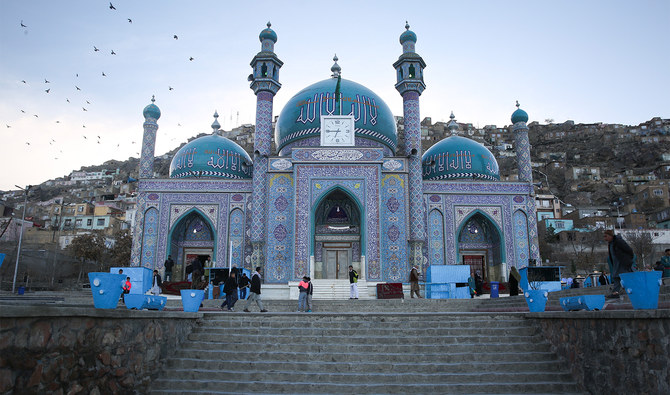

KABUL, Afghanistan: Around 30 men are crammed into a Kabul classroom, part of the debut student cohort at a Taliban-run institute training tourism and hospitality professionals.
It’s a motley crew. One student is a model. Another is 17 and has no job history.
The students vary in age, education level and professional experience. They’re all men — Afghan women are banned from studying beyond sixth grade — and they don’t know anything about tourism or hospitality. But they are all eager to promote a different side of Afghanistan. And the Taliban are happy to help.
Afghanistan’s rulers are pariahs on the global stage, largely because of their restrictions on women and girls. The economy is struggling, infrastructure is poor, and poverty is rife.
And yet, foreigners are visiting the country, encouraged by the sharp drop in violence, increased flight connections with hubs like Dubai, and the bragging rights that come with vacationing in an unusual destination. The numbers aren’t huge — they never were — but there’s a buzz around Afghan tourism.
In 2021, there were 691 foreign tourists. In 2022, that figure rose to 2,300. Last year, there were 7,000.
Mohammad Saeed, the head of the Tourism Directorate in Kabul, said the biggest foreign visitor market is China because of its proximity and large population. Afghanistan also has advantages over some of its neighbors.
“They’ve told me they don’t want to go to Pakistan because it’s dangerous and they get attacked. The Japanese have said this to me also,” Saeed said. “This is good for us.”
But there are disadvantages, too.
Visas are difficult and expensive to access. Many countries severed ties with Afghanistan after the Taliban returned to power, and no country recognizes them as the legitimate rulers of the country.
Afghan embassies either closed or suspended their operations. There’s an ongoing power struggle between Afghanistan’s embassies and consulates staffed by people from the former Western-backed administration, and those under the Taliban administration’s full control.
Saeed concedes there are obstacles for Afghan tourism to develop but said he was working with ministries to overcome them.
His ultimate aim is to have a visa on arrival for tourists, but that could be years away. There are problems with the road network, which is half-paved or non-existent in some parts of the country, and airlines largely avoid Afghan airspace.
The capital Kabul has the most international flights, but no Afghan airport has direct routes with major tourist markets like China, Europe, or India.
Despite the challenges, Saeed wants Afghanistan to become a tourism powerhouse, an ambition that appears to be backed by the Taliban’s top leaders.
“I have been sent to this department on the instructions of the elders (ministers). They must trust me because they’ve sent me to this important place.”
The students also have aspirations. The model, Ahmed Massoud Talash, wants to learn about Afghanistan’s picturesque spots for Instagram posts and its history for media appearances.
Business school graduate Samir Ahmadzai wants to open a hotel but thinks he should know more about tourism and hospitality first.
“They hear that Afghanistan is backwards, poverty and all about war,” said Ahmadzai. “We have 5,000 years of history. There should be a new page of Afghanistan.”
Classes include Afghan handicrafts and anthropology basics.
An unofficial subject is how to interact with foreign women and how their behavior or habits could clash with local customs and edicts. Examples might be women smoking or eating in public, to mixing freely with men who are not related to them by blood or marriage.
The Taliban have imposed a dress code for women and requirements for them to have a male guardian, or mahram, when they travel. Dining alone, traveling alone, and socializing with other women in public have become harder. With gyms closed to women and beauty salons banned, there are fewer places where they can meet outside the home.
In a sign that the country is preparing for more overseas visitors, the country’s only five-star hotel, the Serena, has reopened its women’s spa and salon for foreign females after a monthslong closure.
Foreigners must show their passport to access services. Women with “born in Afghanistan” on their ID are barred.
The restrictions on Afghan women and girls weigh on overseas travel companies, who say they try to focus on the positive aspect of cultural interactions by making donations, supporting local projects or only visiting family-run businesses.
Shane Horan, the founder of Rocky Road Travel, said visiting Afghanistan should not be seen as an endorsement of any particular government or political regime.
“Ultimately, the goal should be to support responsible tourism practices that contribute positively to the local economy and foster mutual respect and understanding, while also remaining cognizant of the broader political context in Afghanistan.”
He said there was no input from authorities about what tour groups saw or did, and that the company worked closely with a women’s rights organization in Afghanistan. A percentage of the tour cost went into supporting this organization’s programs, Horan added.
There are no women at the Institute of Tourism & Hotel Management. The students don’t mention it. But an official at the Tourism Directorate does.
“It’s a heartbreaking situation,” said the official, who wished to remain anonymous for fear of reprisals. “Even female family members ask if they can study here. But there was a change in policy with the change in government. The women who were studying before (the takeover) never came back. They never graduated.”


