



RIYADH: Secretary Anthony Blinken said the Middle East region had two paths moving forward, one of violence and permanent insecurity, the other intergration and and greater peace.
Speaking in Riyadh at a joint US-Gulf Cooperation Council ministerial meeting to advance coordination on regional security on Monday, Blinken said he believed most in the region wanted to follow the path of peace.
“There really are two paths forward for the region as a whole. One driven with division with destruction, with violence with permanent insecurity. The other, greater integration, greater security, greater peace,” Secretary Anthony Blinken said.
“ I think the region today shows that many more of us want to pursue that affirmative path, and I’m grateful to our colleagues in the GCC for working in partnership to advance in that direction,” he added.
During his opening remarks, Secretary Blinken expressed that the meeting serves as an opportunity to advance efforts to promote greater stability in this region.
Blinken arrived in Riyadh Monday morning as a part of a 3-day visit from April 29-May 1 to meet with regional partners.
The secretary highlighted that in the upcoming days as he travels to Jordan and Palestine he will meet with humanitarian groups and the Israeli governemnt to discuss the developments in Gaza.
During his remarks Secretary Blinken highlighted the current U.S. interventions such as the increased value of aid delivered to Gaza and the building of the US maritime corridor.
“It is not enough we still need to get more aid in and around Gaza,” he explained.
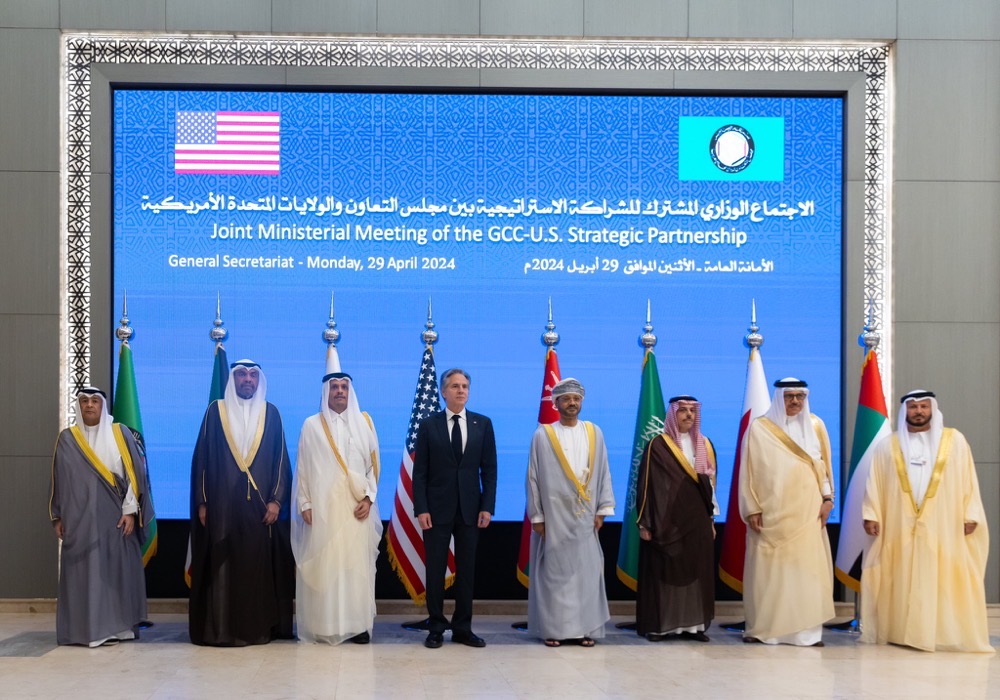
During his speech, Blinken underlines that the U.S. will continue to work with its GCC partners to “build just and lasting peace.”
“We are focused on addressing the greatest threat to regional stability and regional security, Iran,”
“ This is the first meeting since Iran’s unprecedented attack on Israel, The first direct attack from Iran to Israel with more than 300 projectiles including over 100 holistic missiles," Blinken explained.
Blinken underlined that the attacks from Iran stress the importance of working together in integrated defense.
He highlighted that this will be the discussion topic in the upcoming US-GCC meeting in a few weeks on integrated air, militry defense and maritime security.
The other discussion topic underlined by Blinken was the “ ways to preserve freedom of navigation in the Red Sea,”
“The Houthi attacks not only undermine security but they undermine the lives and livelihoods of people throughout the region including in Yeman, the very people they profess they want to represent, The cost of goods have gone up, and it’s harder to get things into Yemen, to the north we’re people so desperately need it,”
“This needs to stop and we are being resolute in doing everything we can to put a stop to it,” Blinken sid.
During his opening remarks, the GCC Secretary-General Jassim Al-Budaiwi called for an immediate ceasefire in Gaza and called for an international conference on implementing a two-state solution.
He also underlined the need for effective international measures to end the violence in the West Bank.
He also expressed the importance of ensuring the security of relief corridors for the delivery of humanitarian aid.
Al-Budaiwi emphasized that the continuous escalation between Iran and Israel threatens the security and stability of the region.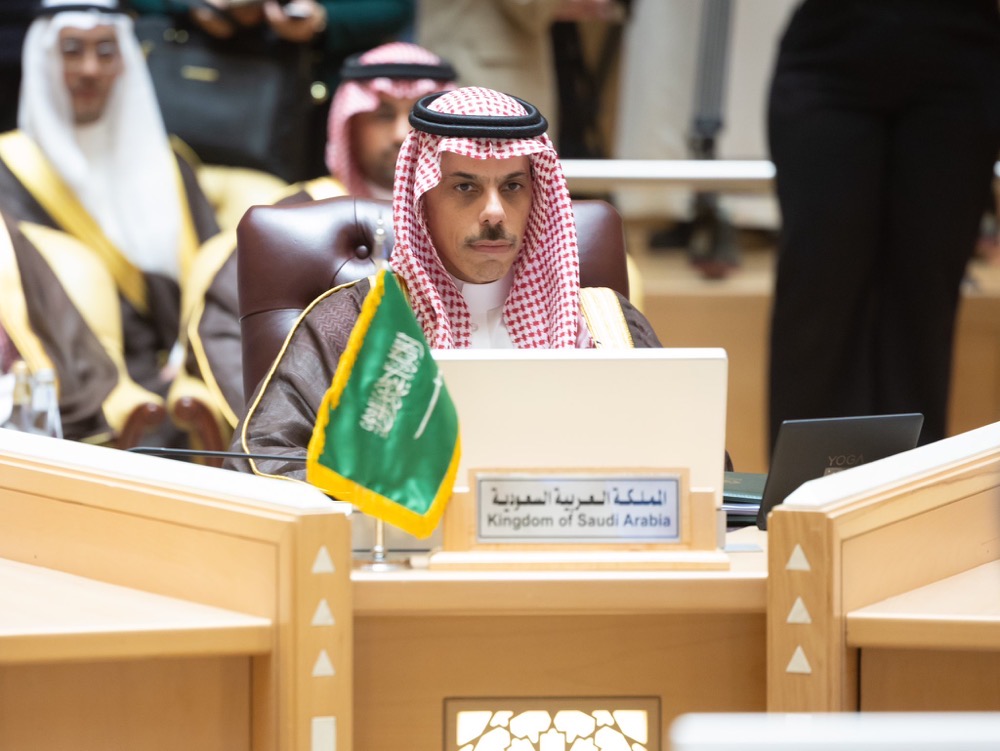
The GCC Secretary General also expressed concern over the Houthi attacks on the Red Sea.
Following his visit to the Kingdom, Blinken will be meeting with counterparts in Jordan and Palestine.
As a part of his visit, the secretary will discuss various topics including the ongoing efforts to achieve a ceasefire in Gaza that secures the release of hostages.
Other topics in the meetings will include humanitarian aid to Gaza, limiting the spillover of conflict and ongoing efforts to achieve regional security.
A pathway to an independent Palestinian state with security guarantees for Israel will also be one of the topics of discussion during his visit.
On the sidelines of the meeting, The Saudi Minister of foreign affairs, Prince Faisal bin Farhan met with Secretary Blinken. The two discussed the developments in the Gaza Strip, the importance of a ceasefire, efforts to ensure entry of urgent humanitarian aid, and joint efforts.


