

Riyadh forum highlights Saudi Arabia’s vision for healthcare and tourism

Tourism in Saudi Arabia contributes 4 percent to the national GDP. (AN Photo by Huda Bashatah)
Short Url
Updated 28 April 2024
Follow

Riyadh forum highlights Saudi Arabia’s vision for healthcare and tourism

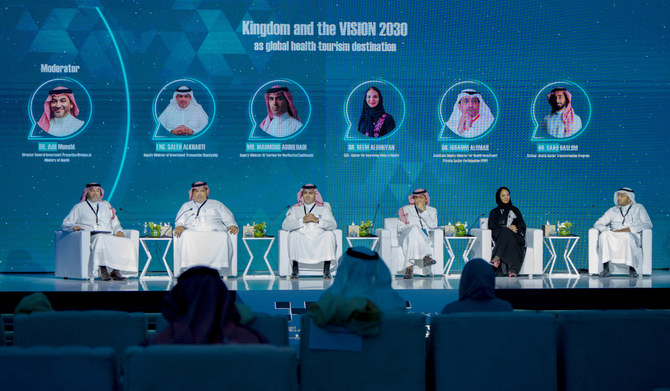
RIYADH: Saudi Deputy Minister of Investment Transaction Saleh Al-Khabti said that the healthcare sector’s contribution to the Kingdom’s gross domestic product is projected to reach about $66.6 billion, with the creation of more than 245,000 jobs by 2030.

Al-Khabti shared the information during a panel discussion titled “The Kingdom and Vision 2030 as a Global Health Tourism Destination”, at the Health Tourism Future Forum, which began Sunday in Riyadh.
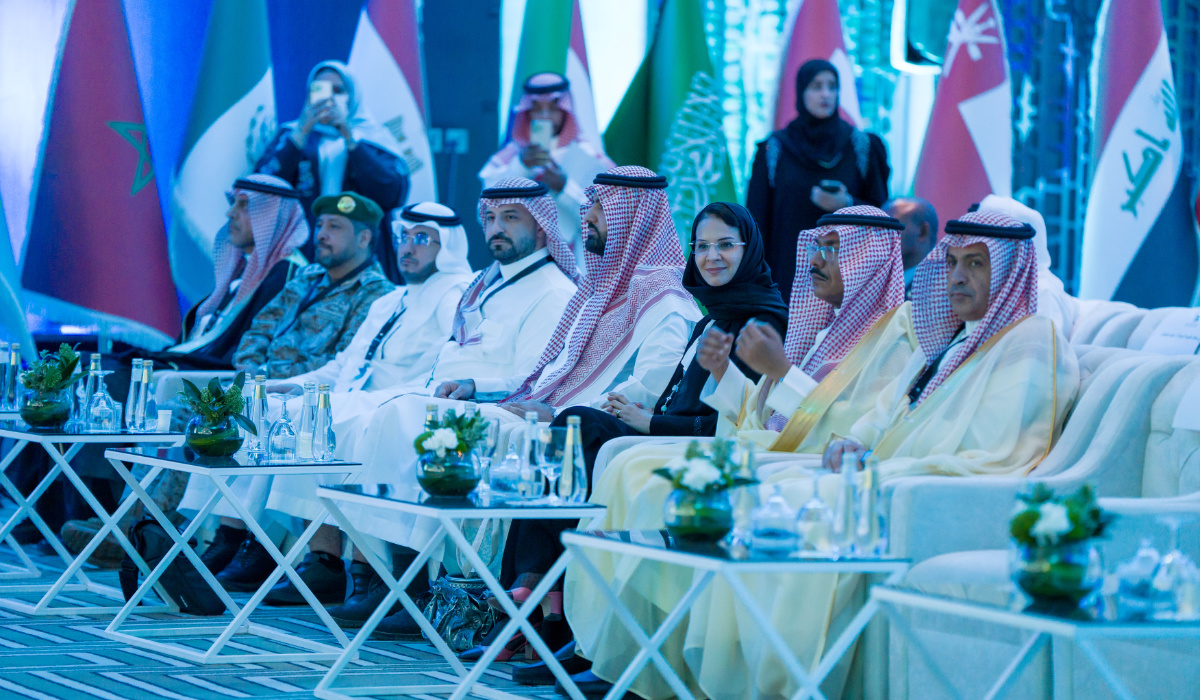


The three-day event features presentations, workshops, a young researchers' forum, business meetings, seminars, and interactive sessions. (AN Photo by Huda Bashatah)

The Health Tourism Club and the Health Tourism Association, in partnership with the Global Healthcare Travel Council, launched the forum to identify priorities and redefine visions for health tourism at regional and international levels.

The forum, which this year coincides with the eighth anniversary of the launch of Saudi Arabia’s Vision 2030, is an annual global platform for the health tourism industry aiming to develop future strategies in the Kingdom’s healthcare sector. The global healthcare industry is estimated to be worth $4.4 trillion.
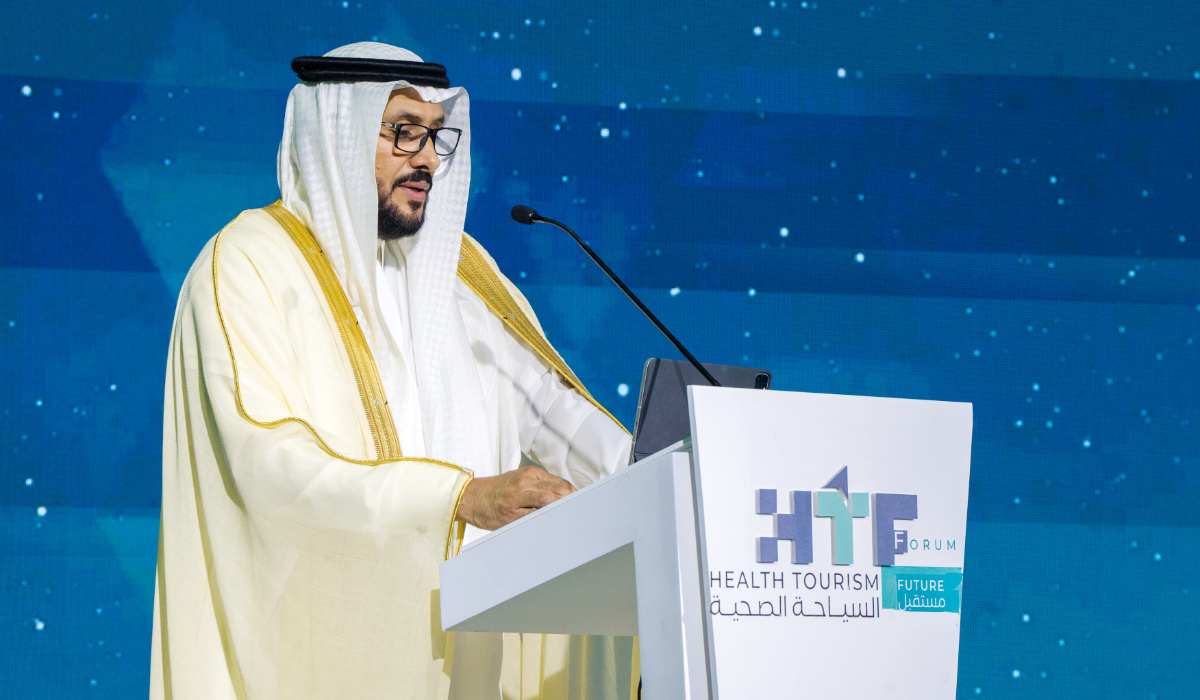


Ahmed Al-Ouraij, President of the Health Tourism Association said the forum represents the birth of the first specialized health tourism initiatives. (AN Photo by Huda Bashatah)

Al-Khabti said that significant investment is needed in the Saudi healthcare sector over the next seven years, much of which will be driven by the National Investment Strategy.

“Regarding foreign direct investment, Saudi Arabia reached about $19 billion, a three-time increase since 2017,” he said.

Ahmed Al-Ouraij, president of the Health Tourism Association, said that the forum marked the beginning of the first specialized health tourism initiatives.
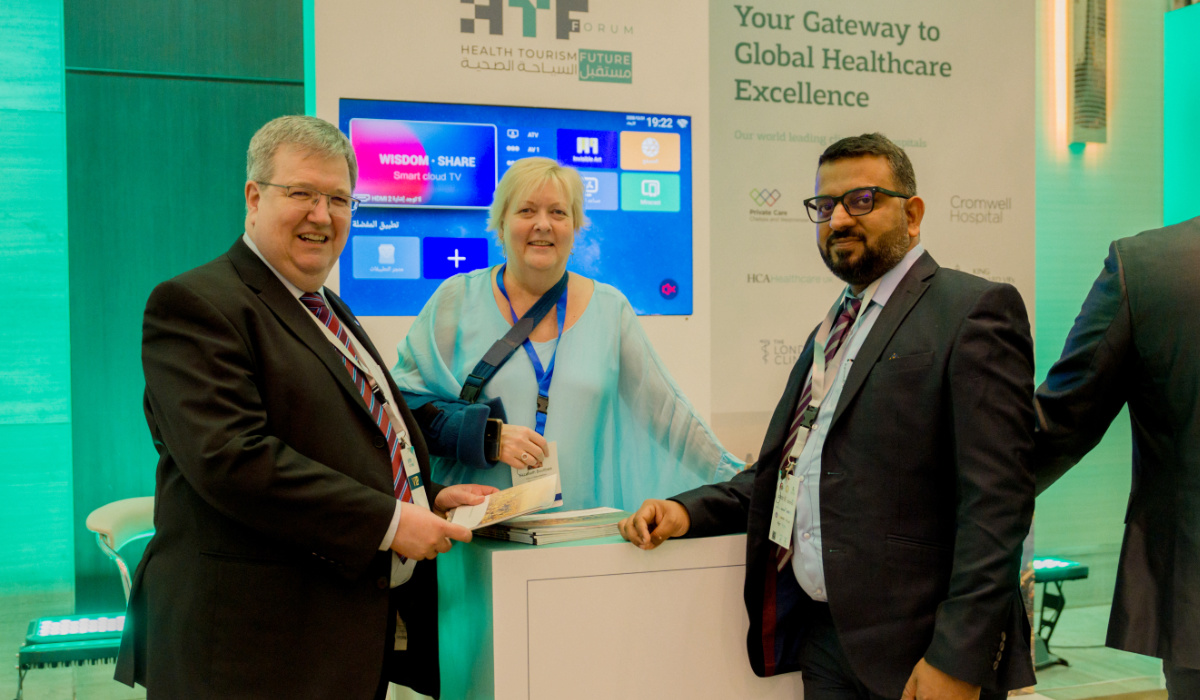


Healthcare London is a collaborative of nine healthcare providers - 23 hospitals - such as the Cleveland Clinic and Imperial College. (AN Photo by Huda Bashatah)

Health tourism involves individuals traveling to another country for medical treatment or wellness services. The sector has grown rapidly in recent years due to increasing healthcare costs in many countries and advances in medical technology and expertise in specific regions.

Mahmoud Abdulhadi, deputy minister of tourism for destination enablement, mentioned that Saudi Arabia’s tourism industry has made significant progress, exceeding its target of 106 million visitors seven years ahead of schedule.

“The total amount spent on the total population of visitors was about $66.6 billion, a direct contribution to the economy,” Abdulhadi said.
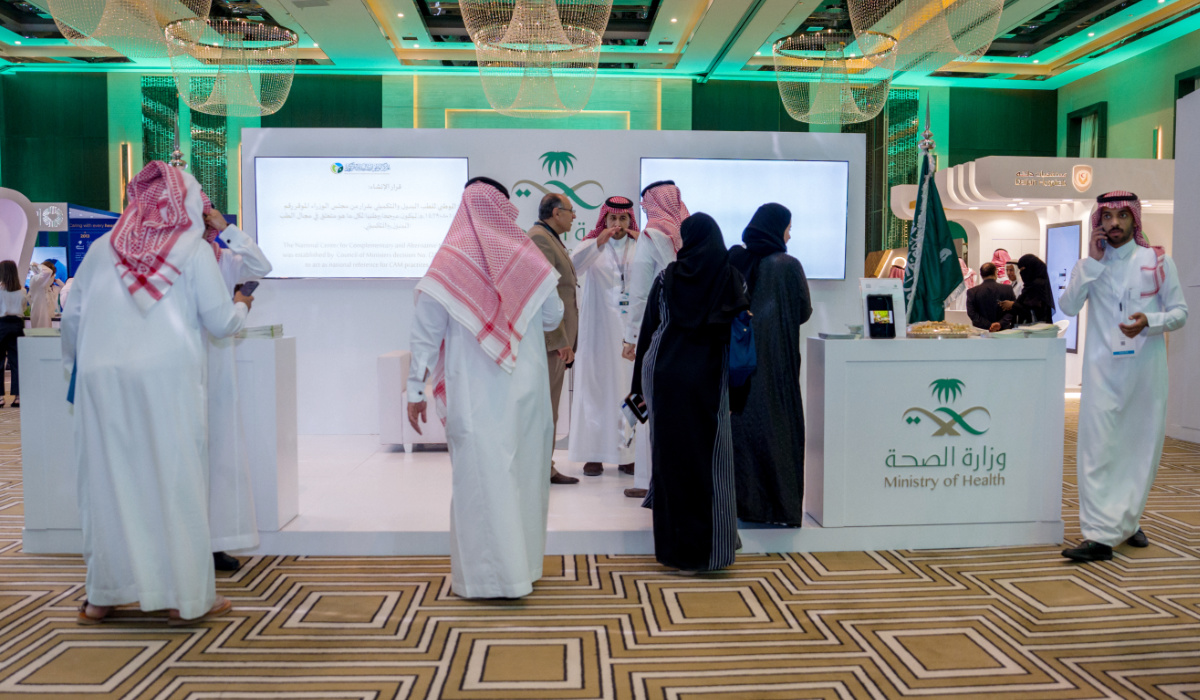


The three-day event features presentations, workshops, a young researchers' forum, business meetings, seminars, and interactive sessions. (AN Photo by Huda Bashatah)

The deputy minister also said that about 10 percent of all employment rates globally come from the tourism or tourism-related sectors. In Saudi Arabia, tourism contributes 4 percent to the national GDP.  

“Tourism is a key contributor to Vision 2030 because it creates employment. When we started our journey in 2019, we had 600,000 employees in the sector, and today we have 925,000.”

Abdulhadi added that increasing the number of employees to 1.6 million by 2030 seemed on target, given the current trajectory.

“Leisure is now our second-largest source of visitation after spiritual visits to the holy sites and our fastest growing sector,” he said.

Conversely, only a small percentage of visitors to the Kingdom travel for medical or wellness purposes.

Abdulhadi said: “The reason might be because health tourism hasn’t been marketed well enough or in the right way.”

While the health tourism sector is still in its early stages, Abdulhadi believes there is a strong domestic market, or potential, for wellness and health travel.  

Health tourism can range from medical treatment to wellness services. Abdulhadi said: “We have on the technical side people who are coming in for treatment for specific illnesses, and then we have on the soft side people who are coming in for what a spa experience in a nice destination is.”

He said that certain destinations lend themselves to potential wellness offerings, but that having the proper infrastructure in place is critical.

In the exhibition accompanying the conference, Healthcare London, a collaboration between nine healthcare providers, announced its official launch.

It was formed to allow more international patients to access the treatment that London’s leading private healthcare providers and NHS teaching hospitals can offer.

Michael Barker, project manager at Healthcare London, told Arab News: “Ever since we started working on Healthcare London, Saudi Arabia has been our No.1 market, especially because we know it very well.”

The forum also addresses challenges, proposes innovative solutions for sustainable growth, and works to raise awareness about the need to prioritize health and well-being. It is the culmination of the Kingdom’s drive to boost medical tourism and enhance the local and global healthcare sector.

The three-day event includes presentations, workshops, a young researchers’ forum, discussions, business meetings, seminars and interactive sessions. The activities focus on aspects of medical tourism such as innovation, investment, marketing and legislation.


Saudi Arabia launches key projects at World Defense Show in Riyadh

Updated 09 February 2026
Follow

Saudi Arabia launches key projects at World Defense Show in Riyadh

  • Defense Minister Prince Khalid bin Salman unveils initiatives
  • New firms set up and deals inked at event running to Feb. 12  

RIYADH: Defense Minister Prince Khalid bin Salman unveiled new initiatives and signed several agreements on the opening of the third World Defense Show in Riyadh on Sunday.

Prince Khalid opened the show on behalf of Crown Prince Mohammed bin Salman, the Saudi Press Agency reported.

Organized by the General Authority for Military Industries, the five-day event will run until Feb. 12, showcasing the Kingdom’s rapid strides toward strategic independence and technological leadership in the defense sector.

The 2026 edition features a purpose-built venue with a 2,700-meter runway for live air and land demonstrations, underscoring the show’s status as a premier global defense event.

The GAMI’s Gov. Ahmad Al-Ohali said the show reflects Saudi Arabia’s commitment to localizing over 50 percent of military spending in line with Vision 2030, and fostering an integrated ecosystem where government bodies and international partners collaborate on innovation.


The event brings together official delegations, government entities, and leading international companies specializing in the defense and security sectors. (SPA)

Strategic agreements and major launches

At the Saudi Arabian Military Industries Group pavilion, Prince Khalid launched several key initiatives.

  • New entities: The inauguration of the SAMI Land Co., SAMI Autonomous Co., and the SAMI Land Industrial Complex.
  • Supply chain: The unveiling of the SAMI Local Content Program and the HEET Program.
  • International cooperation: A memorandum of understanding was signed between the Saudi General Authority for Defense Development and the Korean Agency for Defense Development on advanced military research.
  • Defense deals: The minister signed cooperation agreements with Slovakia, Malaysia, and Somalia.
Defense Minister Prince Khalid signed cooperation agreements with Slovakia, Malaysia, and Somalia. (SPA)


Technological debuts and innovations

The show is also serving as a launchpad for cutting-edge security technologies across various government sectors.

  • AI-Powered Lucid Gravity: Public Security debuted its advanced Lucid Gravity electric security vehicle at the Ministry of Interior’s pavilion.

The vehicle integrates state-of-the-art artificial intelligence and specialized security equipment designed to accelerate emergency response times and support field operations.

Public Security’s advanced Lucid Gravity electric security vehicle is displayed at the Ministry of Interior’s pavilion. (SPA)

By leveraging predictive intelligence and advanced command-and-control systems, the Lucid Gravity exemplifies the ministry’s commitment to protecting the Kingdom.

  • Smart helmet: Also at the Ministry of Interior’s pavilion, the General Directorate of Civil Defense unveiled its smart helmet.

Designed to revolutionize public safety and emergency response, the helmet features day-and-night cameras and specialized sensors to detect hazardous materials in hard-to-reach locations.

The device serves as a mobile command node, delivering live video feeds directly to command-and-control centers. By enabling real-time data analysis and faster decision-making, the helmet reduces response times and enhances personnel safety in high-risk environments.


The smart helmet features day-and-night cameras and specialized sensors to detect hazardous materials in hard-to-reach locations. (SPA)


  • Border security: The General Directorate of the Border Guard showcased an integrated security system featuring radar and thermal cameras capable of detecting drones and classifying moving targets to protect critical infrastructure.

It also functions as an early warning system for critical facilities and border areas and is fully integrated with command-and-control systems.


Border Guard's ntegrated security system features radar and thermal cameras capable of detecting drones and classifying moving targets to protect critical infrastructure. (SPA)
  • Counter-terrorism: The Islamic Military Counter Terrorism Coalition presented a comprehensive framework integrating intellectual, media, and military domains to combat extremism and terror financing.

    Visitors were briefed on specialized programs designed to raise the readiness of national personnel and foster sustainable institutional cooperation among member states to combat extremism.

    On the event’s opening day, the pavilion hosted high-level delegations, including ministers, military leaders, and ambassadors who reviewed and praised the coalition’s pivotal role in coordinating local and international security efforts.

    A view of the Islamic Military Counter Terrorism Coalition pavilion. (SPA)
  • Meteorology: The National Center for Meteorology displayed advanced weather systems essential for ensuring the safety of the event’s air shows and military operations.

    At its dedicated pavilion, the NCM is showcasing its latest advanced meteorological technologies and systems. These solutions serve both the military and civilian sectors, providing accurate data to support beneficiary entities’ operational processes.

World Defense Show CEO Andrew Pearcey said that participation is expected to surpass previous records, reflecting the event’s growing importance on the international stage.

NCM's latest meteorological technologies and systems serve both the military and civilian sectors